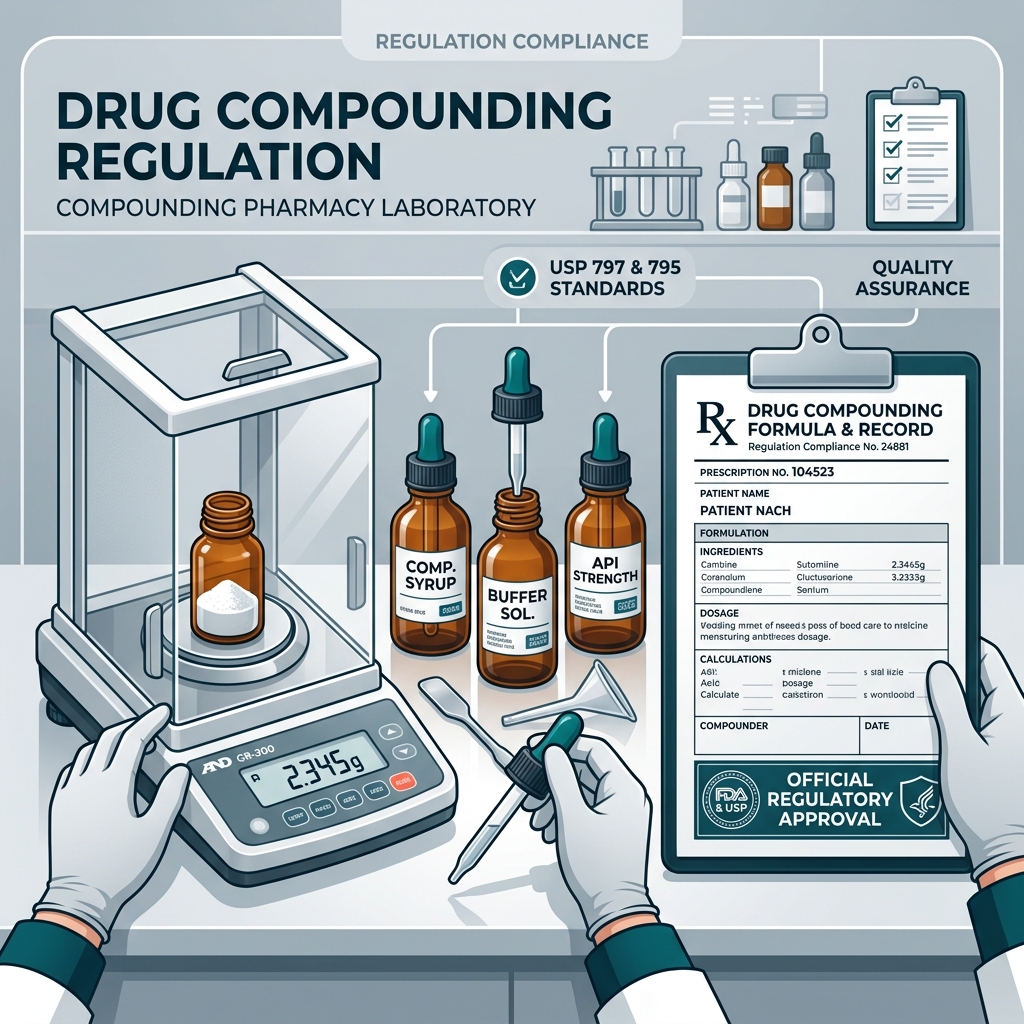
- 2025 Shortage Status: The FDA formally declared the active shortage of brand-name Wegovy® and Ozempic® resolved in February 2025. This resolution altered the rules for mass-compounding facilities (503B) but preserved traditional patient-specific compounding.
- Section 503A Permissibility: State-licensed compounding pharmacies operating under Section 503A of the FD&C Act are legally permitted to prepare semaglutide from bulk substances, provided the preparation is based on a patient-specific prescription and is justified by a documented clinical difference.
- Documented Clinical Difference: Acceptable medical justifications under Section 503A include severe allergies to inactive excipients in the commercial pens (e.g., phenol or metacresol) or the need for customized intermediate strengths (e.g., 1.25 mg or 1.5 mg) not manufactured by Novo Nordisk.
- April 2026 FDA Proposal: On April 30, 2026, the FDA issued a proposed rule to exclude semaglutide and tirzepatide from the 503B bulk drug substances list. The public comment period closes in June 2026, targeting large-scale batch manufacturing while leaving individual compounding under Section 503A intact.
- Patient Verification Protocol: To ensure clinical safety, patients must verify that their provider utilizes state-licensed 503A pharmacies, requires a patient-specific prescription, follows sterile USP <797> standards, and provides independent potency and purity testing via a Certificate of Analysis (COA).
Introduction: The Changing Landscape of GLP-1 Accessibility
The introduction of glucagon-like peptide-1 (GLP-1) receptor agonists, specifically semaglutide, has represented a historic advancement in endocrinology and chronic weight management. Originally developed for glycemic control in type 2 diabetes mellitus under the brand name Ozempic®, the molecule's potent central appetite suppression and metabolic benefits led to its 2021 FDA approval for chronic weight management under the brand name Wegovy®. The subsequent demand for these medications has been unprecedented in modern pharmaceutical history, outstripping the manufacturing capacity of the innovator firm, Novo Nordisk.
To preserve patient access during periods of national supply constraints, federal laws permit the compounding of copycat formulations when a drug is listed on the FDA's official Drug Shortage Database. Over the last four years, compounding pharmacies have stepped in to fill this gap, providing tens of thousands of patients with affordable compounded semaglutide. However, the legal and regulatory landscape governing compounded GLP-1 medications has entered a new phase. With the FDA's declaring the brand shortage resolved and introducing new proposed rules in April 2026, patients and clinical providers must understand the updated legal criteria that determine how these medications are prepared, prescribed, and verified for clinical safety.
This article provides an in-depth clinical and legal analysis of the updated 2026 rules governing compounded semaglutide. We examine the transition from the historical shortage to the active regulatory proposals, clarify the crucial legal distinction between Section 503A and Section 503B compounding pathways, outline how patients can protect themselves from unsafe counterfeit products, and explain the financial structures that make compounded options a necessary clinical alternative in the United States.
The 2025 Shortage Resolution: What Changed Legally?
In 2022, the FDA officially added semaglutide injection products to its Drug Shortage Database. This declaration was driven by a mismatch between global manufacturing capacity—specifically the assembly of the proprietary single-dose autoinjector pens—and the rapidly expanding patient demographic. Under federal law, a drug's presence on the FDA's active shortage list temporarily suspends certain patent-protection enforcement mechanisms, allowing compounding pharmacies to manufacture copycat formulations to meet the public health need.
In **February 2025**, the FDA updated the status of semaglutide injection on its database, declaring the active shortage to be formally resolved. Novo Nordisk reported that its manufacturing facilities were operating at a capacity sufficient to meet current market demands. Legally, the resolution of an active shortage has different regulatory consequences depending on the type of compounding facility preparing the drug:
- For Section 503B Outsourcing Facilities: The resolution of the shortage severely restricts these large-scale facilities. Under federal law, 503B facilities are only permitted to compound drugs "in bulk" (without individual patient prescriptions) if the drug is on the active FDA shortage list. Once the shortage is declared resolved, 503B facilities must cease bulk compounding of that molecule, unless the drug is added to the FDA's permanent "bulks list."
- For Section 503A Traditional Compounding Pharmacies: Unlike 503B facilities, traditional compounding pharmacies operating under Section 503A do not rely entirely on the shortage list to compound medications. Section 503A allows for the custom preparation of medications based on **individual, patient-specific prescriptions**, provided there is a documented clinical difference between the compounded preparation and the commercially available FDA-approved drug.
Consequently, while the February 2025 shortage resolution reduced the bulk manufacturing of compounded GLP-1s, it did not eliminate the legal pathway for patient-specific compounding. Under Section 503A of the Federal Food, Drug, and Cosmetic Act (FD&C Act), traditional state-licensed compounding pharmacies continue to serve patients who have specific clinical needs that cannot be met by commercial brand-name products. For a detailed clinical discussion of the baseline safety parameters, see our guide on is compounded semaglutide safe.
Traditional Compounding Under Section 503A: The "Clinical Difference" Mandate
Traditional compounding pharmacies operate under Section 503A of the FD&C Act. These facilities are state-licensed and regulated primarily by their respective State Boards of Pharmacy, with federal oversight regarding bulk drug substances and sterile compounding conditions. To compound a copy of an approved drug under Section 503A, a pharmacy must possess a valid, patient-specific prescription from a licensed healthcare provider.
Furthermore, because the drug is no longer on the active FDA shortage list, the pharmacist must determine that the compounded medication is not "essentially a copy" of the commercially available brand-name drug. Under FDA guidelines, this requirement is met if the compounding pharmacist documents on the prescription that there is a **clinical difference** between the compounded formulation and the commercial product for that specific patient. In clinical practice, there are three primary categories of medical necessity that justify compounding under Section 503A:
1. Excipient Sensitivity and Allergies
The commercial formulations of semaglutide (Wegovy® and Ozempic®) contain specific inactive ingredients (excipients), including disodium phosphate dihydrate, propylene glycol, and preservatives such as phenol or metacresol. A subset of patients experiences localized contact dermatitis, severe skin hypersensitivity, or systemic allergic reactions to these specific synthetic additives. Under Section 503A, a pharmacy can legally compound a preservative-free version of semaglutide, or utilize alternative buffering agents to ensure the patient can tolerate the injection safely without cutaneous or systemic reactions.
2. Custom Intermediate Strengths for Dosing Tolerability
Novo Nordisk manufactures semaglutide in fixed, discrete doses: 0.25 mg, 0.5 mg, 1.0 mg, 1.7 mg, and 2.4 mg. In clinical trials and real-world clinical practice, a significant percentage of patients experience severe gastrointestinal adverse effects (such as intractable nausea, cyclical vomiting, or gastroesophageal reflux) when titrating between these standard dose levels. For example, a patient who has plateaued at the 1.0 mg dose but cannot tolerate the 1.7 mg dose may require a customized intermediate dose, such as 1.25 mg or 1.5 mg, to manage the transition. Because commercial autoinjector pens cannot be adjusted to deliver these customized quantities, a 503A pharmacy can prepare a tailored concentration in a multi-dose vial to facilitate gradual, patient-specific titration. This clinical strategy is analyzed in detail in our complete guide to semaglutide.
3. Combination Formulations
Healthcare providers frequently determine that a patient's compliance and clinical outcomes are improved by compounding semaglutide in combination with other active molecules. For instance, compounding semaglutide with cyanocobalamin (Vitamin B12) or L-carnitine is a common clinical practice. Vitamin B12 co-administration helps mitigate the fatigue and lethargy that many patients report as side effects of GLP-1 receptor agonism, while L-carnitine supports cellular energy metabolism during periods of caloric restriction. These dual-active formulations represent distinct clinical entities that are not commercially manufactured, satisfying the Section 503A requirement for custom, patient-specific medications.
The April 30, 2026 FDA Proposed 503B Rule: Restricting Mass Compounding
On April 30, 2026, the FDA issued a significant regulatory proposal that directly impacts the compounding pharmacy sector: the proposed exclusion of semaglutide and tirzepatide from the Section 503B Bulk Drug Substances List (91 FR 28312). To understand the significance of this proposal, it is necessary to examine the operational differences between 503B outsourcing facilities and 503A traditional pharmacies.
Section 503B outsourcing facilities operate on a larger scale. They are registered with the FDA, must comply with Current Good Manufacturing Practice (CGMP) regulations—the same quality standards applied to traditional drug manufacturers—and are permitted to compound medications in bulk batches for distribution to clinics, hospitals, and healthcare systems **without first receiving patient-specific prescriptions**.
Under Section 503B of the FD&C Act, outsourcing facilities are only permitted to compound medications from bulk drug substances under one of two conditions:
- The drug appears on the active FDA Drug Shortage Database.
- The bulk substance appears on a list developed by the FDA of bulk drug substances for which there is a clinical need (the "503B Bulks List").
Because semaglutide was removed from the active shortage list in early 2025, 503B facilities could only continue compounding the peptide if the FDA placed it on the permanent 503B Bulks List. On April 30, 2026, the FDA proposed to **exclude** semaglutide from this list, concluding that there is no clinical need for 503B facilities to compound semaglutide in bulk, given the commercial availability of the FDA-approved brand-name drug.
The FDA established a public comment period for this proposal, which is scheduled to close in **June 2026**. During this period, telehealth platforms, compounding pharmacies, clinical organizations, and patient advocacy groups are submitting clinical data regarding drug access, tolerability, and affordability. If finalized, the rule will prohibit 503B facilities from compounding semaglutide from bulk powder. However, this rule **does not apply to Section 503A pharmacies**, which will continue to operate under their traditional patient-specific prescription model. This targeted approach is designed to restrict mass-manufacturing by unregulated entities while preserving the customized clinical pathway for individual patients under Section 503A.
Section 503A (Traditional Pharmacy): Operates under State Board of Pharmacy licensing and is governed by USP sterile compounding standards. Section 503A pharmacies are legally authorized to prepare custom medications from bulk drug substances *only* upon receiving a patient-specific prescription. Because the law requires individual medical necessity, 503A compounding is not restricted by the resolution of a shortage, provided the provider documents a clinical difference (such as excipient allergies or intermediate dose strengths).
Section 503B (Outsourcing Facility): Registered with and inspected directly by the FDA, operating under Current Good Manufacturing Practice (CGMP) regulations. These facilities compound in large batches without requiring patient-specific prescriptions, distributing medications for "office stock" in clinics and hospitals. 503B facilities are legally restricted to compounding drugs in active shortage, or those on the 503B Bulks List. The April 30, 2026 proposal to exclude semaglutide from this list would effectively halt bulk 503B production of compounded GLP-1s.
Access Compounded Semaglutide Safely Under 2026 Rules — $79/mo
Ensure your weight loss treatment complies with Section 503A. Losing Weight RX partners exclusively with state-licensed 503A compounding pharmacies to deliver patient-specific, quality-tested semaglutide at a flat monthly rate.
Start Your Clinical AssessmentCompounded Safety and Sourcing Checklist: Verifying Your Pharmacy
Because compounded medications do not undergo pre-market FDA evaluation, the clinical safety and efficacy of your treatment depend on the quality control standards of the compounding pharmacy. To help patients avoid low-quality preparations and bad actors in the online market, we have developed a structured verification protocol. When choosing a telehealth platform or pharmacy partner, ensure the provider satisfies these five criteria:
- Verify State-Licensed 503A Pharmacy Status: Confirm that the pharmacy filling your prescription is licensed in its home state and in your state of residence. You can verify a pharmacy's credentials by searching the online license database of the state's Board of Pharmacy. The pharmacy must be licensed as a traditional pharmacy, not an unregulated distributor.
- Confirm USP <797> Sterile Compounding Standards: Semaglutide is administered via subcutaneous injection, which bypasses the body's natural gastrointestinal defenses. As a result, the medication must be entirely sterile. Reputable 503A pharmacies compound in high-standard cleanrooms (ISO Class 5 or better) and follow the sterile preparation guidelines outlined in Chapter 797 of the United States Pharmacopeia (USP <797>).
- Request a Certificate of Analysis (COA): A quality-focused compounding pharmacy will routinely submit each batch of active pharmaceutical ingredient (API) and finished preparation to independent, third-party laboratories for testing. Request a Certificate of Analysis (COA) for your batch. The COA must verify the identity of the molecule (semaglutide base), a purity level of 99% or higher, a potency concentration within +/- 10% of the label, and the absence of bacterial endotoxins or microbial contamination.
- Beware of Salt Formulations: The FDA has warned that some compounding pharmacies utilize salt forms of the molecule, such as semaglutide sodium or semaglutide acetate. These salt forms have different molecular weights and have not been evaluated for clinical safety or efficacy in humans. Ensure that your pharmacy uses only high-purity **semaglutide base**, which is the active ingredient used in brand-name Wegovy® and Ozempic®.
- Avoid "Research Peptides" and Chemical Sellers: Unregulated websites frequently sell lyophilized (freeze-dried) powder labeled as "semaglutide" with disclaimers stating "for research purposes only" or "not for human consumption." These products do not require a prescription, are not prepared in sterile cleanrooms, and are not subjected to quality control. Administering reconstituted research peptides carries severe clinical risks, including localized abscesses, systemic sepsis, and toxicity from heavy metal residues or chemical manufacturing byproducts. Refer to our pricing analysis on the cheapest semaglutide online in 2026 to understand what a legitimate, medically supervised program should cost.
Dosing Titration and Clinical Efficacy: The Scientific Protocol
The administration of compounded semaglutide must follow the clinical titration schedule established in the landmark STEP (Semaglutide Treatment Effect in People with obesity) clinical trials. Gradual titration is physiologically necessary to allow the gastrointestinal system to adapt to the peptide, reducing hunger while managing side effects. The standard clinical protocol consists of the following phases:
| Titration Stage | Weekly Dose | Duration | Primary Clinical Objective |
|---|---|---|---|
| Initiation Phase | 0.25 mg | Weeks 1–4 | Adapt gastrointestinal receptors; minimize initial nausea and vomiting. |
| Escalation Phase 1 | 0.50 mg | Weeks 5–8 | Begin early appetite regulation; establish consistent metabolic response. |
| Escalation Phase 2 | 1.00 mg | Weeks 9–12 | Achieve therapeutic concentration; document initial weight reduction. |
| Escalation Phase 3 | 1.70 mg | Weeks 13–16 | Transition to high-dose therapy; support sustained caloric deficit. |
| Maintenance Phase | 2.40 mg | Weeks 17+ | Achieve maximum weight reduction and chronic metabolic stabilization. |
During the STEP-1 clinical trial, which evaluated the efficacy of a 2.4 mg weekly dose of semaglutide over a 68-week period, adult participants achieved an average weight loss of **14.9% of their baseline body weight**, alongside improvements in cardiovascular risk factors, blood pressure, and physical functioning. While the 2.4 mg dose remains the target maintenance dose for optimal clinical outcomes, weight loss is highly individualized. Under Section 503A compounding, providers can customize dose levels, allowing some patients to achieve sustainable results on intermediate doses (such as 1.0 mg or 1.5 mg) while avoiding severe side effects.
Managing Gastrointestinal Side Effects: Clinical Strategies
Because compounded semaglutide shares the same pharmacological profile as Wegovy® and Ozempic®, it carries the same side effect profile. These reactions are typically mild to moderate in severity, dose-dependent, and most common during the initial initiation and escalation phases. Clinical management strategies include:
- Nausea: Often caused by delayed gastric emptying. Patients should eat smaller, more frequent meals, focus on bland foods, and avoid high-fat or greasy meals that remain in the stomach longer. Staying hydrated is also crucial.
- Constipation: A common side effect of slowed gastrointestinal transit. Patients should gradually increase their intake of dietary fiber, maintain a high volume of water intake, and discuss the use of over-the-counter stool softeners or osmotic laxatives (like polyethylene glycol 3350) with their clinical provider.
- Diarrhea: Less common than constipation, but can occur due to shifts in gut motility or diet. Patients should avoid high-fat foods, limit dairy consumption, and consider a temporary bland diet (such as bananas, rice, applesauce, and toast).
- Gastroesophageal Reflux (Heartburn): Delayed digestion can increase intragastric pressure. Patients should avoid eating within three hours of lying down, elevate their head during sleep, and limit dietary triggers such as caffeine, mint, chocolate, and acidic foods.
Additionally, rapid weight loss can sometimes result in the loss of lean muscle mass. To preserve metabolic health, patients should consume adequate dietary protein (aiming for 1.2 to 1.6 grams per kilogram of target body weight daily) and engage in regular resistance exercise. For more information on physical activity plans, see our guide on exercise routines to prevent muscle loss on semaglutide.
The Financial Equation: Brand Premium vs. Flat-Rate Compounding
For most patients, the primary barrier to accessing GLP-1 therapy is financial. The list price for brand-name Wegovy® is approximately **$1,349 per month**, and commercial insurance plans frequently exclude weight loss medications from coverage. Even when patients qualify for manufacturer savings cards, the out-of-pocket cost often remains above $650 per month, which is unsustainable for long-term chronic treatment.
Compounded semaglutide bypasses the brand premium by utilizing traditional pharmaceutical compounding. By working directly with state-licensed 503A compounding pharmacies, telehealth platforms can offer the medication at a significantly lower cost. For example, Losing Weight RX provides access to a comprehensive compounded semaglutide program for a flat rate of **$79 per month**, which represents an **89% cost reduction** compared to the list price of brand-name products.
Furthermore, many telehealth providers utilize tiered pricing structures (sometimes called "dose escalation traps"), where the monthly price increases as the patient titrates to higher maintenance doses. Flat-rate programs like Losing Weight RX eliminate these pricing changes, charging a single price regardless of the dose level. This ensures that clinical dosing decisions are based on safety and efficacy rather than financial constraints.
Frequently Asked Questions
Yes. Traditional patient-specific compounding remains legal under Section 503A of the FD&C Act. Although the FDA declared the active shortage of Wegovy® and Ozempic® resolved in February 2025, 503A pharmacies are legally authorized to prepare compounded semaglutide when there is a documented clinical difference for a specific patient, such as a severe allergy to commercial preservatives (like phenol or metacresol) or the need for a customized intermediate strength.
On April 30, 2026, the FDA proposed excluding semaglutide and tirzepatide from the Section 503B Bulk Drug Substances List (91 FR 28312). If finalized after the public comment period closes in June 2026, this rule will prevent large-scale 503B outsourcing facilities from mass-compounding these peptides without individual patient prescriptions. However, this proposal does not apply to traditional Section 503A pharmacies, which can continue compounding for individual patients with a valid prescription.
The primary clinical reasons include excipient sensitivities or allergies to the preservatives in commercial pens (like phenol or metacresol), the medical necessity for customized intermediate dose strengths (such as 1.25 mg or 1.5 mg) to manage tolerability, and the use of combination formulations (such as semaglutide combined with Vitamin B12) to reduce side effects like fatigue. Additionally, the lower cost of compounded alternatives provides access for patients who face financial barriers to commercial brand-name products.
Ensure your telemedicine provider works exclusively with state-licensed 503A compounding pharmacies located in the United States. The pharmacy must follow USP <797> sterile compounding standards, require a patient-specific prescription, and perform third-party analytical testing. You should request a Certificate of Analysis (COA) to confirm that the batch contains high-purity semaglutide base (not salt formulations) and is free from bacterial contamination.
No. Purchasing semaglutide without a prescription is illegal and highly dangerous. Unregulated online suppliers often sell freeze-dried powder labeled as "research chemicals" or "not for human consumption." These products do not undergo quality control, are not prepared in sterile environments, and carry severe risks of contamination with bacterial endotoxins, heavy metals, or incorrect dosage levels, which can lead to localized abscesses, systemic infection, or toxicity.
Brand-name Wegovy® is priced at approximately $1,349/month because its retail price reflects Novo Nordisk's patent exclusivity, research and development costs, and brand marketing. Compounded semaglutide utilizes the same active ingredient but is prepared by compounding pharmacies under Section 503A. This bypasses brand premiums and advertising costs, allowing platforms like Losing Weight RX to offer the medication at a flat rate of $79/month all-inclusive.
Start Compounded Semaglutide at a Flat $79/mo
Bypass commercial supply constraints and brand markups. Complete your online health evaluation, connect with a U.S. licensed provider, and receive quality-tested compounded semaglutide from a state-licensed 503A pharmacy shipped directly to your door.
Get Started TodayClinical References & Sources
- U.S. Food and Drug Administration. (2026). Compounding During Drug Shortages under Section 503A and 503B of the FD&C Act. FDA Guidance Document. FDA Compounding Portal
- Federal Register. (2026). Proposed Exclusion of Semaglutide from the 503B Bulks List. 91 FR 28312. Federal Register Article
- Wilding, J. P. H., Bateman, A. H., et al. (2021). Once-weekly semaglutide in adults with overweight or obesity. New England Journal of Medicine, 384(11), 989-1002. ClinicalTrials.gov (NCT03548935)