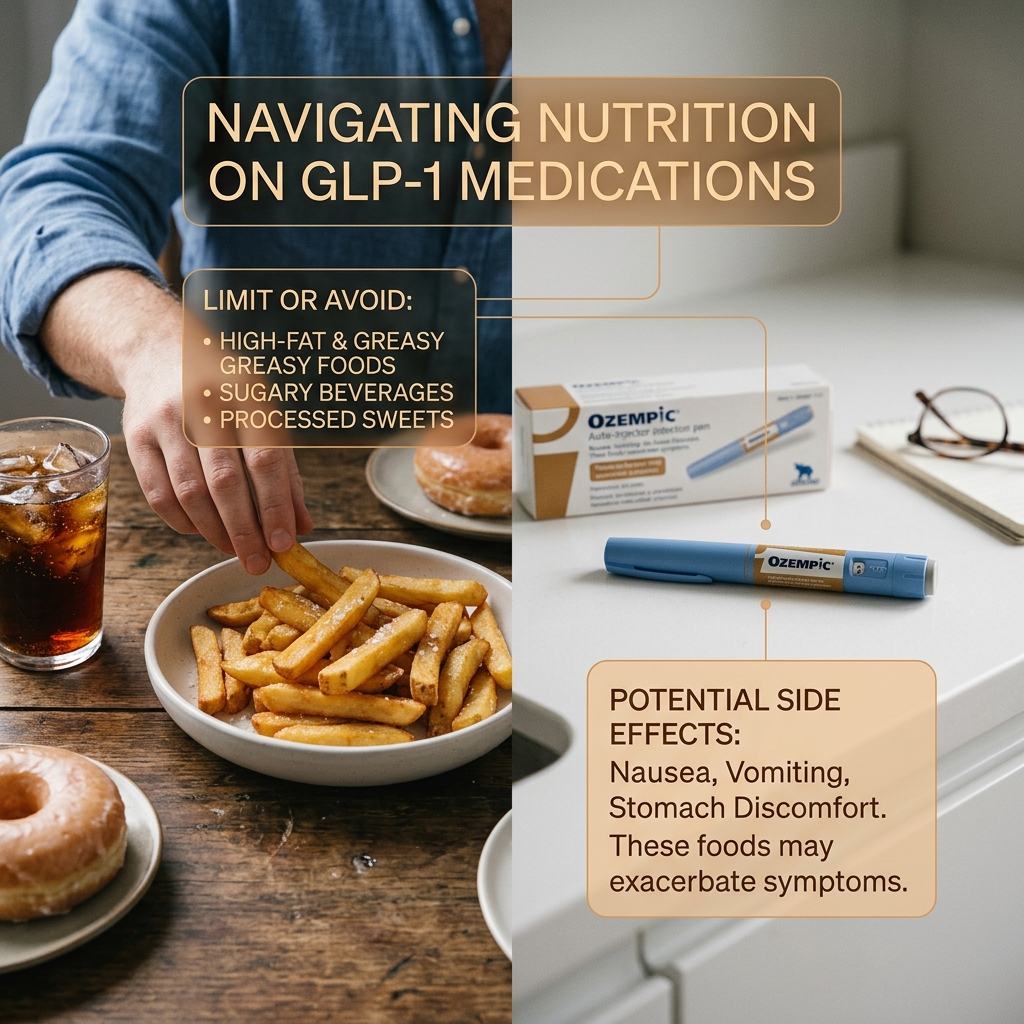
- Core Mechanism: Semaglutide acts as a GLP-1 receptor agonist, significantly slowing gastric emptying. Food remains in the stomach for an extended duration, making careful dietary selection essential to prevent severe symptoms like acid reflux, nausea, and vomiting.
- Primary Trigger Foods: High-fat, greasy, deep-fried meals, and carbonated beverages are the leading causes of acute nausea, vomiting, sulfur burps, and acid reflux.
- Dose Escalation Warnings: Gastrointestinal side effects are most prevalent during the initial dose-escalation phase of GLP-1 therapy. Proactively modifying your diet before each dose increment is a highly effective clinical strategy to mitigate transient side effects.
- Clinical Trial Reality: The STEP 1 trial reported that 72.9% of participants experienced gastrointestinal side effects (mostly mild-to-moderate), but only 4.3% discontinued treatment, indicating high manageability.
- Proactive Strategies: Consuming smaller, fractionated meals, chewing food to a liquid consistency, separating fluids from solid foods, and avoiding raw cruciferous vegetables protect the mucosal lining of the slow-moving stomach.
- Access & Affordability: Compounded semaglutide from U.S. licensed pharmacies provides a clinically identical molecule at a flat rate of $146/mo, ensuring affordable access to GLP-1 therapy.
Introduction: The GLP-1 Gastrointestinal Paradigm
The introduction of glucagon-like peptide-1 (GLP-1) receptor agonists, including brand-name Ozempic® and Wegovy® and compounded semaglutide, has fundamentally transformed the landscape of clinical weight management and metabolic medicine. By mimicking the actions of the endogenous GLP-1 hormone, semaglutide addresses the deep physiological roots of chronic obesity, insulin resistance, and cardiovascular risk. The clinical trials supporting these therapies—such as the landmark STEP 1 study published in the New England Journal of Medicine—demonstrate weight loss outcomes that were previously only achievable through surgical intervention. However, because semaglutide acts directly on the endocrine and gastrointestinal systems, it introduces significant changes to how the human body processes food.
When starting semaglutide therapy, patients frequently encounter a range of gastrointestinal (GI) side effects. These reactions result from the medication’s primary mechanisms of action. While effective for weight loss, they require a parallel adjustment in dietary habits. Failing to adapt your eating patterns to the physiological realities of GLP-1 therapy can lead to severe discomfort, including persistent nausea, vomiting, gastroesophageal reflux, and bloating. This guide provides a detailed, evidence-based exploration of trigger foods, the physiological reasons behind these recommendations, and a clinical eating protocol designed to protect your gastrointestinal system and maximize your long-term success.
Adhering to a GI protection protocol is critical for ensuring treatment adherence. Clinical data indicates that while gastrointestinal side effects are common, they are highly manageable and typically transient. By understanding how semaglutide alters the rate of digestion, how specific food categories interact with these changes, and how to structure your daily nutritional intake, you can successfully navigate the adaptation phase and sustain your progress toward metabolic wellness.
The Core Physiological Mechanism: Why Food Choice Matters on GLP-1s
To understand the clinical necessity of dietary modification while taking semaglutide, one must examine the specific physiological pathways altered by GLP-1 receptor agonists. Semaglutide is a modified peptide with 94% sequence homology to human GLP-1, engineered with structural changes that protect it from enzymatic degradation, extending its half-life to approximately seven days. This prolonged activity leads to continuous stimulation of GLP-1 receptors, which are widely distributed throughout the body. The two primary mechanisms responsible for the interaction between food choices and side effects are delayed gastric emptying and central nervous system regulation of nausea.
Delayed Gastric Emptying and Gastric Stasis
The most immediate physical effect of semaglutide is a profound delay in gastric emptying. Under normal circumstances, the stomach empties food within 60 to 120 minutes. Under the influence of semaglutide, this rate of transit is significantly reduced, creating a functional gastroparesis-like state. While this delay is beneficial for weight loss because it maintains mechanical fullness and prolongs satiety, it means that food remains in your stomach for much longer. If the meal consists of foods that are difficult to break down—such as high-fat lipids or dense, complex carbohydrates—the stomach must work much harder to process them, leading to fermentation, bloating, and sulfur burps.
Central Appetite Regulation and Nausea Thresholds
Semaglutide crosses the blood-brain barrier to act directly on the hypothalamus and the area postrema in the brainstem. The hypothalamus regulates hunger and energy expenditure, while the area postrema regulates nausea and vomiting. By continuously stimulating GLP-1 receptors in the hypothalamus, semaglutide lowers your appetite setpoint, making you feel satisfied with less food. However, if you attempt to eat past this point of satisfaction, you will rapidly overwhelm the stomach's physical capacity, triggering immediate, intense nausea. The threshold at which the body transitions from feeling full to feeling nauseated is dramatically lowered.
Smooth Muscle Relaxation and Lower Esophageal Sphincter Function
GLP-1 receptor agonists cause smooth muscle relaxation along the digestive wall, including the lower esophageal sphincter (LES)—the valve between the esophagus and stomach. When the LES is relaxed and the stomach remains full of food due to delayed gastric emptying, the physical barrier against acid reflux is compromised. Any factor that increases pressure within the stomach (like large meals or carbonated beverages) or increases acidity (like spicy or acidic foods) will cause gastric juices to flow backward into the esophagus, leading to heartburn and reflux.
Primary Food Categories to Avoid on Semaglutide
To mitigate the risk of gastrointestinal side effects and protect the mucosal lining of your digestive tract, specific food categories should be strictly avoided or minimized during GLP-1 therapy.
1. High-Fat, Greasy, and Deep-Fried Foods
High-fat and deep-fried foods, such as French fries, fried chicken, bacon, sausage, fatty cuts of beef, heavy cream, and pastries, are the most common triggers for severe nausea, vomiting, and diarrhea. Digesting fats triggers the release of cholecystokinin (CCK), which naturally slows gastric emptying to allow for lipid absorption. Combining fat-induced slowing with the pharmacological effects of semaglutide creates a "double-slowdown" effect. Transit of food through the stomach is brought to a near-halt. As fatty meals remain trapped in the stomach, they irritate the gastric mucosa and trigger nausea. Furthermore, if these fats pass into the small intestine in a large, concentrated bolus, they can overwhelm digestive capacity, resulting in steatorrhea—loose, greasy, foul-smelling stools accompanied by painful cramping.
2. High-Sugar and Ultra-Processed Foods
Refined sugars and ultra-processed foods—including candy, cakes, cookies, sodas, white bread, and pre-packaged snacks—should be minimized. Consuming simple carbohydrates causes rapid increases in blood glucose, directly counteracting semaglutide's therapeutic goals. High-sugar foods also cause acute GI distress through osmotic mechanisms. When a meal containing a high concentration of simple sugars enters the small intestine, it draws water out of surrounding blood vessels to dilute the sugar. This sudden influx of water causes rapid distension of the intestinal wall, leading to cramping and osmotic diarrhea. Additionally, sugar alcohols (like sorbitol or maltitol) in processed foods are fermented by gut bacteria, resulting in painful gas and bloating.
3. Carbonated Beverages
Carbonated beverages—including sparkling water, sodas, seltzers, and beer—are major sources of gas and bloating. Carbonation introduces pressurized carbon dioxide gas directly into your digestive system. Under the influence of semaglutide, this gas becomes trapped in the slow-moving stomach, stretching the gastric walls and triggering immediate bloating, fullness, and discomfort. The pressure also forces the relaxed lower esophageal sphincter open, causing acid, gas, and partially digested food to reflux into the esophagus. Choose flat, non-carbonated beverages instead.
4. Spicy and Highly Acidic Foods
Spicy foods containing capsaicin and highly acidic foods (like citrus, tomatoes, and vinegar) are direct irritants to the gastrointestinal lining. Because gastric emptying is delayed, these substances remain in contact with the gastric mucosa for several hours, causing irritation, inflammation, and localized burning (gastritis). Because semaglutide relaxes the lower esophageal sphincter, this highly acidic, spicy mixture can easily travel back up into the esophagus, resulting in severe, burning chest pain (heartburn).
5. Alcohol
Alcoholic beverages present multiple safety risks when combined with semaglutide. Alcohol is a direct chemical irritant to the stomach lining, potentially causing acute gastritis, nausea, and vomiting. It also impairs the liver's ability to release glucose (gluconeogenesis), increasing the risk of hypoglycemia (low blood sugar) when combined with semaglutide. Additionally, alcohol is a diuretic. Because semaglutide reduces the sensation of thirst, patients are already at risk for dehydration, which can worsen headaches, dizziness, and fatigue.
6. Hard-to-Digest Raw Vegetables and High-FODMAP Foods
While fiber is essential for preventing constipation, consuming large amounts of raw, fibrous vegetables (like broccoli, cauliflower, cabbage, and kale) or high-FODMAP foods (like onions, garlic, beans, and lentils) can cause severe bloating. In a slowed digestive system, these complex carbohydrates spend a prolonged period in the stomach and colon, allowing bacteria to ferment them and produce large volumes of gas. To prevent this, vegetables should be thoroughly cooked rather than eaten raw. Cooking breaks down tough cellulose fibers, making them much easier to process.
Get Compounded Semaglutide from Licensed U.S. Pharmacies — $146/mo
Every weight loss program includes U.S. licensed provider evaluation and compounded semaglutide filled by state-licensed 503A compounding pharmacies. All-inclusive, transparent pricing.
Start Your AssessmentThe Proactive GI Protection Protocol: Clinical Eating Strategies
Minimizing side effects on semaglutide requires a fundamental shift in how you eat. Implementing these clinical strategies will protect your gastrointestinal system and ensure a comfortable treatment experience.
1. Eat Small, Fractionated Meals
Consuming a large volume of food stretches the stomach beyond its comfortable limit, triggering immediate nausea and reflux. Instead, eat four to six small, nutrient-dense meals throughout the day, each about the size of a fist. This approach prevents the stomach from becoming overly full, allowing it to process food more efficiently and reducing indigestion.
2. Chew Thoroughly and Eat Slowly
Mechanical digestion begins in the mouth. Chewing food to a smooth, liquid-like consistency reduces the workload on your stomach and allows food particles to pass through the pyloric sphincter more rapidly. Eating slowly also allows satiety hormones to register fullness before you have consumed too much food, preventing accidental overeating.
3. Separate Fluids from Solid Foods
Drinking large amounts of fluid during a meal can cause the stomach to fill up too quickly, triggering reflux or vomiting. Separate fluid intake from meals: sip flat water throughout the day, but stop drinking 15 minutes before a meal and wait 30 minutes after eating before resuming fluid intake. This simple habit can dramatically reduce post-meal bloating.
4. Prioritize Lean Proteins and Soluble Fiber
To support healthy weight loss and preserve muscle mass, prioritize lean, easily digestible proteins like skinless chicken, turkey, white fish, tofu, egg whites, and low-fat Greek yogurt. For fiber, focus on soluble fiber (oats, peeled sweet potatoes, cooked carrots). Soluble fiber absorbs water to form a gel, softening stools and regulating bowel movements without producing gas.
5. Avoid Eating Close to Bedtime
Lying down with food in your stomach triggers gastroesophageal reflux and morning nausea. Do not eat solid food within three to four hours of going to sleep. This gives your slow-moving stomach enough time to empty its contents, preventing stomach acid from escaping through the relaxed lower esophageal sphincter.
Safe Swaps: Dietary Alternatives on Semaglutide
To help you navigate your daily food choices, the table below outlines common trigger foods to avoid and replaces them with safe, nutrient-dense, and GI-friendly alternatives.
| Food Category | Avoid (High GI Stress) | Choose (GI Safe & Supportive) |
|---|---|---|
| Proteins | Ribeye steak, bacon, fried chicken, sausage, greasy burgers | Chicken breast, turkey, cod, tilapia, tofu, egg whites |
| Vegetables | Raw broccoli, raw cauliflower, raw cabbage, raw onions | Steamed carrots, cooked zucchini, spinach, peeled cucumber |
| Carbohydrates | Donuts, white bread, pastries, sugary cereals, white rice | Oatmeal, quinoa, sweet potatoes (peeled and cooked), brown rice |
| Beverages | Carbonated sodas, beer, sweet cocktails, sparkling water | Flat water, herbal teas (ginger/peppermint), electrolyte water |
| Dairy | Heavy cream, whole milk, high-fat cheeses, ice cream | Low-fat Greek yogurt, cottage cheese, almond milk |
| Fats & Oils | Butter, margarine, lard, heavy vegetable oils, deep-fry batter | Small amounts of avocado oil, extra virgin olive oil (in moderation) |
Clinical Trial Context: Understanding the STEP 1 Data
To understand the safety profile of semaglutide, we can look at the clinical data from the landmark STEP 1 trial (Semaglutide Treatment Effect in People with obesity), published in the New England Journal of Medicine. This randomized, double-blind, placebo-controlled trial evaluated the efficacy and safety of once-weekly semaglutide 2.4 mg in adults with overweight or obesity. The findings provide important clinical context for the gastrointestinal side effects associated with the drug.
The STEP 1 trial reported the following key statistics regarding gastrointestinal adverse events:
- Overall Incidence: Gastrointestinal side effects were reported by 72.9% of participants in the semaglutide group, compared to 47.1% in the placebo group.
- Most Common Symptoms: The most frequent symptoms in the semaglutide group were nausea (43.9% vs. 16.1% for placebo), diarrhea (29.7% vs. 15.9% for placebo), vomiting (24.5% vs. 6.3% for placebo), and constipation (24.2% vs. 11.1% for placebo).
- Severity and Timing: Over 98% of GI events were classified as mild to moderate. These side effects occurred primarily during the initial dose-escalation phase and resolved as the body adapted to the medication.
- Discontinuation Rates: Despite these side effects, only 4.3% of participants permanently discontinued the treatment due to these events, demonstrating that the side effects are highly manageable.
- Weight Loss Independence: Statistical analysis showed that the weight loss achieved by patients on semaglutide was largely independent of whether they experienced side effects, proving that the drug's metabolic and appetite-suppressing mechanisms are active even in the absence of side effects.
Because side effects are most common during the dose-escalation phase, adopting a GI-supportive diet before increasing your dosage can significantly reduce symptom severity.
Clinical Management: When Side Effects Require Medical Attention
While mild to moderate nausea, reflux, and constipation are normal parts of the body adapting to semaglutide, certain symptoms require immediate evaluation by your medical provider. It is vital to distinguish between transient, food-triggered side effects and serious medical conditions.
Acute Pancreatitis
Semaglutide carries a warning for acute pancreatitis, an inflammatory condition of the pancreas. While rare, it is a serious medical event that requires immediate hospitalization and clinical evaluation. The hallmark symptom of acute pancreatitis is severe, constant, and sharp abdominal pain that typically radiates directly to your back, often accompanied by persistent vomiting, fever, and a rapid heart rate. If you experience severe abdominal pain that does not respond to standard gastrointestinal management or dietary modifications, seek emergency medical care immediately.
Severe Dehydration and Kidney Injury
Persistent vomiting and diarrhea can rapidly deplete the body of essential fluids and electrolytes, leading to severe dehydration. Because semaglutide reduces the central drive to drink fluids, patients may not realize how dehydrated they are becoming until symptoms present. Chronic, severe dehydration can lead to acute kidney injury (AKI) and other systemic complications. Symptoms of severe dehydration include dizziness, orthostatic hypotension, confusion, extreme dry mouth, dark-colored urine, or a significant decrease in urination volume. If you cannot keep fluids down for more than 24 hours, contact your healthcare provider immediately.
Gallbladder Disease
Rapid weight loss increases the risk of gallbladder issues, including gallstones and gallbladder inflammation. Semaglutide also slows down gallbladder motility, contributing to bile stasis. Symptoms include sudden, severe pain in the upper right quadrant of your abdomen, pain after eating fatty meals, fever, and yellowing of the skin or eyes (jaundice). If you experience these symptoms, contact your provider.
Conclusion: Integrating Diet and GLP-1 Therapy
Undergoing semaglutide therapy is a highly effective clinical path to achieving significant weight loss and reversing metabolic dysfunction. However, the medication requires an active partnership with lifestyle choices. The physiological changes induced by GLP-1 receptor agonists mean that your body will no longer tolerate high-fat, sugary, carbonated, or highly processed foods without protesting in the form of gastrointestinal distress.
By understanding the mechanisms of delayed gastric emptying and smooth muscle relaxation, you can proactively adapt your diet. Focusing on lean proteins, easily digestible soluble fiber, and flat hydration while implementing mindful eating techniques and smaller portions will protect your gastrointestinal system. This protection ensures comfort and safety while maximizing the long-term efficacy of your treatment, setting the foundation for healthy, sustainable eating habits that will support your metabolic wellness long after you reach your goal weight.
Additionally, it is important to remember that dietary adjustments are not permanent restrictions but rather tools to support your body's adaptation. As your system becomes accustomed to GLP-1 therapy, many patients find they can reintroduce small amounts of previously problematic foods. The primary objective is to maintain a supportive, nutrient-dense diet that prioritizes your gastrointestinal comfort and long-term metabolic health.
Frequently Asked Questions
High-fat foods cause nausea because they delay gastric emptying. Digestion of lipids triggers cholecystokinin (CCK), which slows stomach emptying. Since semaglutide also slows stomach transit, combining them creates a double-slowdown. Food remains in the stomach longer, causing fermentation, reflux, and intense nausea.
It is recommended to avoid carbonated beverages. Carbonation introduces carbon dioxide gas. In a slowed stomach, this gas becomes trapped, stretching the gastric walls. This causes bloating, nausea, and forces the relaxed lower esophageal sphincter open, resulting in acid reflux.
Spicy foods should be avoided. Capsaicin is a direct irritant to the GI lining. Because gastric emptying is delayed, spicy substances remain in contact with your stomach lining for hours, causing gastritis and burning pain. They can also easily reflux, causing severe heartburn.
Refined carbohydrates like white bread, pastries, pasta, and sugary sodas should be cut. They digest rapidly, causing blood sugar spikes. High sugar concentrations also draw water into the intestines via osmosis, causing cramping, bloating, and diarrhea.
Fiber helps or hurts depending on the type. Soluble fiber (oats, cooked carrots) prevents constipation and diarrhea by absorbing water. Insoluble fiber (raw broccoli, cabbage) can accumulate and ferment in the slowed stomach, causing bloating and gas. Focus on cooked vegetables and soluble fiber.
Coffee is allowed but should be consumed cautiously. Caffeine stimulates bowel movements, helping with constipation. However, coffee is highly acidic, which can irritate the stomach lining and worsen reflux and nausea. It is also a diuretic, increasing dehydration risk. Drink in moderation.
Start Compounded Semaglutide at $146/mo — Licensed Providers, Licensed Pharmacies
Complete your 5-minute online assessment, get evaluated by a U.S. licensed provider within 24 hours, and receive your compounded semaglutide from a state-licensed 503A pharmacy — shipped directly to your door.
Get Started TodayClinical References & Sources
- Wilding, J. P. H., Bateman, A. H., et al. (2021). Once-weekly semaglutide in adults with overweight or obesity. New England Journal of Medicine, 384(11), 989-1002. NEJM Study
- U.S. Food and Drug Administration. (2026). FDA Drug Shortages Database. FDA Shortages Log
- National Institutes of Health. (2025). Clinical trials database for semaglutide. ClinicalTrials.gov (NCT03548935)