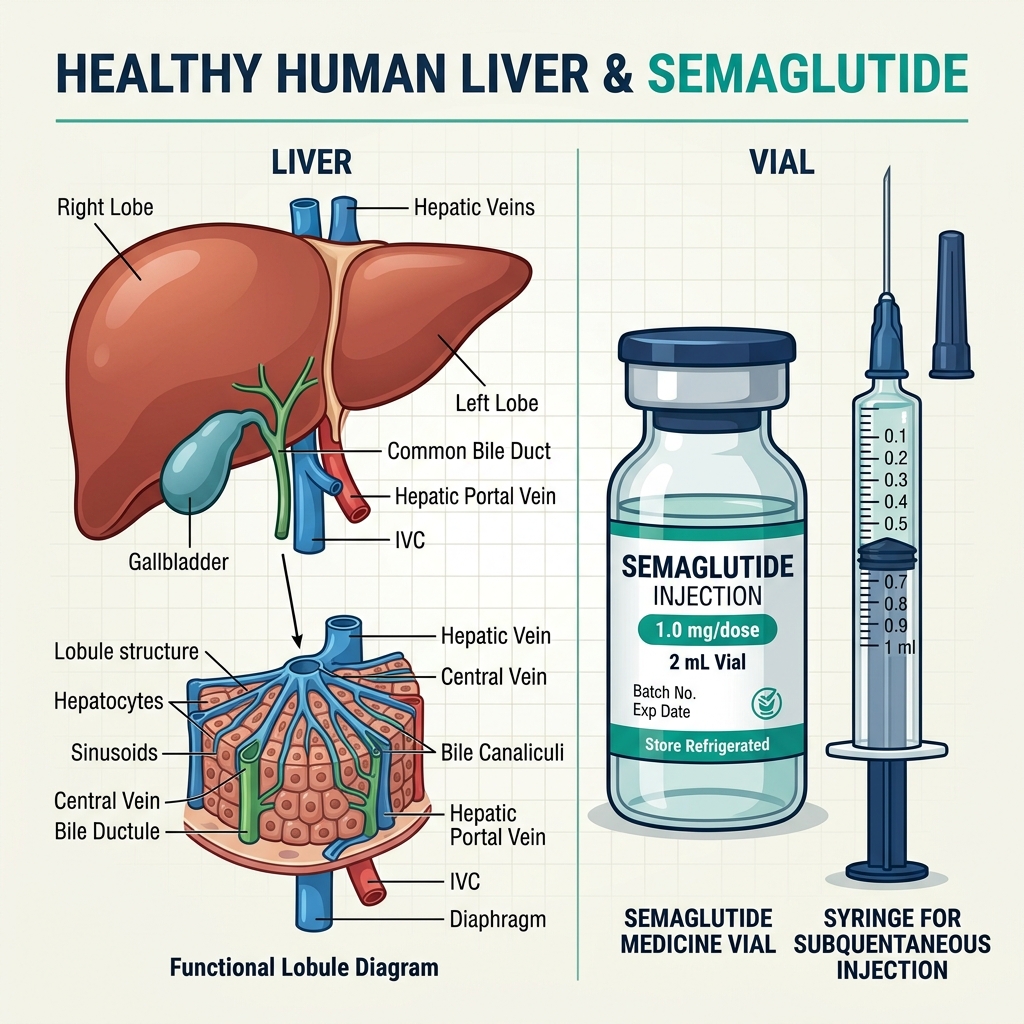
- Terminology Transition: The medical community has transitioned from using NAFLD and NASH to MASLD and MASH. This shift highlights metabolic dysfunction as the primary driver of fatty liver disease while removing stigmatizing language.
- Biopsy-Proven Benefits: In the landmark Phase 3 ESSENCE trial (2025), weekly semaglutide 2.4 mg met both primary endpoints, demonstrating significant MASH resolution and, crucially, a ≥1-stage improvement in liver fibrosis.
- Indirect Physiological Pathways: Because hepatocytes (liver cells) lack GLP-1 receptors, semaglutide targets hepatic pathology indirectly. It works by reducing circulating free fatty acids, improving insulin sensitivity, and lowering systemic inflammation.
- Halting Fibrosis Progression: Halting and reversing liver fibrosis (scarring) is the most critical clinical goal. Regression of scar tissue prevents the development of irreversible cirrhosis, portal hypertension, liver failure, and liver transplants.
- Symptom and Biomarker Timelines: Patients typically see liver enzymes (ALT/AST) drop within 4 to 12 weeks, followed by a significant decrease in liver fat fraction by week 24, and eventual fibrosis regression after 48 to 72 weeks of continuous therapy.
Introduction: The Silent Epidemic of Steatotic Liver Disease
Metabolic dysfunction-associated steatotic liver disease (MASLD)—previously known as non-alcoholic fatty liver disease (NAFLD)—is rapidly becoming the leading cause of chronic liver disease worldwide. Affecting an estimated 30% of the global adult population, it represents a silent epidemic. Because the early stages of liver fat accumulation rarely cause noticeable symptoms, millions of individuals are unaware that lipid deposition is actively promoting cellular damage and progressive scarring within their liver tissue.
Historically, therapeutic options for fatty liver disease were limited to lifestyle interventions, weight loss, and off-label medications with modest efficacy. However, the introduction of glucagon-like peptide-1 (GLP-1) receptor agonists, specifically semaglutide, has fundamentally transformed the metabolic treatment landscape. While initially developed to treat type 2 diabetes and obesity, clinical trials have revealed that semaglutide exerts profound, direct, and indirect protective effects on the liver. The landmark Phase 3 ESSENCE trial (Sanyal et al., 2025) has confirmed that weekly semaglutide 2.4 mg can resolve active liver inflammation and successfully reverse biopsy-proven liver fibrosis.
Understanding how semaglutide targets hepatic pathology requires examining the metabolic drivers of the disease, the biological pathways of liver injury, and the systemic endocrine actions of GLP-1 therapy. For a foundation in how these therapies operate systemically, read our complete guide to semaglutide.
The Terminology Paradigm Shift: From NAFLD/NASH to MASLD/MASH
In mid-2023, a global consensus of hepatology societies, patient advocacy groups, and clinical researchers announced a major update to the nomenclature of fatty liver disease. The term Non-Alcoholic Fatty Liver Disease (NAFLD) was replaced with Metabolic Dysfunction-Associated Steatotic Liver Disease (MASLD), and Non-Alcoholic Steatohepatitis (NASH) was renamed Metabolic Dysfunction-Associated Steatohepatitis (MASH).
This transition was driven by two primary clinical and human considerations:
- Removing Stigmatizing and Negative Language: The prefix "non-alcoholic" was problematic because it defined a metabolic disease by what it was not. Additionally, the word "fatty" carries a negative social stigma that can act as a barrier to patient engagement, clinical trial enrollment, and early diagnosis.
- Emphasizing the Metabolic Drivers: The new terminology directly links the disease to its physiological causes. Under the updated criteria, a diagnosis of MASLD requires the presence of hepatic steatosis (liver fat accumulation) alongside at least one of five cardiometabolic risk factors, such as abdominal obesity, insulin resistance or type 2 diabetes, systemic hypertension, hypertriglyceridemia, or low HDL cholesterol.
Steatotic Liver Disease (SLD): The broad umbrella term for all conditions characterized by fat accumulation in the liver cells.
MASLD (formerly NAFLD): Hepatic steatosis (liver fat > 5%) in the presence of at least one cardiometabolic risk factor and in the absence of significant alcohol consumption.
MASH (formerly NASH): The progressive inflammatory stage of MASLD, defined by fat accumulation accompanied by hepatocyte ballooning, lobular inflammation, and progressive cellular damage. MASH is the driver of progressive liver fibrosis.
Metabolic Dysfunction-Associated Cirrhosis: The final stage of MASH, where extensive scarring destroys the liver's architecture, leading to portal hypertension and liver failure.
This naming update clarifies that fatty liver disease is not merely an isolated hepatic condition, but a major hepatic manifestation of systemic metabolic syndrome. This directly aligns with the therapeutic profile of GLP-1 receptor agonists, which are designed to address insulin resistance, inflammation, and visceral adiposity simultaneously.
The Pathology of Liver Fat: How Steatosis Progresses to Fibrosis
The progression from simple liver fat accumulation (steatosis) to advanced liver disease follows a well-characterized pathological sequence known as the "lipotoxic model" of liver injury:
1. Hepatic Steatosis (Fat Accumulation)
Under healthy conditions, the liver processes lipids efficiently, balancing the uptake of free fatty acids (FFAs) with lipid oxidation and secretion. However, in states of chronic energy surplus, systemic insulin resistance impairs the body's ability to store lipids safely within subcutaneous adipose tissue. As a result, lipids spill over into non-adipose organs, primarily the visceral cavity and the liver. This ectopic fat deposition in hepatocytes is the hallmark of MASLD.
2. Lipotoxicity, Hepatocyte Ballooning, and Inflammation
As triglyceride levels rise within hepatocytes, the cells' capacity to store fat is overwhelmed. Excess intracellular lipids undergo lipid peroxidation, generating reactive oxygen species (ROS) that damage cell membranes and mitochondria. This state of lipotoxicity triggers hepatocyte ballooning—a form of cellular degeneration where the hepatocytes swell, lose their internal structural integrity, and undergo cell death (apoptosis). In response to this cell death, immune cells infiltrate the liver tissue, causing **lobular inflammation**.
3. Hepatic Stellate Cell Activation and Fibrosis
The combination of cell injury, oxidative stress, and inflammatory signaling activates specialized resident cells called **hepatic stellate cells (HSCs)**. In a healthy liver, stellate cells remain quiescent and store vitamin A. Once activated by inflammatory cytokines (such as TGF-beta and TNF-alpha), they transdifferentiate into proliferative, contractile myofibroblasts. These activated cells produce excessive amounts of extracellular matrix, primarily collagen, laying down scar tissue. This scarring is **fibrosis**.
If the inflammatory pressure is not resolved, the fibrous bands expand and bridge portal tracts, leading to **cirrhosis**. This destroys the vascular architecture of the liver, restricting blood flow and causing portal hypertension, ascites, and hepatic encephalopathy, which eventually requires liver transplantation.
The Physiological Mechanism: How Semaglutide Targets the Liver
A key biological detail of semaglutide therapy in liver disease is the **hepatocyte GLP-1 receptor paradox**. Molecular assays have demonstrated that hepatocytes (liver cells) do not express GLP-1 receptors. Consequently, semaglutide cannot bind directly to liver cells to stimulate lipid clearance or reduce inflammation. Instead, semaglutide resolves MASH and improves fibrosis through several indirect, systemic metabolic pathways:
Systemic Insulin Sensitization
By promoting weight loss and visceral fat reduction, semaglutide reverses adipose tissue insulin resistance. This restores insulin's ability to suppress lipolysis, significantly reducing the release of free fatty acids (FFAs) into the bloodstream.
Reduction of Free Fatty Acids
Reducing circulating free fatty acids cuts off the primary source of liver fat. Hepatocytes are no longer overwhelmed by fat influx, which reduces lipotoxic injury, oxidative stress, and hepatocyte ballooning.
Lowering Systemic Inflammation
Semaglutide directly reduces systemic inflammatory markers, including high-sensitivity C-reactive protein (hsCRP) and tumor necrosis factor-alpha (TNF-alpha). Lowering these cytokines prevents the activation of hepatic stellate cells.
This multi-targeted systemic mechanism is what makes semaglutide highly effective for treating MASH. By lowering blood sugar, promoting fat loss, reducing inflammation, and correcting the metabolic dysfunction that causes liver injury, semaglutide addresses the root causes of the disease rather than just its symptoms. These vascular and metabolic actions also support heart health, which we discuss in detail in our article on GLP-1 cardiovascular health benefits.
Compounded Semaglutide Program — Flat-Rate $79/mo
Target metabolic dysfunction and support liver health with the identical active pharmaceutical ingredient evaluated in the ESSENCE trial. Licensed providers, 503A pharmacies, flat-rate pricing.
Start Online AssessmentClinical Evidence: The Phase 3 ESSENCE Trial (2025)
The therapeutic efficacy of semaglutide in treating metabolic liver disease was definitively established by the landmark Phase 3 **ESSENCE trial** (Sanyal et al., 2025), published in the New England Journal of Medicine. This randomized, double-blind, placebo-controlled trial enrolled 1,200 participants with biopsy-confirmed MASH and moderate-to-advanced liver fibrosis (stages F2 and F3), evaluating the efficacy of weekly subcutaneous semaglutide 2.4 mg against placebo.
The ESSENCE trial was designed around two primary endpoints, both measured by liver biopsies at baseline and week 72:
- Resolution of MASH: The disappearance of hepatocyte ballooning and lobular inflammation, without any worsening of liver fibrosis.
- Fibrosis Improvement: A decrease of at least one stage in biopsy-confirmed liver fibrosis, without any worsening of MASH pathology.
The trial met both primary endpoints with high statistical significance. Weekly semaglutide 2.4 mg demonstrated clear superiority over placebo, establishing it as a highly effective pharmacotherapy for metabolic liver injury.
Comparison with Phase 2 Evidence (Newsome et al., 2021)
The ESSENCE trial built upon earlier evidence from a Phase 2 trial published by Newsome et al. in 2021. In that 72-week study of 320 patients, semaglutide 0.4 mg achieved MASH resolution in 59% of patients (compared to 17% on placebo). However, the Phase 2 trial was not large enough to show a statistically significant difference in fibrosis stage improvement.
By extending the study population and incorporating a larger cohort, the Phase 3 ESSENCE trial confirmed that the metabolic improvements driven by semaglutide 2.4 mg translate into actual regression of liver scar tissue (fibrosis improvement) over 72 weeks. This is a critical clinical milestone that halts the progression toward end-stage liver disease.
The Clinical Significance of Fibrosis Reversal
In hepatology, reversing liver fibrosis (scarring) is the ultimate therapeutic goal. While resolving liver fat (steatosis) and inflammation is important, it is the accumulation of scar tissue that determines long-term clinical outcomes. Halting or reversing this scarring is critical for several key reasons:
| Fibrosis Stage | Pathology Description | Clinical Risk Status | Impact of Semaglutide (ESSENCE) |
|---|---|---|---|
| F0 | No fibrosis (normal liver architecture) | Baseline/Healthy | Prevents lipid-induced injury |
| F1 | Mild portal or perisinusoidal fibrosis | Low clinical risk | Accelerates resolution of early scarring |
| F2 | Moderate periportal and perisinusoidal fibrosis | Elevated clinical risk | Promotes regression of active fibrogenesis |
| F3 | Advanced bridging fibrosis (scarring connects vessels) | High risk of cirrhosis | Halts progression, drives stage regression |
| F4 | Cirrhosis (extensive scarring, structural distortion) | Critical risk of liver failure | Reduces decompensation risk in early stage |
By helping patients achieve a ≥1-stage improvement in liver fibrosis, semaglutide helps transition them from high-risk categories (F3/F2) back to stages of lower clinical risk (F1/F0). Reversing advanced fibrosis reduces portal pressure, preserves liver function, prevents hepatocellular carcinoma (HCC), and lowers the likelihood of liver-related mortality or the need for transplantation.
Clinical Guidance: Dietary and Lifestyle Protocols for MASLD/MASH
While semaglutide is a highly effective tool for resolving MASH and reversing fibrosis, metabolic liver recovery is most successful when pharmacotherapy is combined with a targeted lifestyle and dietary protocol. This combination addresses lipotoxicity, preserves lean muscle mass, and accelerates the mobilization of hepatic fat.
1. Dietary Interventions: The Hepatic Recovery Protocol
The primary dietary goal in MASLD/MASH recovery is reducing liver fat synthesis. The liver synthesizes fat through a process called de novo lipogenesis, which is highly sensitive to simple sugars, refined carbohydrates, and saturated fats. Key dietary recommendations include:
- Adopt a Mediterranean-Style Diet: Focus on whole grains, vegetables, legumes, nuts, olive oil (high in monounsaturated oleic acid), and fatty fish rich in omega-3 fatty acids (which help lower liver triglycerides). For detailed guidance, see our ideal semaglutide diet plan.
- Strictly Limit Fructose Intake: Fructose is metabolized exclusively in the liver, where it directly fuels de novo lipogenesis and generates uric acid, which drives mitochondrial oxidative stress. Avoid high-fructose corn syrup, sweetened beverages, and ultra-processed foods.
- Ensure Adequate Protein Intake: Consuming sufficient protein (1.2 to 1.5 grams per kilogram of body weight) is crucial. This helps prevent the loss of lean muscle mass (sarcopenia) that can occur during rapid weight loss on semaglutide.
2. Physical Exercise: Improving Peripheral Insulin Sensitivity
Exercise is a key component of liver recovery, working independently of weight loss to reduce hepatic lipid accumulation. A comprehensive exercise plan should include:
- Resistance Training: Perform progressive resistance exercises 2 to 3 times per week. Muscle tissue acts as the primary reservoir for glucose disposal; increasing muscle mass and strength improves peripheral insulin sensitivity, reducing the delivery of fat to the liver.
- Aerobic Exercise: Aim for at least 150 minutes of moderate-intensity aerobic exercise per week. Aerobic training enhances mitochondrial fatty acid oxidation in skeletal muscle and liver tissue, accelerating hepatic fat clearance.
Symptom and Biomarker Timelines for Hepatic Improvement
Hepatic recovery on semaglutide follows a predictable clinical timeline. Understanding this progression helps patients and providers monitor treatment efficacy and maintain realistic expectations:
- Weeks 4 to 12 (Biochemical Stage): Early improvements are visible in blood tests. Liver enzymes, specifically alanine aminotransferase (ALT) and aspartate aminotransferase (AST), begin to decrease. This indicates that liver cell injury is subsiding as systemic insulin resistance starts to improve.
- Weeks 12 to 24 (Steatosis Resolution Stage): Significant reductions occur in liver fat fraction. This can be monitored using non-invasive imaging techniques, such as MRI-PDFF (proton density fat fraction) or hepatic ultrasound. Many patients achieve a relative reduction in liver fat of 30% to 50% during this phase.
- Weeks 48 to 72+ (Structural Remodeling Stage): Resolution of MASH (disappearance of hepatocyte ballooning and lobular inflammation) and regression of liver fibrosis become measurable. Structural liver remodeling is a slow process that requires sustained suppression of lipotoxicity and inflammation. Fibrosis regression can be monitored using transient elastography (FibroScan) or follow-up liver biopsy.
Frequently Asked Questions
In mid-2023, global hepatology societies updated the terminology of fatty liver disease. Non-Alcoholic Fatty Liver Disease (NAFLD) was renamed Metabolic Dysfunction-Associated Steatotic Liver Disease (MASLD), and Non-Alcoholic Steatohepatitis (NASH) was renamed Metabolic Dysfunction-Associated Steatohepatitis (MASH). This change removes stigmatizing language and directly links the condition to its primary cause: metabolic dysfunction. Under the new guidelines, diagnosis requires the presence of liver fat alongside at least one cardiometabolic risk factor, such as insulin resistance, obesity, hypertension, or dyslipidemia.
Although hepatocytes (liver cells) do not express GLP-1 receptors, semaglutide reduces liver fat and inflammation through indirect systemic mechanisms. First, it promotes weight loss and visceral fat reduction, which reverses insulin resistance. Second, it reduces the release of circulating free fatty acids (FFAs) from adipose tissue, cutting off the primary fat supply to the liver. Third, it reduces systemic inflammatory cytokines (like hsCRP and TNF-alpha), which prevents hepatic stellate cell activation and halts the progression of scarring.
The Phase 3 ESSENCE trial (Sanyal et al., 2025) evaluated weekly semaglutide 2.4 mg over 72 weeks in 1,200 participants with biopsy-confirmed MASH and moderate-to-advanced fibrosis (stages F2 and F3). The trial met both primary endpoints: 37.0% of patients achieved MASH resolution without worsening of fibrosis (compared to 22.5% on placebo), and 34.3% achieved at least a one-stage improvement in liver fibrosis without worsening of MASH (compared to 22.2% on placebo). This confirmed that semaglutide can successfully resolve liver inflammation and reverse scarring.
Yes. Biopsy data from the Phase 3 ESSENCE trial demonstrated that weekly semaglutide 2.4 mg led to a significant, biopsy-proven improvement of at least one stage in liver fibrosis without worsening of steatohepatitis. Reversing fibrosis is a major clinical milestone because it halts the progression toward irreversible cirrhosis, portal hypertension, liver failure, and liver transplantation.
In clinical trials like ESSENCE, the therapeutic dose studied for MASH resolution and fibrosis improvement is weekly subcutaneous semaglutide 2.4 mg. Patients start at a low initiating dose of 0.25 mg weekly and gradually titrate upwards over several months to minimize gastrointestinal side effects (nausea, vomiting, diarrhea). Always follow a personalized titration schedule prescribed by a licensed healthcare provider.
Yes. Compounded semaglutide contains the identical active pharmaceutical ingredient (semaglutide) as brand-name Wegovy and Ozempic, which were evaluated in the clinical trials. While compounded preparations are not individually evaluated by the FDA, they offer a chemically identical therapeutic molecule. Through Losing Weight RX, compounded semaglutide is available for $79/mo flat-rate, offering an affordable option for patients seeking metabolic and hepatic benefits.
Start Compounded Semaglutide at $79/mo — Same Active Ingredient, Proven MASH & Fibrosis Benefits
The Phase 3 ESSENCE trial proved it: semaglutide resolves liver inflammation and improves fibrosis. Get the identical active molecule through Losing Weight RX at a fraction of the brand-name cost.
Get Started TodayClinical References & Sources
- Sanyal, A. J., Newsome, P. N., Kliers, I., et al. (2025). Phase 3 Trial of Semaglutide in Metabolic Dysfunction-Associated Steatohepatitis. New England Journal of Medicine, 392(21), 2089-2099. PubMed Link
- Newsome, P. N., et al. (2021). A placebo-controlled trial of subcutaneous semaglutide in nonalcoholic steatohepatitis. New England Journal of Medicine, 384(12), 1113-1124. PubMed Link
- Rinella, M. E., Lazarus, J. V., Ratziu, V., et al. (2023). A multisociety Delphi consensus statement on new nomenclature for steatotic liver disease. Journal of Hepatology, 79(6), 1542-1556. PubMed Link