- Slowed Transit Mechanism: Semaglutide slows down gastric emptying and intestinal peristalsis. As a result, the colon absorbs more water from the stool, causing it to become dry, hard, and difficult to pass.
- Thirst Signal Suppression: GLP-1 agonists act on the hypothalamus to suppress thirst alongside hunger. Proactive hydration (80–100 oz daily) is essential to prevent chronic dehydration and subsequent constipation.
- Osmotic Laxatives First: Osmotics like Polyethylene Glycol 3350 (MiraLAX) or magnesium oxide are the safest and most effective first-line treatments because they draw water directly into the colon without irritating nerve pathways.
- The Fiber Paradox: Adding large volumes of insoluble fiber (like bran) to a sluggish bowel can cause a physical obstruction. Soluble fiber (like psyllium husk) is preferred but must be consumed with abundant water.
- Titration Warnings: Motility changes are most pronounced during the first 24–72 hours after increasing your dose. Adhering to the standard 4-week titration intervals helps the enteric nervous system adapt.
- Discontinuation Rates: Gastrointestinal side effects are common, but fewer than 2% of patients discontinue GLP-1 therapy due to constipation when proactive clinical management is implemented.
Introduction: The Unspoken Challenge of GLP-1 Therapy
The advent of glucagon-like peptide-1 (GLP-1) receptor agonists like semaglutide (commercially known as Wegovy® and Ozempic®) has fundamentally transformed the clinical approach to chronic weight management and metabolic health. By mimicking the endogenous GLP-1 hormone, semaglutide targets the brain's satiety centers, regulates glucose-dependent insulin secretion, and slows digestion to sustain fullness. However, the same physiological mechanisms that make semaglutide an exceptionally effective weight management tool also alter the baseline function of the gastrointestinal system.
Among the documented side effects, gastrointestinal distress is the most prevalent. While nausea, acid reflux, and diarrhea are widely discussed, semaglutide constipation is one of the most common and persistent complaints among patients. Left unmanaged, severe constipation can lead to complications such as hemorrhoids, anal fissures, and in rare cases, fecal impaction or bowel obstruction. Managing this side effect requires a clear understanding of gut motility and a structured, clinically sound intervention protocol.
This clinical guide explores the underlying physiology of GLP-1-induced constipation, analyzes the data from phase 3 clinical trials, and provides a step-by-step treatment protocol. Our goal is to equip you with the dietary, hydration, lifestyle, and pharmacological tools necessary to restore normal bowel function while continuing your weight loss journey safely.
The Physiology: Why Does Semaglutide Cause Constipation?
To treat constipation on Wegovy or other semaglutide formulations effectively, we must first understand its biological cause. Constipation is not merely an incidental side effect of the medication; it is a direct extension of semaglutide's primary mechanism of action on the digestive tract.
GLP-1 receptors are widely distributed throughout the body. While their activation in the hypothalamus regulates central satiety, their activation in the peripheral organs directly modulates gastrointestinal motor function. In a healthy gut, a coordinated wave of smooth muscle contractions—known as peristalsis—moves digested food through the stomach, small intestine, and large intestine. Semaglutide disrupts this baseline motility through three distinct physiological pathways:
1. Delayed Gastric Emptying
Semaglutide slows down the rate at which the stomach empties its contents into the duodenum. By relaxing the gastric fundus and reducing antral contractions, the medication delays digestion. This prolongs the time food spends in the stomach, which keeps you full longer but slows the downstream entry of chyme into the intestinal tract.
2. Slowed Colonic Transit
GLP-1 receptor activation directly inhibits the electrical activity of the enteric nervous system (ENS) in the small and large intestines. This inhibitory signal slows down the peristaltic waves that propel waste toward the rectum. As colonic transit time increases, the stool moves at a fraction of its normal speed.
3. Excessive Water Extraction
The colon's primary role is to reabsorb water and electrolytes from digested waste. Because semaglutide prolongs the time stool spends in the large intestine, the colonic mucosa has more time to extract moisture. The longer the waste sits, the more dehydrated, compacted, hard, and difficult to pass it becomes.
Additionally, GLP-1 receptor agonists modulate the autonomic nervous system, shifting the balance away from the parasympathetic ("rest and digest") tone that promotes bowel movements. This combination of delayed gastric transit, slowed colonic motility, and increased local water absorption creates the ideal physiological environment for dry, hard stools and severe constipation.
Clinical Data: What Do the Trials Show?
Constipation is a well-documented side effect across all clinical trials evaluating semaglutide. Understanding the data from these large-scale clinical trials helps establish realistic expectations regarding the prevalence, timing, and severity of this side effect.
STEP Clinical Trial Insights
The STEP (Semaglutide Treatment Effect in People with obesity) clinical trial program evaluated the safety and efficacy of once-weekly semaglutide 2.4 mg (Wegovy®) in thousands of adults. Across these trials, gastrointestinal events were the most frequently reported side effects. Let's look at the specific constipation data:
- STEP 1 Trial (Wilding et al., 2021): In this landmark study of 1,961 adults with obesity, 19.6% of patients in the semaglutide group reported constipation, compared to 12.0% in the placebo group.
- STEP 2 Trial (Davies et al., 2021): Evaluating patients with type 2 diabetes and obesity, constipation was reported in 11.7% of patients on the 2.4 mg dose and 12.2% on the 1.0 mg dose, compared to 5.8% for placebo. The lower rate in diabetic patients may relate to underlying diabetic neuropathy or baseline dietary differences.
- STEP 5 Trial (Garvey et al., 2022): Over a 2-year treatment period, constipation remained a common side effect, reported by approximately 21.2% of semaglutide patients, confirming that motility issues can persist beyond the initial months of therapy.
For patients taking semaglutide for type 2 diabetes at lower doses (Ozempic® at 0.5 mg or 1.0 mg), the SUSTAIN trial program reported lower baseline rates of constipation, ranging from 5.0% to 11.5%. This indicates a clear dose-dependent relationship: as the dose of semaglutide increases, the degree of delayed transit and the incidence of constipation rise accordingly.
Discontinuation and Severity
Importantly, the majority of constipation cases reported in the STEP trials were classified as mild to moderate in severity. While gastrointestinal side effects were the leading cause of treatment discontinuation, only a tiny fraction of patients stopped therapy specifically due to constipation. Across the STEP 1 trial, overall discontinuation due to any gastrointestinal side effect was only 4.5% in the semaglutide group compared to 0.8% in the placebo group, with constipation representing a negligible percentage of those withdrawals.
This trial data highlights two key clinical points: first, constipation is a very common side effect that affects roughly 1 in 5 patients taking Wegovy; second, it is highly manageable and rarely severe enough to require discontinuing the medication, provided patients implement proper preventive and therapeutic strategies.
The Semaglutide Titration Timeline & Motility Adaptation
The occurrence of constipation is closely tied to your titration schedule. When you first start semaglutide, or when you step up to a higher dose, your enteric nervous system is exposed to higher concentrations of the drug. The body eventually adapts to these changes, but these transition points are when your gut is most vulnerable to slowed motility.
The standard, FDA-approved titration schedule spans 20 weeks, escalating the weekly subcutaneous dose every 4 weeks to minimize gastrointestinal side effects. Let's look at the standard timeline and how motility is affected at each stage:
Your body is introduced to the GLP-1 receptor agonist. The delay in gastric emptying begins immediately. While nausea is the most common early symptom, mild constipation can appear in the first two weeks as intestinal transit begins to slow down. Hydration habits must be established here.
As the dose doubles, the inhibitory effect on intestinal peristalsis becomes more pronounced. Stool transit time through the colon increases, and patients who do not drink enough water will start to experience harder stools. Mild osmotic support may be needed.
This dose level marks the transition into therapeutic ranges. Appetite suppression is strong, and overall food volume decreases significantly. Less food intake means less physical bulk moving through the bowel, which can lead to infrequent bowel movements. Distinguishing between infrequent stooling and actual constipation is key.
At this stage, cumulative levels of semaglutide in your system are high. Any underlying motility issues are likely to peak here. Proactive bowel protocols, including daily osmotic laxatives if necessary, must be strictly followed to prevent hard stools.
The maximum therapeutic dose for weight loss. Once you are stable on this dose for several weeks, the enteric nervous system slowly adapts, and many patients report a gradual improvement in gastrointestinal side effects. Maintenance is about keeping up a steady daily routine.
As detailed above, the risk of constipation is highest within the first 24 to 72 hours following a dose escalation. Understanding this timeline allows you to anticipate motility changes and adjust your hydration and laxative protocols proactively rather than waiting for severe constipation to develop.
Dietary and Hydration Interventions: The Foundation
Before turning to pharmacological laxatives, you must establish a solid clinical foundation through diet and hydration. Because semaglutide alters the baseline speed of your digestive system, traditional advice regarding dietary fiber and hydration must be modified to prevent worsening the condition.
The Hydration Equation: Hypothalamic Thirst Suppression
Dehydration is the single most common trigger for constipation on Wegovy and other GLP-1 medications. To understand why, we have to look at the brain. Semaglutide crosses the blood-brain barrier and binds to GLP-1 receptors in the hypothalamus, which contains the neural networks that control both hunger and thirst.
While the suppression of hunger is the desired effect, semaglutide also suppresses the brain's central thirst signals. Patients on semaglutide often go hours without drinking, simply because they do not feel the physical sensation of thirst. Furthermore, as caloric intake drops, you lose the substantial amount of water normally absorbed from digesting food.
To counteract hypothalamic thirst suppression, you must drink water proactively rather than waiting to feel thirsty. You should aim for a minimum of 80 to 100 ounces (2.4 to 3.0 liters) of water daily. Incorporating electrolytes containing sodium, potassium, and magnesium once per day can help maintain cellular hydration and osmotic balance in the colon.
The Fiber Paradox: Insoluble vs. Soluble Fiber
When dealing with standard constipation, the typical advice is to eat more fiber. However, on a GLP-1 medication, this advice can actually backfire. This is known as the Fiber Paradox.
Fiber is generally divided into two main categories:
- Insoluble Fiber: Found in wheat bran, vegetables, and whole grains. It does not dissolve in water and adds raw bulk to the stool, stimulating the intestinal walls to contract.
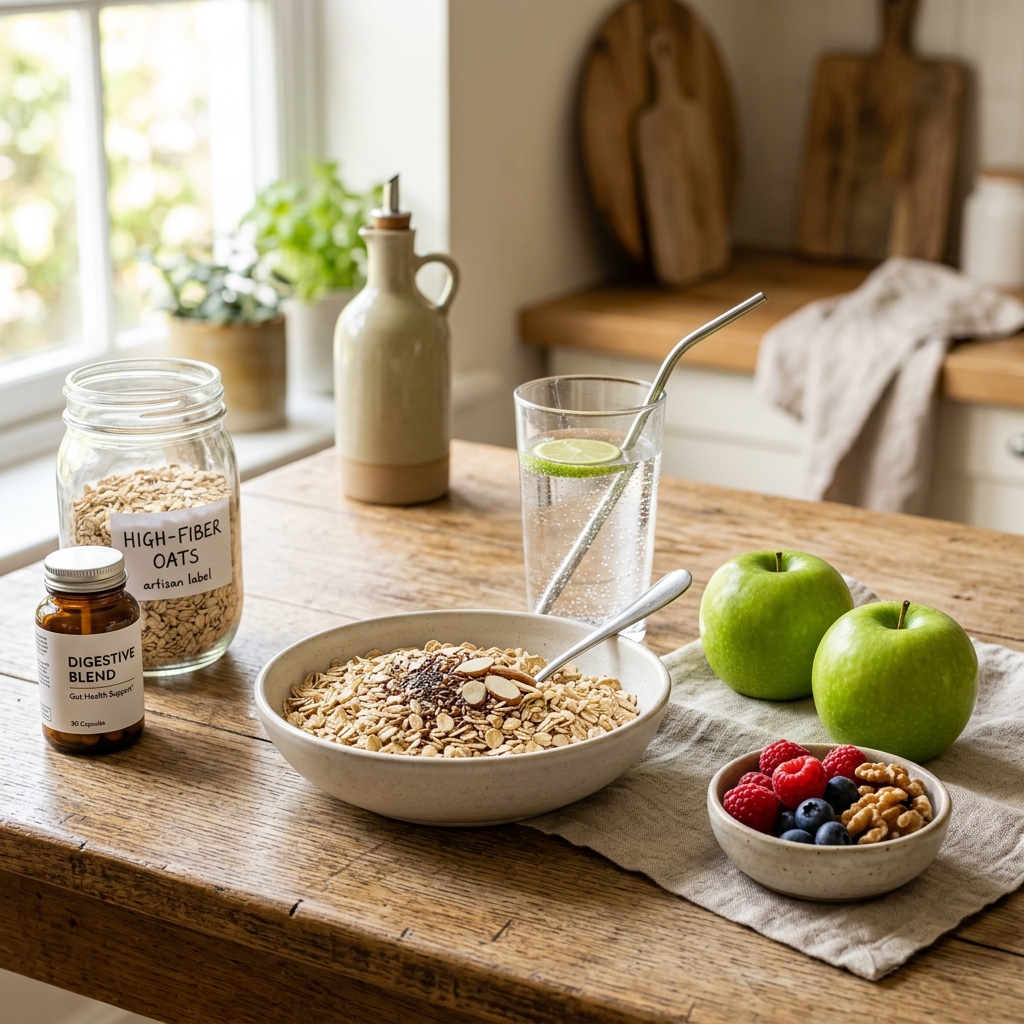
- Soluble Fiber: Found in oats, psyllium husk, flaxseeds, and pectin. It absorbs water to form a soft, gelatinous gel, which lubricates the stool and keeps it hydrated.
If you consume a large amount of insoluble fiber while your colonic motility is significantly slowed by semaglutide, you are adding bulk to a system that is not moving. This bulky mass will sit in the colon, where water will continue to be extracted from it, resulting in a large, hard, dry mass. In clinical terms, this can cause a fecal impaction or contribute to a bowel obstruction.
Therefore, you should focus primarily on soluble fiber. Soluble fiber draws water into the stool, keeping it soft and pliable even when transit time is prolonged. Excellent sources of soluble fiber include oat bran, ground flaxseeds, chia seeds, and daily psyllium husk supplements. However, you must pair soluble fiber with abundant water. Consuming fiber supplements without drinking enough water will worsen constipation, as the fiber will pull moisture from the surrounding tissues and harden in the colon.
The Laxative Ladder: Safe Options on GLP-1s
When dietary and hydration adjustments are not enough, incorporating pharmacological laxatives becomes necessary. Because your gut motility is slowed, you must choose laxatives carefully. Some common over-the-counter options can be dangerous or habit-forming if used incorrectly.
To help navigate these options safely, clinicians use a structured "Laxative Ladder." Patients start with the gentlest, safest options (Step 1) and step up to subsequent levels only if lower-level interventions prove ineffective.
| Step | Laxative Class | Common Agents | Mechanism of Action | GLP-1 Safety Rating | Clinical Protocol |
|---|---|---|---|---|---|
| Step 1 | Osmotic Laxatives | Polyethylene Glycol 3350 (MiraLAX), Magnesium Citrate/Oxide | Draws water into the bowel lumen via osmosis to hydrate and soften stool | High (First-Line Recommended) | Safe for daily prevention. Take 17g of PEG 3350 daily in 8 oz of water. Non-habit forming. |
| Step 2 | Stool Softeners | Docusate Sodium (Colace) | Acts as an emulsifier, allowing water and lipids to penetrate hard stool | High (Mild Efficacy) | Gentle but slow. Best used to prevent straining. Combine with Step 1 if needed. |
| Step 3 | Soluble Fiber | Psyllium Husk (Metamucil), Methylcellulose | Forms a hydrated gel to maintain stool volume and moisture | Moderate (Requires Hydration) | Start with 1 tsp daily. Must drink at least 8-12 oz of water immediately to prevent compaction. |
| Step 4 | Stimulant Laxatives | Senna (Senokot), Bisacodyl (Dulcolax) | Directly irritates mucosal lining and stimulates enteric nerves to force contractions | Low (Rescue Only) | Use only for acute, severe constipation. Limit to maximum 2-3 consecutive days to avoid dependency. |
| Step 5 | Prescription Agents | Prucalopride (Motegrity), Linaclotide (Linzess), Lubiprostone | Selectively stimulates prokinetic pathways or increases intestinal fluid secretion | High (Requires Rx) | Reserved for refractory cases unresponsive to OTC steps. Must be monitored by a doctor. |
Deep Dive: Choosing the Right Laxative Class
Understanding how these laxative classes interact with a gut slowed by semaglutide is essential for avoiding complications.
1. Why Osmotic Laxatives Are Preferred
Osmotic laxatives—such as Polyethylene Glycol 3350 (MiraLAX) and magnesium-based compounds (magnesium hydroxide, magnesium citrate, or magnesium oxide)—are the gold standard for treating GLP-1-induced constipation. They are not absorbed by the body. Instead, they remain in the bowel lumen and act as sponges, drawing water from the surrounding tissues into the colon. This hydrates and softens the stool naturally, making it easy to pass.
Importantly, osmotic laxatives do not force the intestinal muscles to contract. Because they do not interfere with the nervous system's control of bowel motility, they are not habit-forming, do not cause dependency, and are safe for daily or long-term use during your semaglutide therapy.
2. The Clinical Utility of Magnesium Oxide
Magnesium oxide (typically 400 mg to 800 mg taken at bedtime) is an excellent osmotic choice. In addition to drawing water into the bowel, magnesium helps relax the smooth muscles of the digestive tract, facilitating easier passage of stool. If you choose magnesium, monitor for loose stools and adjust your dose downward if your bowel movements become too frequent or watery.
3. The Dangers of Stimulant Laxative Dependency
Stimulant laxatives—such as senna (Senokot®) and bisacodyl (Dulcolax®)—work by directly irritating the lining of the colon and stimulating the myenteric plexus (the nerves in the bowel wall) to force smooth muscle contractions. While highly effective for clearing acute, severe blockages, they should never be used as a primary or daily treatment for semaglutide constipation.
Chronic use of stimulant laxatives can cause the enteric nerves to become desensitized. Over time, your colon can lose its natural ability to contract, leading to laxative dependency and a condition known as "lazy bowel syndrome" (colonic inertia). Limit stimulant laxatives to emergency "rescue" use, and never take them for more than 2 to 3 consecutive days.
Mid-Article CTA: Start Your Journey Safely
Compounded Semaglutide at $146/mo — All Doses Included
Get evaluated online by a licensed U.S. medical provider. Enjoy transparent, flat-rate pricing, ongoing dosage support, and free cold-chain shipping to your door—with no hidden membership fees.
Start Your AssessmentPractical Daily Protocol: A Motility Checklist
Treating constipation is not just about taking laxatives when you run into trouble; it is about establishing a daily routine that prevents the slowdown from occurring in the first place. Incorporate these three daily habits to keep your digestive tract moving:
1. Leverage the Gastrocolic Reflex
The gastrocolic reflex is an involuntary physiological response where stretch receptors in the stomach signal the colon to contract and clear space when new food or warm liquids enter. You can utilize this natural mechanism to train your bowels:
- Every morning, drink a warm cup of water, tea, or coffee within 15 minutes of waking.
- Consume a small, high-protein breakfast or a soluble fiber supplement immediately afterward.
- Set aside 10 to 15 minutes to sit on the toilet roughly 20 to 30 minutes after eating, even if you do not feel an immediate urge. This helps establish a consistent biological routine.
2. Optimize Bowel Biomechanics
The position you adopt on a standard toilet can physically hinder bowel movements. When sitting at a 90-degree angle, the puborectalis muscle remains partially contracted, creating a bend in the rectum that restricts the passage of stool.
To optimize your anatomy, use a toilet footstool (such as a Squatty Potty) to raise your knees above your hips. This shifts your posture to a 35-degree squatting angle, relaxing the puborectalis muscle, straightening the rectal passage, and allowing stool to pass with significantly less straining.
3. Keep Moving
Physical activity is a powerful, non-pharmacological stimulant for bowel motility. Walking, swimming, or light aerobic exercise stimulates the muscles of the abdomen and promotes natural peristalsis. Aim for at least 20 to 30 minutes of moderate cardiovascular activity daily (such as brisk walking) to help decrease transit times through the colon.
Medical Red Flags: When to Seek Immediate Care
While mild to moderate constipation is a common side effect of GLP-1 therapy, severe constipation can lead to serious medical complications. If you develop any of the following symptoms, stop taking semaglutide and seek immediate medical attention:
- Severe, localized abdominal pain: Sharp, constant, or worsening pain in a specific area of the abdomen can indicate a bowel obstruction or perforation.
- Persistent vomiting: If you are unable to keep liquids down and are vomiting, it may signal that waste is backed up into the stomach due to an obstruction.
- Inability to pass gas: Complete cessation of flatus and bowel movements is a strong indicator of a mechanical bowel obstruction.
- Fever and chills: Developing a fever alongside severe constipation can indicate an infection or bowel ischemia (restricted blood flow).
- Blood in the stool: While bright red blood on toilet paper often indicates benign hemorrhoids or anal fissures, dark tarry stools or significant bleeding require immediate medical evaluation.
If you experience these symptoms, do not take additional laxatives, especially stimulants, as forcing contractions against a complete physical blockage can cause serious harm. Seek evaluation at an urgent care center or emergency department immediately.
Frequently Asked Questions
Semaglutide causes constipation by mimicking the GLP-1 hormone, which slows down gastric emptying (how fast food leaves the stomach) and delays intestinal transit (how fast digested food moves through the colon). As the passage of waste slows down, the colon absorbs more water from the stool, causing it to become dry, hard, and difficult to pass.
Osmotic laxatives, such as Polyethylene Glycol 3350 (MiraLAX) or magnesium oxide/citrate, are generally considered the safest first-line options for GLP-1-induced constipation. They work by drawing water into the bowel to soften the stool naturally. Stimulant laxatives (like senna or bisacodyl) should only be used for short-term rescue therapy (2-3 days) to avoid dependency.
You should aim for 80 to 100 ounces (2.4 to 3.0 liters) of water daily. GLP-1 medications like semaglutide suppress central thirst signals in the brain alongside appetite signals, meaning you might not feel thirsty even when dehydrated. Consistent, proactive hydration is critical to keep stool hydrated.
Yes, but with an important caveat: you must drink at least 8 to 12 ounces of water immediately after taking a psyllium fiber supplement. Psyllium is a soluble fiber that expands and forms a gel by absorbing water. If your colon is transit-delayed and you do not drink enough water, the fiber can compact, harden, and worsen the blockage instead of helping it pass.
Constipation on semaglutide typically peaks within 24 to 72 hours following your weekly injection, and is most pronounced during the first 48 hours of a dose escalation (for example, when stepping up from 0.5 mg to 1.0 mg). Once you reach a stable maintenance dose for several weeks, your enteric nervous system adapts, and the severity of constipation often decreases.
Constipation is a medical emergency if it is accompanied by severe, constant abdominal pain; frequent vomiting; an inability to pass gas; fever; chills; or blood in the stool. These symptoms can indicate a bowel obstruction, fecal impaction, or colon perforation. If you experience any of these red flags, seek immediate medical attention and do not take additional laxatives.
Compounded Semaglutide for $146/mo — Online Medical Care
Complete your 5-minute online evaluation, consult with a licensed provider, and receive compounded semaglutide from a state-licensed 503A pharmacy shipped directly to your door—at one consistent, flat-rate price.
Get Started TodayClinical References & Sources
- Wilding, J. P. H., Bateman, A. H., et al. (2021). Once-weekly semaglutide in adults with overweight or obesity. New England Journal of Medicine, 384(11), 989-1002. ClinicalTrials.gov (NCT03548935)
- Davies, M., Færch, L., et al. (2021). Semaglutide 2.4 mg once weekly in adults with overweight or obesity, and type 2 diabetes (STEP 2): a randomised, double-blind, double-dummy, placebo-controlled, phase 3 trial. The Lancet, 397(10278), 971-984. PubMed (PMID 33667417)
- Garvey, W. T., Batterham, R. L., et al. (2022). Two-year effects of semaglutide 2.4 mg once weekly on control of eating in adults with overweight or obesity. Nature Medicine, 28(10), 2083-2091. PubMed (PMID 36216945)
- Camilleri, M., Acosta, A. (2023). Effects of GLP-1 receptor agonists on gastric emptying and gastrointestinal transit: a systematic review and meta-analysis. Clinical Gastroenterology and Hepatology, 21(5), 1162-1175. PubMed (PMID 36528211)