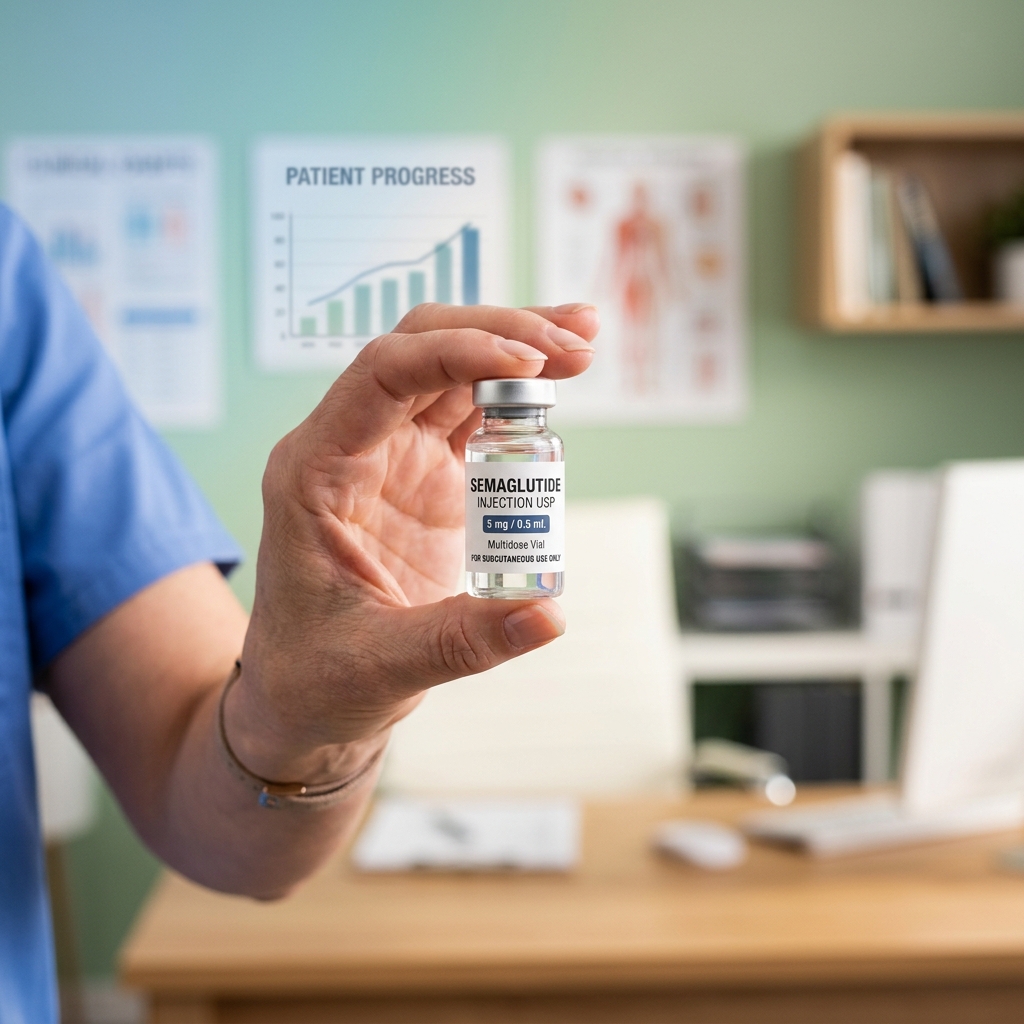
- No FDA-Approved Generic: Due to active patent protections held by Novo Nordisk, a true, FDA-approved generic semaglutide (generic Wegovy® or Ozempic®) is not yet commercially available and is not expected until around 2031-2032.
- Compounding Pathway: Under federal law (Section 503A of the FD&C Act), state-licensed compounding pharmacies are legally permitted to prepare customized copies of semaglutide to resolve public health shortages.
- Identical Active Ingredient: Reputable compounded semaglutide uses the exact same active molecular structure (semaglutide base) as brand-name drugs, though it is delivered via vial and syringe rather than a pre-filled pen.
- Clinical Dosing: Compounded semaglutide follows the same weekly titration schedule (escalating from 0.25 mg to 2.4 mg) as brand-name alternatives to control appetite and support metabolic health.
- Significant Savings: While brand-name Wegovy® retails for $1,349/mo, compounded semaglutide through Losing Weight RX is available for $79/mo flat-rate—representing a cost reduction of over 89%.
Introduction: The Search for Affordable GLP-1 Therapy
The introduction of glucagon-like peptide-1 (GLP-1) receptor agonists has transformed chronic weight management and diabetes care. Semaglutide, the active molecule in Ozempic® and Wegovy®, provides clinical efficacy in weight reduction and glycemic control. However, branded options remain financially out of reach for many, with Wegovy retailing for approximately $1,349 monthly without insurance. Compounding this challenge, persistent supply chain shortages have limited accessibility for patients across the United States.
These barriers have driven immense interest in a "generic semaglutide." While Novo Nordisk's active patents prevent generic drug manufacturers from releasing FDA-approved equivalents at standard pharmacies, the drug shortage has legally activated another pathway: custom pharmaceutical compounding. Under Section 503A of the FD&C Act, licensed compounding pharmacies can legally prepare customized formulations of semaglutide for patients with a physician's prescription.
This guide examines the legal distinctions, patent timelines, safety protocols, and economic savings behind compounded semaglutide, offering patients a clear roadmap to accessing GLP-1 therapy safely and affordably in 2026.
Understanding Semaglutide: The Molecule and the Brands
Semaglutide is a synthetic GLP-1 receptor agonist that shares 94% sequence homology with endogenous human GLP-1 (glucagon-like peptide-1), an incretin hormone secreted by L-cells of the small intestine in response to nutrient ingestion. To prevent the rapid degradation by the enzyme dipeptidyl peptidase-4 (DPP-4)—which typically metabolizes endogenous GLP-1 within minutes—the semaglutide molecule features two structural modifications: a substitution of alanine with alpha-aminoisobutyric acid at position 8, and the attachment of a C-18 fatty diacid chain via a hydrophilic spacer to lysine at position 26. These modifications increase albumin binding, thereby extending the clinical half-life of semaglutide to approximately seven days, enabling a convenient weekly dosing regimen.
In the commercial market, Novo Nordisk distributes semaglutide under three distinct brand names, each targeting specific clinical indications and patient populations:
- Ozempic®: FDA-approved in 2017, Ozempic is indicated for the treatment of Type 2 Diabetes Mellitus (T2DM) to improve glycemic control and reduce the risk of major adverse cardiovascular events (MACE) in adults with T2DM and established cardiovascular disease. It is administered via a multi-dose pre-filled pen that allows patients to select doses ranging from 0.25 mg to 2.0 mg weekly.
- Wegovy®: FDA-approved in 2021, Wegovy is indicated for chronic weight management in adults and pediatric patients aged 12 years and older with obesity (BMI ≥ 30 kg/m²) or overweight (BMI ≥ 27 kg/m²) with at least one weight-related comorbidity (e.g., hypertension, dyslipidemia, type 2 diabetes). It is packaged in single-dose, auto-injector pens with doses escalating from 0.25 mg to 2.4 mg weekly.
- Rybelsus®: Approved in 2019, Rybelsus is an oral formulation of semaglutide co-formulated with an absorption enhancer, sodium N-[8-(2-hydroxybenzoyl) amino] caprylate (SNAC). SNAC facilitates transcellular absorption across the gastric mucosa, enabling oral delivery of the peptide, which is typically indicated for type 2 diabetes control at daily doses of 7 mg or 14 mg.
It is critical to recognize that while Ozempic and Wegovy are indicated for different medical conditions and utilize different injection devices, the underlying active pharmaceutical ingredient is identical: semaglutide base. The clinical differences observed in patient outcomes are primarily a function of the dosing protocols rather than chemical variance. For a deeper scientific analysis of the molecule's physiological pathways, see our complete guide to semaglutide.
The Concept of a "Generic" Drug vs. "Compounded" Medication
To navigate the landscape of affordable GLP-1 therapy, patients and healthcare providers must understand the legal and scientific distinctions between an FDA-approved generic drug and a compounded medication. These two terms are often conflated in public discourse, but they represent entirely different regulatory pathways.
What is an FDA-Approved Generic?
A generic drug is a direct copy of an existing brand-name medication. Under the Hatch-Waxman Act of 1984, a manufacturer seeking approval for a generic drug does not need to repeat the extensive pre-clinical and clinical trials required for the brand-name innovator drug. Instead, they must submit an Abbreviated New Drug Application (ANDA) to the FDA. The generic manufacturer must demonstrate:
- Pharmaceutic Equivalence: The generic drug must contain the identical active ingredient in the same strength, dosage form, and route of administration as the brand-name drug.
- Bioequivalence: The rate and extent of absorption of the generic drug in the body must show no significant difference from that of the brand-name drug.
- Good Manufacturing Practices (cGMP): The production facilities must meet the same rigorous quality standards as the brand-name manufacturer.
Once approved, the generic drug is listed in the FDA’s "Orange Book" with a therapeutic equivalence rating (such as an "AB" rating), indicating it can be safely substituted for the brand-name drug at the pharmacy counter. Because Novo Nordisk holds active patents, no generic semaglutide has yet been approved under the ANDA pathway.
What is a Compounded Medication?
Pharmaceutical compounding is a clinical practice in which a licensed pharmacist combines, mixes, or alters ingredients to create a customized medication for an individual patient in response to a valid prescription from a licensed practitioner. Compounded medications do not undergo FDA pre-market approval. This pathway is regulated primarily under two sections of the Federal Food, Drug, and Cosmetic (FD&C) Act:
- Section 503A: Governs traditional compounding pharmacies. These facilities prepare medications on a patient-specific basis under the oversight of State Boards of Pharmacy. They are exempt from cGMP compliance, new drug approval requirements, and labeling directions for use, provided they adhere to USP (United States Pharmacopeia) guidelines for sterile compounding (USP <797>).
- Section 503B: Governs outsourcing facilities. These facilities are registered with the FDA and are permitted to compound larger batches of medications without individual prescriptions for hospital and clinic use. They must comply with cGMP requirements and undergo regular FDA inspections.
Because compounded semaglutide is prepared for individual patients rather than mass-manufactured, it is legally defined as a compounded medication rather than a generic. It is a legal, physician-prescribed alternative that uses the same active chemical compound, but it does not carry the formal "FDA-approved generic" label.
Novo Nordisk's Patents and the Timeline for True Generics
The primary barrier to the release of an official generic semaglutide is the active patent protection held by Novo Nordisk. Under U.S. patent law, a drug manufacturer is granted a 20-year period of exclusivity from the date of filing a patent application, which allows them to recover research and development costs and generate profits without direct market competition.
Novo Nordisk's intellectual property portfolio for semaglutide is robust and multi-layered, consisting of patents covering:
- The Core Molecule: The specific amino acid sequence and chemical structure of the modified GLP-1 peptide.
- Formulation Patents: The specific excipients, buffers (such as disodium phosphate dihydrate), and stabilizers (like propylene glycol) used to maintain peptide stability in solution.
- Delivery Device Patents: The mechanical designs of the proprietary FlexTouch and Wegovy auto-injector pens.
In the United States, several key patents covering the semaglutide molecule and its formulation are set to expire between 2031 and 2032. In the European Union, the primary patent expirations align with a similar timeline. In other markets, such as China and India, the patent landscape differs; for instance, Chinese patent regulators invalidated Novo Nordisk's primary semaglutide patent in 2022, which has been subject to ongoing litigation. In India, local manufacturers are preparing to launch generic versions as soon as local patent terms expire or are legally bypassed.
Furthermore, several generic manufacturers (including major pharmaceutical companies like Mylan, Viatris, and Teva) have filed challenges against Novo Nordisk's patents or submitted ANDAs with Paragraph IV certifications, asserting that the patents are invalid or will not be infringed by their generic products. While litigation and settlements may occasionally move the entry date of a generic forward by a few years, medical consensus indicates that a true, FDA-approved generic semaglutide will not be widely available in U.S. retail pharmacies until at least 2031 or 2032.
Until that time, patients seeking access to affordable semaglutide must look to other legally permitted avenues, specifically compounded formulations prepared under drug shortage guidelines.
The Role of the FDA Drug Shortage Database
Under federal law, compounding pharmacies are generally prohibited from compounding medications that are essentially copies of commercially available drugs. This rule is designed to protect the integrity of the FDA drug approval process. However, Congress created a vital exception to this rule under Section 503A and 503B of the FD&C Act: when a drug is officially listed on the FDA’s Drug Shortage Database, it is no longer considered "commercially available."
During an official shortage, compounding pharmacies are legally permitted to prepare copycat versions of the drug to meet public health needs. This regulatory mechanism has been the primary legal basis for the availability of compounded semaglutide since 2022.
Timeline of the Semaglutide Shortage
In 2022, the demand for GLP-1 weight loss medications experienced exponential growth, driven by clinical trials demonstrating average weight loss of 15% to 20% of body weight (such as the STEP-1 clinical trial) and widespread public awareness. Novo Nordisk's manufacturing facilities could not scale production of the specialized injection pens quickly enough. Consequently, the FDA added semaglutide injection to its drug shortage list.
This shortage opened a legal window for compounding pharmacies to compound semaglutide. Because the active ingredient was unavailable in sufficient quantities to meet demand, 503A pharmacies began sourcing semaglutide API to create customized vials for patients.
Current Regulatory Status in 2026
The legal landscape surrounding compounded GLP-1s has been highly dynamic. In late 2024 and throughout 2025, Novo Nordisk increased its manufacturing capacity and petitioned the FDA to remove semaglutide from the drug shortage database, arguing that all dose levels of Wegovy and Ozempic were now available. The FDA subsequently updated its shortage status.
However, the compounding industry and clinical groups challenged these updates, arguing that persistent localized shortages and regional supply gaps remained. Under Section 503A, pharmacies can continue to compound semaglutide for individual patients under specific circumstances, such as when a clinician determines that a compounded formulation provides a clinical difference for an individual patient (for instance, a patient who requires a customized dosage titration not available in commercial pens, or a patient who has a documented allergy to an excipient in the brand-name product). This clinical exception allows telehealth platforms like Losing Weight RX to continue offering access to compounded semaglutide from 503A pharmacies, ensuring patient care is not abruptly interrupted due to brand supply constraints or cost barriers.
Even when a drug is not on the active FDA shortage list, a state-licensed 503A pharmacy can compound a medication if it is customized for a patient's specific clinical needs, as prescribed by a licensed provider. Losing Weight RX partners exclusively with pharmacies that compile with all state and federal regulations to maintain continuous access to therapy.
Get Compounded Semaglutide from Licensed U.S. Pharmacies — $79/mo
Every prescription is written by a licensed provider and filled by a state-licensed 503A pharmacy that follows USP sterile compounding standards. Flat-rate pricing at all dose levels.
Start Your AssessmentSafety, Regulation, and Sourcing of Compounded Semaglutide
Because compounded medications do not undergo pre-market FDA review, the burden of ensuring safety, sterility, and efficacy falls upon the compounding pharmacies and the clinical platforms that coordinate care. Understanding the quality controls is essential for any patient considering this treatment pathway.
Sourcing: Semaglutide Base vs. Semaglutide Salts
A major safety consideration in the compounding of GLP-1s is the chemical form of the active ingredient. The FDA has issued warnings regarding compounding pharmacies using semaglutide sodium or semaglutide acetate instead of the pure semaglutide base.
- Semaglutide Base: The exact molecular structure approved by the FDA for Wegovy and Ozempic. This is the only form with verified clinical safety and efficacy data.
- Semaglutide Salts (Sodium/Acetate): Modified chemical forms containing salt molecules. These forms are often cheaper and easier to source, but they have not been evaluated for safety in humans. Furthermore, they are not approved active ingredients in any commercial drug.
Reputable platforms like Losing Weight RX work exclusively with pharmacies that source 100% pure semaglutide base from FDA-registered facilities. Each batch of API is accompanied by a Certificate of Analysis (CoA) to verify its identity, purity, and potency. For more details on compounded drug safety protocols, refer to our guide: is compounded semaglutide safe?.
Sterility and Quality Standards
Because semaglutide is an injectable medication administered subcutaneously, it must be prepared in a sterile environment. A non-sterile injection can introduce pathogens directly into the tissue, causing severe infections, abscesses, or systemic illness. Licensed 503A compounding pharmacies must adhere to USP Chapter <797> standards for sterile compounding, which require:
- ISO Class 5 Environments: Sterile compounding must occur within a laminar flow hood or barrier isolator with strict air quality controls.
- Aseptic Technique: Staff must undergo rigorous training, validation, and regular glove-fingertip and media-fill testing.
- Sterility Testing: Finished batches must be tested for sterility, endotoxins, and potency to ensure the final product is safe and contains the precise concentration of active drug.
Patients should always confirm that their compounded semaglutide is prepared by a pharmacy that meets these stringent standards.
Economic Analysis: Branded GLP-1s vs. Compounded Alternatives
The financial barrier associated with brand-name GLP-1 medications is a primary driver for the adoption of compounded semaglutide. A detailed cost comparison highlights the economic disparity between these treatment pathways.
| Feature | Brand-Name Wegovy® / Ozempic® | Compounded Semaglutide (Losing Weight RX) |
|---|---|---|
| Average Monthly Cost | $1,349 (Retail List Price) | $79 (Flat-rate) |
| Insurance Requirement | Often required for coverage (prior auths frequently denied) | No insurance needed |
| Dose Escalation Cost | Price remains high (or increases at higher doses) | Flat-rate (same price at all dose levels) |
| Administration Device | Proprietary auto-injector pen | Multi-dose vial + sterile syringes |
| Customization Options | None (fixed concentrations and doses) | Yes (can be co-formulated with Vitamin B12, etc.) |
| Provider/Shipment Fees | Separate physician visit and pharmacy fees | Included in monthly membership |
The "insurance gap" is particularly significant. Most commercial insurance policies do not cover weight loss medications, and federal law currently prohibits Medicare from covering medications indicated solely for obesity treatment. Consequently, patients are forced to pay the full list price of Wegovy or seek out compounded alternatives that offer the same active molecule at a fraction of the cost. Over a 12-month period, choosing compounded semaglutide through a platform like Losing Weight RX results in savings of over $14,000, making chronic weight management financially sustainable for a broader demographic. To compare other options, read our guide on Wegovy alternatives in 2026.
Clinical Dosing, Titration, and Administration Protocol
Whether using branded or compounded semaglutide, clinical success and safety depend on a slow, progressive titration schedule. This titration allows the body's gastrointestinal tract to adapt to the metabolic changes, minimizing side effects.
The standard titration schedule follows a weekly protocol:
- Weeks 1–4: 0.25 mg weekly. This starting dose introduces the medication to the body and initiates mild GLP-1 receptor activation without overwhelming the gastrointestinal tract.
- Weeks 5–8: 0.5 mg weekly. The dose is doubled to enhance satiety signals and glycemic regulation.
- Weeks 9–12: 1.0 mg weekly. Many patients begin experiencing significant weight reduction at this dose level.
- Weeks 13–16: 1.7 mg weekly. A high-therapeutic dose for patients requiring additional weight loss support.
- Week 17 and beyond: 2.4 mg weekly. The standard full maintenance dose for long-term chronic weight management.
Administration Process
Compounded semaglutide is supplied in sterile, multi-dose glass vials. Patients use low-dose insulin syringes (typically 0.3 mL or 0.5 mL) with ultra-fine needles (31G or 32G) to draw the exact dose prescribed. Subcutaneous injections are administered once weekly in areas with subcutaneous fat, such as the abdomen, thighs, or upper arm. Injection sites should be rotated weekly to prevent lipodystrophy (changes in subcutaneous fat tissue).
Managing Side Effects
Gastrointestinal side effects are common, affecting up to 50% of patients during the initial escalation phases. Clinical guidelines for managing these effects include:
- Nausea: Eat smaller, frequent meals instead of three large ones. Avoid high-fat, greasy, or overly sweet foods. Hydrate with electrolyte-rich fluids.
- Constipation: Increase dietary fiber intake and maintain adequate daily water consumption. Light exercise can also support gastrointestinal motility.
- Acid Reflux: Avoid eating within three hours of lying down. Elevate the head of the bed if nighttime reflux occurs.
Summary Checklist for Patients: How to Safely Choose a Compounded Source
To ensure patient safety and avoid counterfeit or low-quality formulations, patients should use the following checklist when evaluating a semaglutide provider:
- Active State Licenses: Ensure both the telehealth platform and the fulfilling pharmacy hold active licenses in your state of residence.
- Valid Prescription Requirement: Legitimate providers will never dispense semaglutide without a comprehensive medical evaluation and a valid prescription from a licensed clinician.
- 100% Semaglutide Base: Confirm that the pharmacy compounds with pure semaglutide base rather than salt forms (sodium or acetate).
- Sterility Standards: Verify that the partner pharmacy complies with USP <797> sterile compounding regulations.
- Transparent Flat-Rate Pricing: Ensure the monthly cost covers all dose levels, avoiding hidden fees or price increases as your dosage escalates.
By choosing a dedicated platform like Losing Weight RX, these vetting processes are managed on your behalf. Losing Weight RX partners exclusively with pre-vetted, state-licensed 503A compounding pharmacies that meet all clinical safety and sterility criteria, ensuring patients receive high-quality, clinical-grade semaglutide base shipped directly in temperature-controlled packaging.
Frequently Asked Questions
No. As of mid-2026, there is no FDA-approved generic semaglutide. Novo Nordisk holds active patents covering the semaglutide molecule, formulation, and delivery devices, which prevents generic manufacturers from releasing copycat versions under the standard generic drug approval pathway. True generics are not expected to enter the market until these patents begin to expire in 2031-2032.
A generic drug is a mass-manufactured copy of a branded drug that undergoes the Hatch-Waxman ANDA process to prove bioequivalence and pharmaceutical equivalence. Compounded semaglutide is a customized medication prepared by state-licensed compounding pharmacies under Section 503A or 503B of the FD&C Act. While compounded semaglutide contains the same active molecular structure, it is prepared on an individual patient basis and is not technically labeled as an "FDA-approved generic."
Novo Nordisk's primary patents on the semaglutide molecule are scheduled to expire in the United States and Europe in 2031-2032. While generic manufacturers are actively challenging these patents or seeking early launch settlements, patients should not expect true generic semaglutide to be available at standard retail pharmacies prior to this timeline.
Yes. Compounded semaglutide is legal under federal law. Section 503A of the FD&C Act permits compounding pharmacies to compound copycat versions of commercially available medications when those medications are on the official FDA Drug Shortage list. Furthermore, clinicians can legally prescribe compounded formulations if they determine that a custom formulation (such as one without specific preservatives or with a customized titration schedule) is clinically necessary for the patient.
Semaglutide sodium is a salt form of the molecule that has not been approved for use in commercial drug products. The FDA cautions against its use because it has not been evaluated for safety or efficacy in clinical trials. Legitimate, high-quality compounding pharmacies source only the pure semaglutide base API (active pharmaceutical ingredient), which is chemically identical to the active ingredient in Wegovy and Ozempic.
Yes. Even if the FDA removes semaglutide from its active shortage list, state-licensed 503A compounding pharmacies are legally permitted to compound medications when a physician determines there is a patient-specific clinical need. This includes customized dosing titration schedules that are not available in commercial branded pens, or formulations that omit specific inactive ingredients (excipients) to which a patient may be allergic or sensitive.
Start Compounded Semaglutide at $79/mo — Licensed Providers, Licensed Pharmacies
Complete your 5-minute online assessment, get evaluated by a U.S. licensed provider within 24 hours, and receive your compounded semaglutide from a state-licensed 503A pharmacy — shipped directly to your door.
Get Started TodayClinical References & Sources
- Wilding, J. P. H., Bateman, A. H., et al. (2021). Once-weekly semaglutide in adults with overweight or obesity. New England Journal of Medicine, 384(11), 989-1002. ClinicalTrials.gov (NCT03548935)
- U.S. Food and Drug Administration. (2024). Human Drug Compounding Under Section 503A of the FD&C Act. FDA.gov Guidance
- U.S. Food and Drug Administration. (2026). FDA Drug Shortages Database. FDA Shortages Log