- Bariatric-Level Weight Loss: Topline Phase 3 clinical trials (specifically the TRIUMPH-1 trial published in May 2026) show that the highest dose of Retatrutide (12 mg) yields an unprecedented average body weight reduction of 28.3% at 80 weeks.
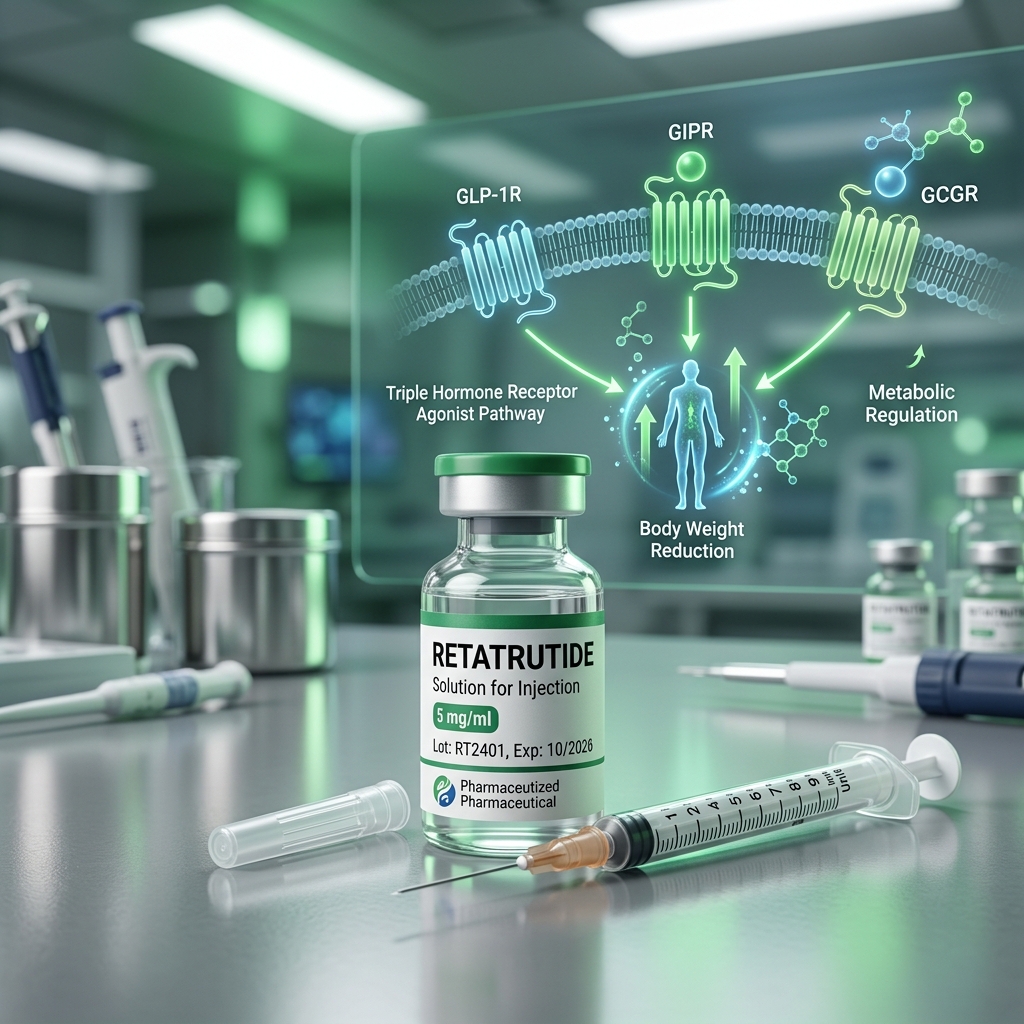
- Triple Agonism Mechanism: Retatrutide targets three separate hormone receptors—GLP-1, GIP, and glucagon—to maximize metabolic function, suppress appetite, and boost energy expenditure simultaneously.
- FDA Approval Timeline: Eli Lilly expects to submit its New Drug Application (NDA) in late 2026 or early 2027. A realistic window for the official Retatrutide FDA approval date is projected for late 2027 to early 2028.
- Efficacy Superiority: Compared to existing weight loss medications, Retatrutide represents a significant step up: clinical trials suggest ~28.3% weight loss, compared to ~20.9% for Tirzepatide (Zepbound) and ~15% for Semaglutide (Wegovy).
- Unique Safety Considerations: Due to glucagon receptor activation, Retatrutide causes a transient, dose-dependent increase in heart rate that peaks around week 24, as well as a mild, temporary skin sensitivity known as dysesthesia.
Introduction: The Next Frontier in Obesity Medicine
Obesity pharmacotherapy has advanced at a breakneck pace over the last decade. It began with the approval of single-receptor agonists, most notably the GLP-1 receptor agonist Semaglutide (commercially known as Wegovy® and Ozempic®), which offered average body weight reductions of roughly 15%. This was followed by the dual-acting GIP/GLP-1 receptor agonist Tirzepatide (marketed as Zepbound® and Mounjaro®), pushing weight loss clinical outcomes past the 20% mark. Now, a new clinical development stands poised to redefine metabolic health: Eli Lilly's investigational compound, Retatrutide (formerly LY3437943).
Retatrutide represents a novel pharmacological class known as a triple receptor agonist. By targeting three separate hormone pathways—glucagon-like peptide-1 (GLP-1), glucose-dependent insulinotropic polypeptide (GIP), and glucagon—this drug achieves weight loss numbers that mimic the outcomes of surgical bariatric procedures. But as this clinical trial compound moves closer to commercialization, patients and clinical providers alike are asking key questions. What does the latest clinical trial data show? How does it perform in terms of safety? And when is the official Retatrutide FDA approval date expected?
In this clinical guide, we will break down the molecular mechanisms of Retatrutide, evaluate the data from the Phase 2 and Phase 3 TRIUMPH clinical trials, map the projected FDA regulatory timeline, and compare Retatrutide vs Tirzepatide and Semaglutide so you can make an informed, forward-looking decision about your metabolic health options.
Understanding the Biochemistry: How the Triple Agonist Works
To understand why Retatrutide is demonstrating such dramatic clinical success, it is necessary to examine its unique biochemistry. Existing obesity therapeutics target one or two metabolic hormones. Retatrutide is a single peptide backbone designed to bind to and activate three distinct receptors: the GLP-1 receptor (GLP-1R), the GIP receptor (GIPR), and the glucagon receptor (GCGR). This design allows the drug to operate on multiple physiological pathways simultaneously.
1. GLP-1 Receptor Agonism (Appetite Suppression & Gastric Accommodation)
Glucagon-Like Peptide-1 is an incretin hormone secreted by the L-cells of the distal gut in response to food intake. Activation of the GLP-1 receptor regulates glucose homeostasis by promoting insulin secretion in a glucose-dependent manner and suppressing inappropriate glucagon secretion. In the central nervous system, GLP-1 targets the hypothalamus—specifically POMC/CART neurons—to diminish appetite and induce early satiety. In the gastrointestinal tract, GLP-1 slows gastric emptying, which physically prolongs postprandial fullness. This pathway is the biological foundation of Semaglutide's weight management capabilities.
2. GIP Receptor Agonism (Lipid Buffering & Neuroprotection)
Glucose-Dependent Insulinotropic Polypeptide is secreted by K-cells in the proximal gut. In a healthy state, GIP contributes significantly to the "incretin effect" (enhancing postprandial insulin release). When combined with GLP-1, GIP receptor activation is highly synergistic. It operates in the brain to modulate satiety signals in the hindbrain, which clinically appears to reduce the nausea and gastrointestinal side effects commonly caused by high-dose GLP-1 activation. In adipose tissue, GIP increases blood flow and lipid buffering capacity, promoting the healthy storage of fat in subcutaneous depots rather than ectopic, visceral depots, thereby improving systemic insulin sensitivity.
3. Glucagon Receptor Agonism (Thermogenesis & Hepatic Fat Clearance)
The addition of the glucagon pathway is the defining innovation of Retatrutide. Traditionally, glucagon was viewed by endocrinologists primarily as a counter-regulatory hormone that increases blood glucose levels during fasting by promoting glycogenolysis. However, when glucagon receptor activation is balanced with insulinotropic GLP-1 and GIP activation, it acts as a powerful metabolic stimulant. Glucagon increases energy expenditure by promoting mitochondrial thermogenesis (energy consumption) in both skeletal muscle and brown adipose tissue. It also acts directly on the liver to stimulate fatty acid oxidation and lipolysis.
Caloric restriction normally causes the body to decrease its basal metabolic rate—a phenomenon known as metabolic adaptation. By stimulating the glucagon receptor, Retatrutide helps counter this metabolic slowdown. The drug decreases energy intake (via GLP-1 and GIP) while simultaneously increasing energy output (via glucagon), breaking through traditional weight loss plateaus.
Efficacy Analysis: From Phase 2 to the Phase 3 TRIUMPH Program
The clinical development of Retatrutide has been marked by remarkable data, progressing from early clinical evaluation to large-scale Phase 3 trials designed to establish its long-term safety and efficacy across diverse patient populations.
The Phase 2 Trial: A Historic Milestone
In June 2023, Eli Lilly published the results of its Phase 2 clinical trial in the New England Journal of Medicine (NEJM). The 48-week, double-blind, randomized study evaluated 338 adults with obesity or overweight. The results were unprecedented:
- Unprecedented Weight Loss: At the highest dose of 12 mg administered once weekly, participants achieved a mean body weight reduction of 24.2% (approximately 58 pounds) at 48 weeks.
- Responders Rate: At 48 weeks, 100% of participants on the 9 mg and 12 mg doses achieved at least 5% weight loss, while an astounding 26% of patients on the 12 mg dose achieved a weight reduction of 30% or more.
- Resolution of Liver Fat: The trial included a substudy using magnetic resonance imaging (MRI) to measure liver fat in patients with metabolic dysfunction-associated steatotic liver disease (MASLD). At 48 weeks, participants on the 8 mg and 12 mg doses experienced a mean liver fat reduction of over 86%. Remarkably, 90% of those patients achieved complete clearance of liver fat, returning to normal levels (hepatic fat fraction under 5%).
The Phase 3 TRIUMPH Clinical Development Program
To confirm these findings and support regulatory submissions, Eli Lilly launched the global **TRIUMPH** Phase 3 clinical program. This program is comprised of multiple distinct, randomized trials, each targeting specific patient demographics and metabolic conditions:
- TRIUMPH-1 (Obesity & Overweight without Diabetes): An 80-week study evaluating the efficacy of Retatrutide on body weight reduction in adults who have obesity or are overweight with comorbidities, excluding type 2 diabetes.
- TRIUMPH-2 (Type 2 Diabetes & Obesity): Evaluating glycemic control and weight reduction in patients with type 2 diabetes and concurrent obesity.
- TRIUMPH-3 (Cardiovascular Risk & Obesity): Assessing the clinical impact of Retatrutide on cardiovascular outcomes, blood pressure, and metabolic markers in patients with high cardiovascular risk.
- TRIUMPH-4 (Knee Osteoarthritis & Obesity): Investigating whether weight loss achieved via Retatrutide can improve physical function and reduce pain in patients suffering from obesity-related knee osteoarthritis.
In mid-2026, Eli Lilly announced the highly anticipated topline results for the pivotal **TRIUMPH-1** trial. The 80-week study confirmed that extending the treatment window to 80 weeks allows the drug's metabolic stimulation to achieve even greater results. Participants randomized to the highest dose of 12 mg achieved an average body weight reduction of **28.3% (an average loss of 70.3 lbs)**. Furthermore, **45.3% of the 12 mg cohort lost 30% or more of their baseline body weight**, establishing a new clinical standard for non-surgical weight management.
Comparison: Retatrutide vs. Tirzepatide (Zepbound) vs. Semaglutide (Wegovy)
To put Retatrutide's efficacy into clinical context, it is helpful to compare its performance directly against the two leading GLP-1 class medications: Semaglutide and Tirzepatide. For a broader look at available treatments, see our guide on weight loss medications that work.
| Feature | Semaglutide (Wegovy®) | Tirzepatide (Zepbound®) | Retatrutide (Investigational) |
|---|---|---|---|
| Receptor Targets | GLP-1 Only | GLP-1 + GIP (Dual Agonist) | GLP-1 + GIP + Glucagon (Triple) |
| Average Weight Loss | ~15.0% | ~20.9% | ~28.3% |
| Clinical Trial Duration | 68 Weeks (STEP-1) | 72 Weeks (SURMOUNT-1) | 80 Weeks (TRIUMPH-1) |
| High-Dose Responders (≥30%) | ~8% | ~15% | ~45% |
| Common Side Effects | GI (Nausea, Constipation) | GI (Mild Nausea, Diarrhea) | GI, Heart Rate Increase, Dysesthesia |
| Discontinuation Rate (AEs) | ~4% to 6% | ~6.7% | ~11.3% (at 12 mg dose) |
| FDA Approval Status | Approved (2021) | Approved (2023) | Investigational (Pending ~2027) |
Start Compounded GLP-1 Weight Loss Programs Today — $79/mo
While Retatrutide finishes Phase 3 trials, get access to state-licensed 503A compounded Semaglutide or Tirzepatide prescribed by U.S. licensed providers. Shipped directly to your door.
Start Your AssessmentSafety Profile & Adverse Events of Retatrutide
While Retatrutide's weight loss efficacy is unmatched, safety and tolerability are critical when comparing it to existing options. In clinical trials, Retatrutide's overall adverse event profile was generally consistent with other incretin therapies, but the glucagon receptor activation introduces unique safety considerations.
1. Gastrointestinal Adverse Events
Like Semaglutide and Tirzepatide, the most common side effects reported in Retatrutide clinical trials are gastrointestinal. These include nausea, diarrhea, vomiting, and constipation. These symptoms occur primarily during the dose-escalation phase and are classified as mild to moderate in severity. However, because of the drug's high potency, the rate of discontinuation due to adverse events was higher at the maximum 12 mg dose (11.3%) compared to the placebo group (4.9%) and historical discontinuation rates for Tirzepatide (6.7%).
2. Transient Heart Rate Elevation
A side effect unique to Retatrutide is a transient, dose-dependent increase in heart rate. In both Phase 2 and Phase 3 trials, participants experienced an average increase in heart rate of 7 to 8 beats per minute. This effect peaked around 24 weeks before gradually declining toward baseline levels. This is due to the presence of glucagon receptors in the sinoatrial node of the heart, which directly regulate heart rate. While this elevation did not lead to serious adverse cardiovascular events in study participants, it requires careful monitoring, particularly in patients with pre-existing arrhythmia or tachycardia.
3. Skin Sensitivity (Dysesthesia)
A subset of participants in Retatrutide trials reported experiencing dysesthesia—a cutaneous sensory disturbance characterized by heightened sensitivity, tingling, or mild tenderness on the skin, occurring in the absence of a rash or physical lesions. This occurred in roughly 7% to 10% of patients receiving higher doses. The condition was reported as mild, localized, and self-limiting, typically resolving over a few weeks without requiring discontinuation of the drug.
Mitigating Side Effects: The Titration Protocol
To maximize tolerability, Eli Lilly is utilizing a structured titration schedule in its clinical trial designs. Patients do not start on the therapeutic doses immediately. Instead, they begin at a low dose of 2 mg once weekly. The dose is escalated in a step-wise fashion every four weeks: moving from 2 mg to 4 mg, then to 8 mg, and eventually to the maximum dose of 12 mg, depending on individual patient tolerability. This allows the body's gastrointestinal tract and cardiac conduction system time to adapt to the metabolic changes.
Expected FDA Approval Date & Commercial Release Timeline
Because Retatrutide remains an investigational drug, it is not currently approved for sale or prescription use in the United States or any other country. However, based on the clinical trial timelines for the TRIUMPH development program, we can project a realistic regulatory filing and approval window.
The NDA Submission Phase (Late 2026 / Early 2027)
Eli Lilly is currently completing its Phase 3 trials. Topline efficacy data from TRIUMPH-1 was announced in mid-2026. The full data packages, including 80-week data from all trials in the TRIUMPH program (TRIUMPH-2, -3, and -4), must be compiled, audited, and submitted to the FDA. Industry analysts expect that Eli Lilly will submit its New Drug Application (NDA) for chronic weight management in late 2026 or early 2027.
FDA Review & Approval (Late 2027 / Early 2028)
Once the FDA accepts the NDA filing, the agency begins its review process. For standard reviews of new molecular entities, the FDA typically takes 10 to 12 months to evaluate the safety, manufacturing quality control, and clinical efficacy data. If the FDA issues a priority review designation—which is rare unless the drug meets an urgent, unmet medical need that existing therapies do not address—the timeline could be shortened to 6 months. Therefore, the estimated **Retatrutide FDA approval date is projected for late 2027 or early 2028**.
Once approved, commercial release typically follows within 30 to 60 days. Patients can expect Retatrutide to be stocked in retail pharmacies by early-to-mid 2028, assuming there are no manufacturing scale-up delays or supply chain constraints, which have historically plagued Eli Lilly and Novo Nordisk during previous GLP-1 launch campaigns.
Retatrutide vs. Tirzepatide (Zepbound): The Battle of the Generations
As Eli Lilly moves closer to launching Retatrutide, many patients are wondering how it will position itself against the company's current leading obesity drug, Tirzepatide (Zepbound). Will Retatrutide render Tirzepatide obsolete?
The answer lies in clinical segmentation. Retatrutide offers superior weight loss efficacy, but it also carries a higher discontinuation rate due to side effects, along with the unique cardiac stimulatory profile from its glucagon component. Because of these factors, clinical guidelines may position the two drugs differently:
- Tirzepatide (Zepbound): Will likely remain the first-line choice for patients seeking highly effective weight loss (~20.9% average) with lower rates of tolerability issues, especially for patients with a history of cardiac issues, tachycardia, or anxiety.
- Retatrutide: Will likely be reserved for patients with severe class III obesity (BMI > 40), those who have failed to respond to dual GIP/GLP-1 therapy, or patients with concurrent metabolic dysfunction-associated steatohepatitis (MASH), where its glucagon component can rapidly clear hepatic fat deposits.
For a detailed comparison of currently available treatments, consult our Tirzepatide vs. Semaglutide comparison guide.
Accessing Weight Loss Therapy in 2026: A Critical Warning
Because Retatrutide is not yet FDA-approved, it cannot be legally prescribed or purchased through commercial pharmacies. This lack of access has driven the growth of an unregulated, unsafe online market that patients must avoid.
The Danger of "Research Peptides"
Dozens of online companies are selling unregulated powder labeled as "Retatrutide" under the guise of "research chemicals" or "for laboratory use only." These businesses bypass FDA regulations and pharmacy compounding laws completely. Purchasing and injecting these products poses severe health risks:
- No Sterility Controls: Injecting non-sterile substances can lead to severe systemic infections, sepsis, and localized injection site abscesses.
- Dosing Inaccuracies: Laboratory analysis of seized research peptides frequently reveals massive dosing discrepancies, with vials containing either double the labeled dose (leading to severe toxicity) or virtually no active ingredient.
- Contaminants & Heavy Metals: Research chemicals are not manufactured in certified current Good Manufacturing Practice (cGMP) facilities. They often contain chemical impurities, residual solvents, or heavy metals.
Safe & Legitimate Alternatives Today
If you want to start a clinically supervised weight loss program today, you do not need to wait for Retatrutide or risk your health with illegal research peptides. Telehealth platforms like Losing Weight RX provide legal access to compounded GLP-1 medications:
- Compounded Semaglutide ($79/mo flat-rate): An affordable option containing the same active ingredient as Wegovy®, prepared by state-licensed 503A compounding pharmacies following USP sterile compounding standards.
- Compounded Tirzepatide: Provides the dual GIP/GLP-1 receptor agonist pathway, allowing you to achieve up to 20% weight loss under the care of U.S. licensed medical providers.
Frequently Asked Questions
The expected Retatrutide FDA approval date is projected for late 2027 or early 2028. Eli Lilly's Phase 3 clinical trial program, known as the TRIUMPH trials, is ongoing as of 2026. Topline results for trials like TRIUMPH-1 were announced in mid-2026, and Eli Lilly is expected to submit a New Drug Application (NDA) in late 2026 or early 2027. Following the standard 10-to-12-month FDA review process, approval is expected to follow shortly.
In the Phase 3 TRIUMPH-1 trial, adults with obesity or overweight (without diabetes) achieved an average weight loss of 28.3% of their body weight at 80 weeks when taking the highest dose (12 mg) once weekly. This equates to an average loss of over 70 pounds. Additionally, over 45% of patients in this group achieved a weight loss of 30% or more, which matches the outcomes typically seen with bariatric surgery.
Retatrutide is a triple receptor agonist that targets GLP-1, GIP, and glucagon receptors. Tirzepatide (Zepbound/Mounjaro) is a dual receptor agonist targeting only GLP-1 and GIP. The inclusion of glucagon in Retatrutide stimulates hepatic fat clearance and increases energy expenditure. In clinical trials, this triple mechanism resulted in higher average weight loss (28.3% at 80 weeks) compared to Tirzepatide (20.9% at 72 weeks), though Retatrutide carries a slightly higher rate of side effects.
While Retatrutide causes standard gastrointestinal side effects like nausea and constipation, it has two unique side effects due to glucagon receptor activation: a transient, dose-dependent increase in heart rate (average of 7-8 beats per minute) that peaks around week 24 before returning toward baseline, and mild dysesthesia (localized skin sensitivity or tingling in the absence of a rash). Both are typically mild and self-limiting.
No. You cannot legally buy Retatrutide online or at any pharmacy in 2026 because it is not FDA-approved. Any website selling "Retatrutide" online as a "research peptide" or "chemical" is doing so illegally. These products are unapproved, unregulated, and carry severe risks of contamination, sterility issues, and incorrect dosing. Safe, FDA-approved GLP-1 alternatives like Semaglutide and Tirzepatide are legally available through clinical providers.
Insurance coverage will likely be similar to current anti-obesity medications like Wegovy and Zepbound. Commercial plans that cover weight loss medications will likely cover Retatrutide, typically requiring prior authorization showing a BMI over 30 (or over 27 with a comorbidity). However, many employer-sponsored plans exclude weight loss medications entirely. Telehealth programs offering compounded GLP-1 alternatives offer an affordable cash-pay option that bypasses insurance denials.
Start Compounded Semaglutide at $79/mo — Licensed Providers, Licensed Pharmacies
Complete your 5-minute online assessment, get evaluated by a U.S. licensed provider within 24 hours, and receive your compounded semaglutide from a state-licensed 503A pharmacy — shipped directly to your door.
Get Started TodayClinical References & Sources
- Rosenstock, J., Frias, J. P., et al. (2023). Retatrutide, a GIP, GLP-1, and glucagon receptor agonist, for obesity: a randomised, double-blind, placebocontrolled, phase 2 trial. The Lancet, 402(10398), 301-312. ClinicalTrials.gov (NCT04881760)
- Eli Lilly and Company. (2026). Lilly's Phase 3 TRIUMPH-1 Trial Shows Retatrutide Achieves Bariatric-Level Weight Loss in Adults with Obesity. Press Release. Lilly.com Newsroom
- U.S. Food and Drug Administration. (2025). FDA Warnings on Unregulated Peptide Sales Online. FDA.gov Compounding Information