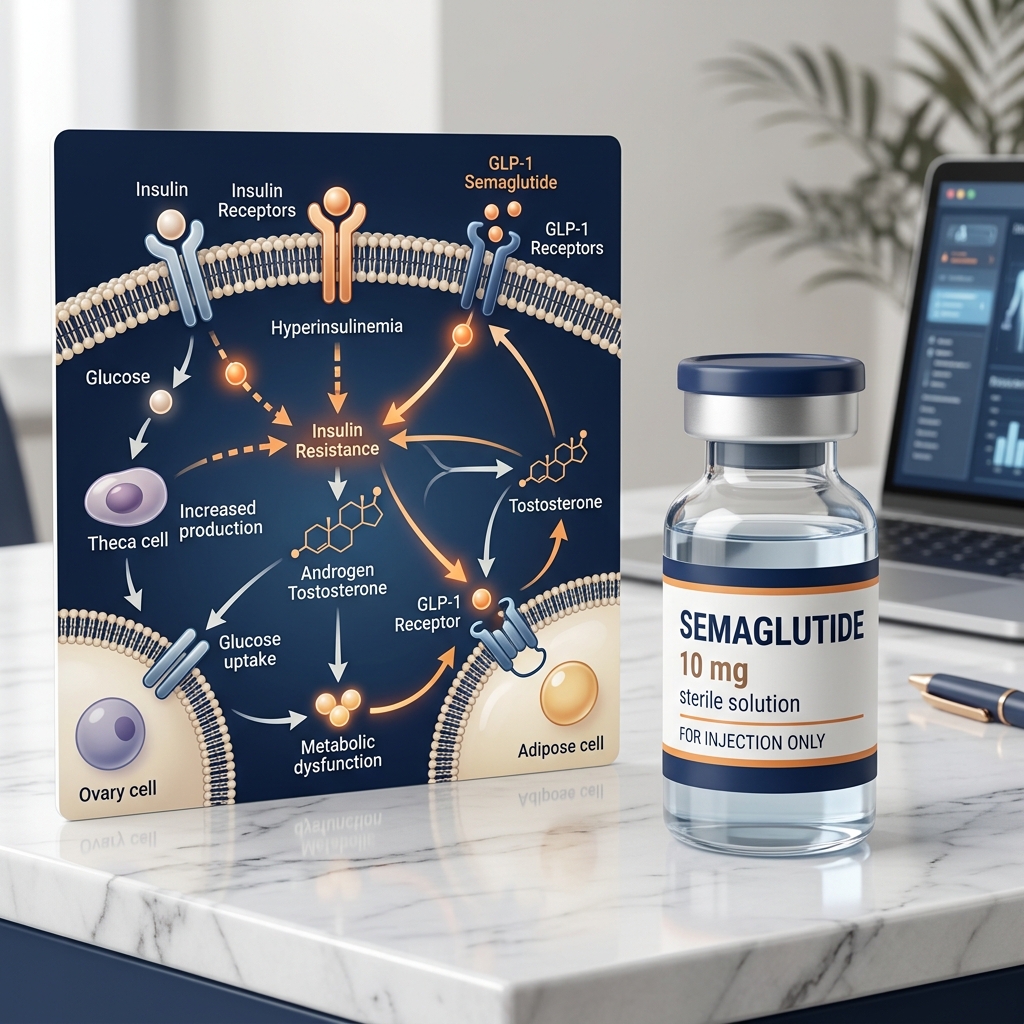
- PCOS is a Metabolic Disorder: While traditionally viewed as a reproductive issue, Polycystic Ovary Syndrome is primarily driven by insulin resistance, hyperandrogenism, and chronic inflammation.
- Semaglutide's Multi-Target Pathway: GLP-1 agonists address the root of PCOS by increasing insulin sensitivity, reducing glucagon secretion, slowing gastric emptying, and lowering circulating androgens.
- Bypassing the Metabolic Block: PCOS causes cellular-level resistance to fat oxidation. Semaglutide directly overcomes this biochemical block to enable consistent, healthy weight loss.
- Metformin vs. Semaglutide: Metformin remains a first-line option but has limited weight loss efficacy (2-5 lbs on average). Semaglutide delivers vastly superior weight loss and significant androgen reductions.
- Combined Lifestyle Synergy: Combining a low-glycemic, anti-inflammatory Mediterranean diet with regular strength training boosts GLUT4 transporter expression, accelerating clinical symptom recovery.
Introduction: The Shift in the PCOS Treatment Paradigm
Polycystic Ovary Syndrome (PCOS) is one of the most common endocrine disorders, affecting between 8% and 13% of women of reproductive age worldwide. Historically, clinical management of PCOS was highly fragmented. Patients seeking help were often shuttled between gynecologists for irregular periods, dermatologists for cystic acne or hirsutism (excessive hair growth), and reproductive endocrinologists for infertility. The standard treatment advice was often limited to a prescribing pattern of oral contraceptive pills and a vague, frequently frustrating recommendation to "just lose weight."
However, modern clinical endocrinology has established that PCOS is far more than a reproductive disorder. It is a complex, multi-systemic metabolic condition. At its core, the clinical pathophysiology of PCOS is driven by a triad of **insulin resistance, hyperandrogenism (excess ovarian androgens like testosterone), and chronic low-grade inflammation**. These forces act in a pathological feedback loop, making adipose tissue accumulation highly efficient and weight loss exceptionally difficult.
This metabolic reality explains why conventional calorie-restriction diets and exercise programs so often fail for women with PCOS. The body is essentially locked in a fat-storage state. The emergence of glucagon-like peptide-1 (GLP-1) receptor agonists, specifically semaglutide (available as brand-name Ozempic® and Wegovy®), has shifted the PCOS treatment paradigm. By directly targeting the underlying insulin resistance and metabolic dysfunction, semaglutide bypasses the typical hormonal blocks, offering new clinical utility for weight management and endocrine restoration in patients with PCOS.
Clinical Pathophysiology: The Metabolic Roots of PCOS
To understand why semaglutide is uniquely effective for PCOS, we must first break down the underlying endocrine and metabolic pathways that define the syndrome. PCOS is characterized by a state of persistent metabolic dysfunction that alters reproductive physiology. The three primary drivers—hyperinsulinemia, hyperandrogenism, and systemic inflammation—are deeply interconnected.
1. Compensatory Hyperinsulinemia and Insulin Resistance
Insulin resistance is a hallmark of PCOS, present in up to 75% of lean women and up to 95% of women with obesity who have the condition. In patients with PCOS, post-receptor defects in insulin signaling impair glucose uptake in insulin-sensitive peripheral tissues, primarily skeletal muscle and adipose tissue. To compensate for this reduced sensitivity and maintain normal blood glucose levels, the pancreatic beta cells secrete excess insulin, leading to chronic **hyperinsulinemia**.
Crucially, while peripheral skeletal muscle is resistant to insulin, the ovaries remain highly sensitive. This mismatch is central to the development of PCOS symptoms. Excess circulating insulin acts as a co-gonadotropin, directly stimulating the ovarian theca cells. It works synergistically with Luteinizing Hormone (LH) to increase the activity of the cytochrome P450c17alpha enzyme system, which accelerates the synthesis of ovarian androgens (testosterone and androstenedione).
2. Hepatic SHBG Suppression and Hyperandrogenism
In addition to directly stimulating ovarian androgen production, hyperinsulinemia acts on the liver to suppress the synthesis of **Sex Hormone-Binding Globulin (SHBG)**. SHBG is the primary carrier protein that binds testosterone in the bloodstream, rendering it inactive. When SHBG levels are low, the fraction of free, biologically active testosterone rises significantly. It is this free testosterone that binds to androgen receptors in skin follicles, leading to the clinical manifestations of hyperandrogenism, including hormonal acne, hirsutism, and androgenic alopecia (hair thinning).
3. Chronic Low-Grade Systemic Inflammation
PCOS is also characterized by chronic, low-grade systemic inflammation, independent of body mass index (BMI). Women with PCOS exhibit elevated circulating levels of inflammatory markers, including C-Reactive Protein (CRP), Tumor Necrosis Factor-alpha (TNF-alpha), and Interleukin-6 (IL-6). These inflammatory cytokines damage cellular insulin receptors, further worsening peripheral insulin resistance. This creates a self-reinforcing loop: insulin resistance promotes weight gain, abdominal adiposity increases inflammatory cytokine release, and inflammation worsens insulin resistance.
Insulin Resistance → Compensatory Hyperinsulinemia → Ovarian Androgen Synthesis Spikes & Hepatic SHBG Production Drops → High Circulating Free Testosterone → Visceral Fat Accumulation → Elevated Systemic Inflammation → Worsened Insulin Resistance.
How Semaglutide Helps: Target Mechanisms in PCOS
GLP-1 receptor agonists like semaglutide were originally developed to treat type 2 diabetes and obesity. However, their mechanism of action directly targets the metabolic pathways that drive PCOS. Rather than merely masking symptoms, semaglutide intervenes in the physiological feedback loops described above.
Enhancing Pancreatic Insulin Secretion and Smoothing Glycemic Curves
Semaglutide acts as a long-acting analog of the incretin hormone GLP-1. When glucose is present, semaglutide binds to GLP-1 receptors on pancreatic beta cells, enhancing glucose-dependent insulin secretion. Simultaneously, it acts on alpha cells to suppress inappropriate glucagon secretion, thereby reducing hepatic glucose output. By matching insulin secretion precisely to blood glucose levels, semaglutide prevents the sharp glucose spikes and subsequent compensatory insulin surges that occur after meals. This reduction in postprandial insulin surges removes the primary stimulus for ovarian androgen production.
Delayed Gastric Emptying and Central Appetite Regulation
Semaglutide delays gastric emptying, which slows the rate at which nutrients enter the duodenum. This delayed absorption flattens the postprandial glucose curve, helping to maintain stable energy levels and reduce insulin demands. In the central nervous system, semaglutide acts on the arcuate nucleus of the hypothalamus and the hindbrain to promote satiety, increase fullness, and diminish "food noise." Women with PCOS often have altered levels of satiety hormones like leptin and ghrelin; semaglutide helps normalize these signals, making dietary adherence much easier.
Decreasing Ovarian Androgen Synthesis and Restoring Ovulation
As semaglutide improves peripheral insulin sensitivity and reduces hyperinsulinemia, the ovarian theca cells are no longer exposed to excessive insulin stimulation. This decreases androgen synthesis, helping to normalize the LH-to-FSH ratio. With lower local androgen levels in the ovaries, follicular arrest (which causes the characteristic "string of pearls" appearance of immature follicles on an ultrasound) is resolved. Follicles can mature normally, leading to the restoration of regular ovulation and predictable menstrual cycles. Additionally, as insulin levels drop, hepatic SHBG synthesis increases, binding more free testosterone and improving androgen-mediated skin symptoms.
Break Through the PCOS Weight Loss Block for $79/Month
Address the hormonal and metabolic roots of PCOS with compounded semaglutide, prescribed online by licensed U.S. providers. Enjoy flat-rate pricing at all dosage levels with zero hidden fees.
Start Your AssessmentMetformin vs. Semaglutide: A Comparative Analysis for PCOS
For decades, Metformin (a biguanide) has been the first-line pharmacotherapy for insulin resistance in women with PCOS. While Metformin is a valuable and inexpensive tool, the introduction of semaglutide has changed clinical options. Understanding how these medications compare—and how they can be used together—is essential for optimizing treatment.
Mechanisms of Action: How They Differ
Metformin works primarily by activating adenosine monophosphate-activated protein kinase (AMPK) in the liver and skeletal muscle. This activation leads to a reduction in hepatic gluconeogenesis (glucose production) and an increase in peripheral glucose uptake, helping to lower circulating insulin levels. Metformin does not act directly on satiety hormones or significantly delay gastric emptying.
In contrast, semaglutide mimics the incretin hormone GLP-1. It enhances glucose-dependent insulin secretion, suppresses glucagon, delays gastric emptying, and acts on the brain to reduce appetite. While both medications ultimately lower circulating insulin levels, semaglutide operates through different physiological pathways, providing more significant effects on weight and appetite regulation.
Clinical Efficacy: Weight Loss and Metabolic Recovery
In clinical studies of PCOS, Metformin's weight-loss efficacy is modest. The average weight reduction on Metformin is typically between 2% and 5% of body weight, with many patients experiencing a plateau within the first 3 to 6 months. For patients with severe metabolic resistance, Metformin alone is often insufficient to produce meaningful weight loss.
Semaglutide demonstrates significantly higher weight-loss efficacy. In the STEP 1 clinical trial, adults taking semaglutide lost an average of 14.9% of their baseline body weight over 68 weeks. In clinical trials specifically evaluating GLP-1 receptor agonists in women with PCOS, participants achieved substantial reductions in visceral fat, waist circumference, and free androgen levels, outperforming those on Metformin monotherapy. If you are exploring cost-effective options, our review of the cheapest semaglutide online in 2026 provides details on clinical telehealth pricing.
Metformin: Primary mechanism: Activates AMPK (liver/muscle sensitivity). Weight loss: Modest (2-5% average, common plateaus). Hirsutism/Acne improvement: Mild. Gastrointestinal tolerability: Diarrhea, cramping (often improves). Cost: Low.
Semaglutide: Primary mechanism: Mimics GLP-1 (pancreatic, gastric, and CNS satiety pathways). Weight loss: Superior (12-15%+ average). Hirsutism/Acne improvement: High (due to significant SHBG increases). Gastrointestinal tolerability: Nausea, constipation (mitigated by gradual titration). Cost: Varies (flat-rate options available).
Transitioning and Combination Therapies
For some patients, a clinical transition from Metformin to semaglutide is appropriate, particularly if Metformin has failed to produce significant weight loss or has caused persistent gastrointestinal side effects. This transition should be conducted under clinical supervision, typically involving a gradual taper of Metformin while titrating semaglutide from the initiation dose (0.25 mg) upward.
Alternatively, emerging clinical evidence supports the combination of low-dose Metformin and semaglutide for patients with severe insulin resistance. Because they work through complementary pathways (AMPK activation and GLP-1 receptor stimulation), the combination can produce synergistic metabolic benefits. However, because both medications can cause gastrointestinal side effects, dual therapy requires careful dose management and clinical monitoring.
Bypassing the PCOS Metabolic "Block"
Many women with PCOS describe a metabolic "block"—a feeling that their body actively resists weight loss despite consistent diet and exercise. This is not a lack of willpower; it is a documented physiological phenomenon. Research shows that women with PCOS have a reduced basal metabolic rate, impaired postprandial thermogenesis (they burn fewer calories digesting food), and mitochondrial dysfunction that limits their cells' ability to oxidize fatty acids for fuel.
Semaglutide helps bypass this metabolic block through several clinical mechanisms:
- Restoring Metabolic Flexibility: Metabolic flexibility is the body's ability to switch between burning carbohydrates and fats for fuel. Insulin resistance locks the body into carbohydrate utilization, preventing fat burning. By lowering insulin levels, semaglutide allows the body to access and oxidize stored fatty acids.
- Targeting Visceral Adipose Tissue: Visceral fat (fat stored around internal organs) is highly metabolically active and inflammatory. Semaglutide preferentially targets visceral fat deposits, reducing systemic inflammation and improving overall metabolic profile.
- Improving Mitochondrial Efficiency: By lowering systemic inflammatory markers like CRP and TNF-alpha, semaglutide helps restore mitochondrial function, allowing for more efficient cellular energy production and fat oxidation.
In clinical trials, women with PCOS treated with semaglutide experienced consistent weight loss and metabolic improvements, even when previous interventions had failed. This indicates that bypassing insulin-mediated fat storage can help overcome the physiological blocks associated with PCOS.
Clinical Timeline: What Patients Can Expect
Metabolic recovery is a gradual process. When starting semaglutide for PCOS, understanding the clinical timeline can help set realistic expectations for symptom improvement.
| Timeframe | Metabolic & Hormonal Shifts | Clinical Manifestations |
|---|---|---|
| Weeks 1 – 4 (0.25 mg) | GLP-1 receptor activation begins. Gastric emptying delays and postprandial glucose curves start to stabilize. | Reduction in appetite and "food noise." Mild weight loss (1-3 lbs). Potential initial nausea or constipation. |
| Months 2 – 3 (0.5 mg – 1.0 mg) | Fasting and postprandial insulin levels drop. Peripheral insulin sensitivity improves; systemic inflammation declines. | Consistent weight loss (5-8% of body weight). Initial restoration of menstrual cycle regularity for some patients. Improved energy. |
| Month 6+ (1.7 mg – 2.4 mg) | Significant reduction in ovarian androgen synthesis. Hepatic SHBG production increases, binding free testosterone. | Cumulative weight loss (10-15%+). Predictable ovulation and cycles. Visual reduction in hormonal acne; slow improvement in hirsutism. |
The Losing Weight RX Protocol: Safe, Flat-Rate Access
While the clinical benefits of semaglutide for PCOS are clear, accessing the medication is often difficult. Brand-name Wegovy® carries a retail list price of over $1,349 per month, and most commercial insurance plans exclude weight loss coverage. Furthermore, many telehealth platforms use tiered pricing structures that increase monthly costs as your dosage escalates, or require expensive upfront memberships.
Losing Weight RX offers a straightforward alternative: **$79 per month, flat-rate, all-inclusive.** Our protocol is designed to provide safe, affordable, and transparent metabolic support:
- Flat-Rate Pricing: You pay the same $79/mo regardless of your dosage level. We do not increase the price when you titrate up to clinical maintenance doses (1.7 mg or 2.4 mg).
- U.S. Licensed 503A Pharmacies: Our compounded semaglutide is sourced exclusively from state-licensed U.S. compounding pharmacies operating under Section 503A. They follow USP <797> sterile compounding standards to ensure sterility, purity, and potency. To learn more about safety standards, read our guide on whether compounded semaglutide is safe.
- No Hidden Fees: Your monthly fee covers the clinical evaluation by a licensed provider, the medication, syringes, and expedited temperature-controlled shipping. There are no membership or doctor consultation fees.
- Compounded Synergies: Partner compounding pharmacies often prepare formulations combining semaglutide with cyanocobalamin (Vitamin B12). This helps support cellular energy pathways and manage fatigue, which is particularly beneficial for PCOS patients dealing with chronic sluggishness.
Practical PCOS Lifestyle & Management Protocol
Semaglutide is a powerful tool for addressing the metabolic dysfunction of PCOS, but it is most effective when paired with targeted lifestyle modifications. A comprehensive approach helps preserve skeletal muscle, improve insulin sensitivity, and sustain long-term metabolic health.
1. The Anti-Inflammatory, Low-Glycemic Diet
To optimize your results on semaglutide, adopt a Mediterranean-style dietary plan that emphasizes low-glycemic, anti-inflammatory whole foods. This nutritional approach supports stable blood sugar levels and reduces systemic inflammation. For a detailed guide on meal planning, refer to our ideal semaglutide diet plan. Key dietary strategies include:
- Prioritize Dietary Protein: Target 1.2 to 1.6 grams of protein per kilogram of body weight daily (approximately 90-120 grams for most adults). Protein preserves skeletal muscle during weight loss and stimulates the release of satiety hormones. Choose lean sources such as chicken breast, turkey, wild-caught salmon, egg whites, and Greek yogurt.
- Focus on Anti-Inflammatory Fats: Incorporate monounsaturated and omega-3 fatty acids, which help reduce systemic inflammation and support hormone synthesis. Excellent sources include extra virgin olive oil, avocados, walnuts, chia seeds, and flaxseeds.
- Select Low-Glycemic Complex Carbohydrates: Avoid refined carbohydrates (white bread, regular pasta, sugary pastries) that trigger rapid glucose and insulin spikes. Instead, choose high-fiber, low-glycemic options such as steel-cut oats, quinoa, lentils, black beans, berries, and leafy green vegetables. Target 25 to 35 grams of dietary fiber daily.
2. Resistance Training: Building the "Insulin Sink"
Skeletal muscle tissue serves as the body's primary sink for glucose disposal, accounting for over 80% of insulin-mediated glucose uptake. Increasing muscle mass directly improves insulin sensitivity, making strength training essential for PCOS management:
- Prioritize Progressive Resistance Training: Focus on lifting weights, bodyweight resistance exercises, or band training 3 to 4 times per week. Targeting major muscle groups (legs, back, chest) stimulates the expression of GLUT4 glucose transporters in muscle cells, enhancing glucose uptake independent of insulin.
- Avoid Chronic High-Intensity Cardio: While moderate cardiovascular exercise is beneficial, excessive high-intensity cardio (such as daily, high-stress spinning or running classes) can chronically elevate cortisol levels. Cortisol, a stress hormone, promotes visceral fat storage and can worsen insulin resistance in PCOS patients. Pair strength training with low-intensity steady-state (LISS) exercise like walking.
3. Strategic Hydration and Electrolyte Protocols
GLP-1 receptor agonists can suppress the brain's thirst centers, increasing the risk of dehydration. Proper hydration is critical for kidney function and managing common side effects like constipation:
- Target 80 to 100 Ounces of Water Daily: Keep a water bottle nearby and drink consistently throughout the day, rather than consuming large volumes at once, which can worsen nausea.
- Support with Sugar-Free Electrolytes: Incorporate a daily serving of sugar-free electrolytes containing magnesium, sodium, and potassium. Magnesium is particularly helpful, as it supports muscle function, glucose metabolism, and bowel motility.
Frequently Asked Questions
For most women with PCOS, menstrual cycle regulation begins within 3 to 6 months of starting semaglutide. This timeline corresponds with initial weight loss (typically 5-10% of body weight) and a significant reduction in fasting insulin levels. By reducing hyperinsulinemia, the hormonal stimulus for excess ovarian androgen production is lowered, allowing normal follicular development and ovulation to resume.
Yes, under clinical supervision, combining semaglutide and Metformin is often highly effective. Metformin and semaglutide operate through distinct, complementary biological pathways: Metformin primarily increases peripheral insulin sensitivity and reduces hepatic glucose production, while semaglutide enhances glucose-dependent insulin secretion, slows gastric emptying, and suppresses central appetite. Studies show this combination can produce synergistic metabolic and weight loss benefits, though it may increase initial gastrointestinal side effects.
Yes. Semaglutide directly reduces hyperandrogenism (excess testosterone) by addressing insulin resistance, which is the primary driver of ovarian androgen production. As circulating insulin levels decline, the ovaries synthesize fewer androgens, and levels of Sex Hormone-Binding Globulin (SHBG) increase. Over 6 to 12 months, this biochemical shift leads to improvements in androgenic symptoms such as hormonal acne, hirsutism (excess facial/body hair), and androgenic alopecia (hair thinning).
No. Semaglutide is not safe for use during pregnancy or when actively trying to conceive. Clinical guidelines from the FDA recommend discontinuing all GLP-1 receptor agonists at least 2 months before attempting to get pregnant. Due to the long half-life of semaglutide, the drug remains in the system for several weeks, and animal studies have indicated potential risks of embryofetal toxicity. If you become pregnant while taking semaglutide, stop the medication immediately and contact your healthcare provider.
Women with PCOS face a metabolic 'block' characterized by cellular insulin resistance, mitochondrial dysfunction, and decreased postprandial thermogenesis (burning fewer calories after eating). This makes fat storage highly efficient and fat mobilization extremely difficult. Semaglutide bypasses this block by directly enhancing glucose-dependent insulin secretion, slowing stomach emptying to smooth glucose spikes, and shifting the metabolic state from storage to lipid oxidation (burning fat), allowing PCOS patients to lose weight effectively.
The Losing Weight RX compounded semaglutide program is a flat $79 per month, all-inclusive. Unlike many telehealth competitors, we do not charge any doctor consultation fees, membership fees, or dose escalation charges. You pay the exact same flat rate of $79/mo whether you are on the initiation dose of 0.25 mg or the clinical maintenance dose of 2.4 mg. This covers the medical evaluation, prescription, medication, syringes, and free temperature-controlled shipping.
Start Compounded Semaglutide Today for a Flat $79/mo
Complete a 5-minute online assessment, get evaluated by a licensed U.S. provider, and receive sterile compounded semaglutide shipped directly to your door. Flat-rate billing at all doses.
Get Started TodayClinical References & Sources
- Elkind-Hirsch, K. E., et al. (2021). Liraglutide, Semaglutide, and Metformin in PCOS: A Randomized Controlled Trial. Journal of Clinical Endocrinology & Metabolism, 106(8), e2984-e2996. PubMed (PMID: 33829255)
- Wilding, J. P. H., et al. (2021). Once-weekly semaglutide in adults with overweight or obesity (STEP 1). New England Journal of Medicine, 384(11), 989-1002. ClinicalTrials.gov (NCT03548935)
- Nestler, J. E. (1997). Role of hyperinsulinemia in the pathogenesis of the polycystic ovary syndrome. Annals of the New York Academy of Sciences, 818(1), 137-149. PubMed (PMID: 9220302)
- Carmina, E., et al. (2023). Metabolic and cardiovascular risk in polycystic ovary syndrome: A clinical review. Endocrine Reviews, 44(2), 221-245. PubMed (PMID: 36306899)
- U.S. Food and Drug Administration. (2024). Human Drug Compounding Under Section 503A of the FD&C Act. FDA.gov Guidance