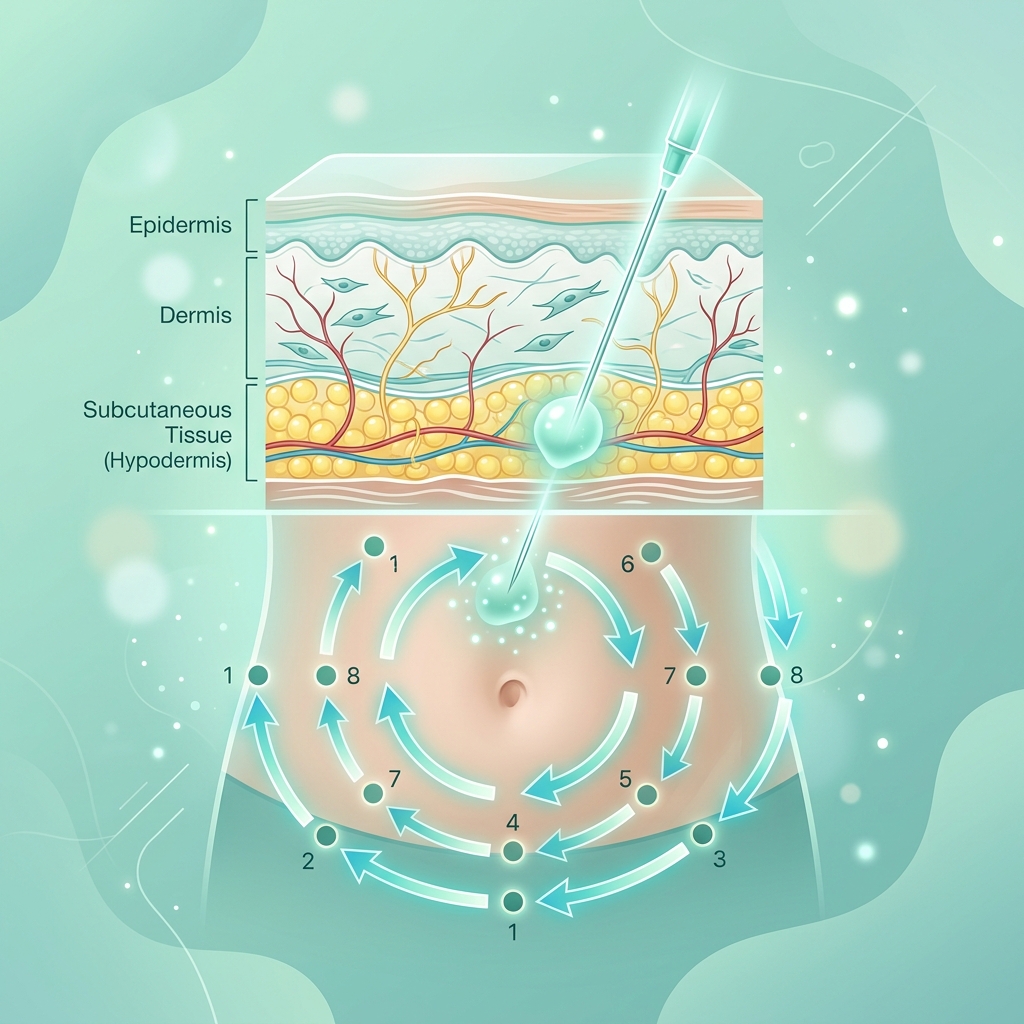
- Four Common Reactions: Most injection site reactions present as harmless redness, localized itching, minor bruising, or a temporary subcutaneous lump (nodule).
- Benign vs. Systemic: Standard localized reactions stay small (under 2 inches) and fade in a few days. Systemic allergic reactions (difficulty breathing, lip swelling, hives everywhere) require emergency medical attention.
- The Temperature Factor: Injecting cold fluid straight from the refrigerator triggers local tissue irritation and pain; allowing the medication to sit at room temperature for 15 to 30 minutes significantly reduces discomfort.
- Weekly Rotation: Rotating injection sites weekly among the abdomen, thigh, and outer arm prevents tissue hardening (lipohypertrophy) and allows previous spots to heal.
- Technique Fixes: Administer at a 90-degree angle to hit the subcutaneous layer, avoiding too-shallow intradermal delivery, and never rub or massage the skin after injecting.
- Symptom Relief: Mild symptoms are easily managed at home using cold compresses, over-the-counter 1% hydrocortisone cream, or topical antihistamines.
Introduction: Navigating Injection Site Reactions on GLP-1 Therapy
Glucagon-like peptide-1 (GLP-1) receptor agonists, most notably semaglutide (marketed commercially as Wegovy® and Ozempic®), have redefined the therapeutic approach to chronic weight management and metabolic health. By acting on key neurological pathways to suppress appetite, slowing gastric motility, and improving insulin sensitivity, these medications help patients achieve life-altering weight loss. However, because semaglutide requires weekly subcutaneous administration, patients must navigate the mechanical and biological realities of self-injection.
Among the most common, yet frequently misunderstood, side effects are localized skin reactions at the injection site. These reactions, which include redness, itching, bruising, and hard subcutaneous lumps, can be alarming for patients who are new to injectable therapies. While these issues are usually benign and temporary, they represent a significant psychological barrier to adherence if left unaddressed. In clinical settings, optimizing injection technique is one of the most effective strategies for maintaining patient comfort and treatment continuity.
This clinical guide provides an exhaustive review of a semaglutide injection site reaction: why it occurs, how to differentiate standard skin responses from serious systemic allergies, and, most importantly, the precise mechanical adjustments you can make to prevent them. By mastering these simple technique adjustments, you can continue your metabolic wellness journey with absolute confidence and minimal physical discomfort.
Subcutaneous Anatomy: The Science of Injecting Semaglutide
To understand why injection site reactions happen, it is helpful to look at the structural layers of human skin. Subcutaneous injections are designed to deliver medication into the fat layer directly beneath the dermis and epidermis, but above the underlying skeletal muscle. This layer of subcutaneous adipose tissue is characterized by a sparse supply of sensory nerve endings and blood vessels, making it the ideal physiological target for slow, steady drug absorption.
When semaglutide is injected into subcutaneous fat, it acts as a localized fluid deposit (depot). Because fat tissue is relatively poorly vascularized compared to muscle, the active peptide molecules pass slowly and steadily into the lymphatic channels and capillaries, maintaining stable therapeutic levels in the blood over a seven-day half-life. If you want to learn more about how this medication acts systemically to suppress appetite and optimize metabolic pathways, consult our complete guide to semaglutide.
However, if the injection technique is flawed, the medication can accidentally be delivered into the wrong tissue layer. If the needle is inserted at too shallow an angle, the fluid is deposited into the dermis (intradermal injection). The dermis is packed with sensory nerves, capillaries, and immune cells (including mast cells and dendritic cells). Depositing semaglutide or its chemical stabilizers here causes immediate tissue distortion, severe pain, intense itching, and localized inflammatory reactions like hives. Conversely, if the needle is inserted too deeply, it can penetrate the skeletal muscle, causing localized bleeding, rapid absorption, and muscle soreness. Achieving the precise subcutaneous depth is critical for avoiding both localized skin reactions and systemic dosing issues.
Pathophysiology: Why the Skin Reacts to GLP-1 Injections
Localized skin reactions to semaglutide occur through a combination of mechanical trauma and localized chemical irritation. The act of inserting a micro-needle, even a tiny 32-gauge needle, causes minor physical disruption to the skin layers. When fluid is pushed into the subcutaneous tissue, it creates mechanical pressure, stretching the surrounding cells and capillaries. In response, the body initiates a localized inflammatory cascade to repair the minor damage.
In addition to physical trauma, the chemical components of the injection can irritate the skin. Prefilled pens and compounded solutions contain active semaglutide peptides alongside inactive stabilizers, buffers, and preservatives, such as phenol or metacresol. These preservatives prevent bacterial growth and maintain the structural integrity of the peptide, but they can act as mild chemical irritants to sensitive tissues. When these agents remain in contact with the dermis or dense fat layers, they can trigger localized contact dermatitis or mild hypersensitivity reactions. For patients who want to learn more about the safety and purity standards of these compounded formulations, our guide on is compounded semaglutide safe offers a detailed look at compounding pharmacy regulations and quality control protocols.
On a cellular level, these physical and chemical stressors can trigger localized mast cell degranulation. Mast cells are key components of the immune system that reside in the skin. When they detect mechanical stress, thermal shock (such as cold fluid), or chemical irritants, they release histamine, prostaglandins, and cytokines. This chemical release causes surrounding blood vessels to dilate (resulting in redness) and fluid to leak into the tissue (causing swelling and hives), while stimulating sensory nerve endings to send itch signals to the brain. This reaction is local and does not indicate a systemic allergy; rather, it is a normal, localized immune response to a foreign substance.
The Four Primary Types of Localized Injection Reactions
Most localized reactions to semaglutide fall into one of four distinct categories. Recognizing the characteristics of each type allows you to manage symptoms effectively and avoid unnecessary anxiety.
1. Transient Erythema (Redness)
Transient erythema is characterized by a localized pink or red patch of skin directly surrounding the needle insertion site. This redness is caused by local vasodilation—the widening of micro-capillaries in response to physical penetration or chemical stabilizers in the formula. Erythema typically appears within a few hours of injection, does not exceed one to two inches in diameter, and remains warm but not hot to the touch. In the vast majority of cases, this redness resolves within 24 to 48 hours without any treatment. It is a common tissue response to subcutaneous therapy and does not require a change in treatment protocol.
2. Localized Pruritus (Itching)
Itching at the injection site is caused by the release of histamine from local mast cells. This histamine release stimulates the unmyelinated C-fibers in the skin, sending a persistent itch signal to the brain. While localized pruritus can be bothersome, it is usually mild and self-limiting. It is crucial to avoid scratching the area; scratching causes further mechanical trauma, damages the skin barrier, and increases the risk of a secondary bacterial infection. It can also worsen the itch-scratch cycle by triggering more mast cells to degranulate and release additional histamine.
3. Minor Bruising and Ecchymosis
Bruising (ecchymosis) occurs when the needle accidentally punctures a tiny blood vessel or capillary in the skin, causing a small amount of blood to leak into the surrounding subcutaneous tissue. A semaglutide bruise can range in color from purple and blue to yellow and green as the body reabsorbs the leaked red blood cells. Bruising is heavily influenced by injection technique. For example, inserting the needle slowly, wiggling it during delivery, or aggressively massaging the skin afterward increases capillary damage and worsens bruising. While visually prominent, small injection bruises are harmless and fade naturally over one to two weeks.
4. Subcutaneous Nodules (Harmless Fluid Lumps)
One of the most common and alarming reactions is the appearance of a small, firm, painless lump under the skin, known as a subcutaneous nodule. These nodules are formed by the fluid deposit of the medication sitting in the fat layer before it has been absorbed. Because subcutaneous fat is dense, the injected liquid must push aside tissue fibers to create space, resulting in a temporary, palpable lump. These nodules are completely benign and represent a normal physical deposit of the drug. They typically resolve within three to seven days as the lymphatic system and capillary network absorb the fluid. They do not cause long-term tissue damage or scarring.
Start Your Semaglutide Program for $79/Month
Consult with a board-certified U.S. medical provider online. Your monthly prescription includes genuine compounded semaglutide, clinical supervision, and free expedited shipping. No hidden fees or insurance required.
Get Started OnlineBenign Skin Reactions vs. Systemic Allergic Reactions
While standard localized skin reactions are common and harmless, patients must be able to distinguish them from systemic allergic reactions. Systemic reactions (Type I IgE-mediated hypersensitivity or anaphylaxis) are rare but require immediate emergency medical care.
The table below outlines the key clinical differences between a benign localized skin reaction and a dangerous systemic allergic response:
| Symptom Category | Benign Localized Reaction | Systemic Allergic Reaction (Emergency) |
|---|---|---|
| Location | Strictly confined to a 1 to 2-inch radius around the needle insertion point. | Spread across the body; hives, swelling, or redness far from the injection site. |
| Skin Presentation | Mild redness, minor bruising, or a single small lump under the skin. | Widespread hives (urticaria), generalized itching, or severe swelling. |
| Facial Swelling | None. | Swelling of the lips, tongue, eyelids, face, or throat (angioedema). |
| Respiration | Normal, unimpeded breathing. | Difficulty breathing, wheezing, stridor, throat tightness, or coughing. |
| Cardiovascular | Stable heart rate and normal blood pressure. | Rapid heart rate (tachycardia), dizziness, confusion, or fainting (hypotension). |
| Resolution Timeline | Fades spontaneously within 24 to 72 hours (nodules up to 7 days). | Rapidly worsens over minutes to hours; requires epinephrine intervention. |
If you experience any symptoms of a systemic allergic reaction, administer an epinephrine auto-injector if you have been prescribed one, and seek immediate emergency medical care (call 911 or go to the nearest emergency room). Once a systemic hypersensitivity reaction is confirmed, you must permanently discontinue semaglutide and all other GLP-1 receptor agonists, as subsequent exposures can trigger more severe anaphylaxis. If you are experiencing general gastrointestinal side effects instead of skin issues, you can read our clinical guide on how to manage semaglutide nausea to keep your titration progress on track.
Clinical Fixes: Step-by-Step Injection Technique Optimization
Most localized injection site reactions are not caused by the drug itself, but by small errors in how the injection is prepared and administered. By optimizing your technique, you can minimize tissue irritation, prevent bruising, and stop nodules from forming. Implement these four key adjustments to improve your injection experience:
1. Rotate Sites Weekly
Injecting into the exact same location week after week leads to chronic tissue inflammation, micro-scarring, and a condition called lipohypertrophy—the hardening of subcutaneous fat. Hardened tissue absorbs medication poorly and is more prone to painful reactions. To prevent this, rotate your injection sites weekly using a structured rotation schedule.
Subcutaneous injections are approved for three anatomical zones: the abdomen (avoiding a two-inch radius around the navel), the front and outer aspect of the thighs, and the outer back of the upper arms. Never inject into skin that is tender, bruised, red, hard, or scarred. If you use the abdomen, divide it into four quadrants (upper right, lower right, upper left, lower left) and use a different quadrant each week. This simple practice gives previous injection sites a full month to heal before being used again.
A primary catalyst for localized injection site reactions is administering cold liquid directly into the skin. Subcutaneous tissues are highly vascularized and populated by sensory nerve endings that are sensitive to thermal shock. Injecting semaglutide immediately after removing it from the refrigerator causes severe localized vasoconstriction, micro-spasms in the surrounding muscle fibers, and physical trauma to the fat cells. This temperature mismatch triggers rapid mast cell degranulation, leading to immediate pain, burning, redness, and itching.
The solution is simple: Let your prefilled pen or syringe sit out of the refrigerator for 15 to 30 minutes prior to injection. Bringing the solution to room temperature (between 59°F and 86°F or 15°C to 30°C) allows the chemical stabilizers and active peptides to align with body temperature, ensuring a smooth, virtually painless insertion and minimizing the localized inflammatory response. Do not use external heat sources (such as microwaves, hot water, or sunlight) to warm the medication, as this will denature the peptide proteins.
3. Perfect the Needle Angle and Depth
To avoid painful, itchy intradermal injections, you must deliver the medication cleanly into the subcutaneous fat layer. Prefilled semaglutide pens are equipped with short, ultra-fine needles (typically 4mm to 8mm in length) designed to penetrate the dermis and reach the fat layer when inserted straight in.
Always insert the needle at a 90-degree angle relative to the skin surface. Use a quick, steady, dart-like motion rather than pushing the needle in slowly. Pushing slowly stretches the skin and stimulates pain receptors, whereas a swift insertion passes through the outer skin layers with minimal discomfort. If you have a very lean body composition, you can gently pinch a one-inch fold of skin between your thumb and forefinger to lift the subcutaneous fat away from the underlying muscle, insert the needle at 90 degrees, deliver the dose, wait 6 to 10 seconds, withdraw the needle, and release the skin fold.
4. Eliminate Post-Injection Massaging
Many patients instinctively rub or massage the skin immediately after injecting to disperse the liquid and prevent lumps. However, this practice is highly counterproductive. Massaging the site causes the micro-needle to wiggle inside the tissue, tearing capillaries and worsening bruising. It also forces the injected liquid out of the subcutaneous fat and up into the dermis. Because the dermis contains a high density of sensory nerves and immune cells, this displacement causes intense burning, itching, and localized swelling. Instead of massaging, apply gentle, steady pressure with a clean cotton ball or gauze pad for 5 to 10 seconds if a drop of blood or fluid appears at the site. Let the medication disperse and absorb naturally.
Supportive Care: Managing Skin Irritation at Home
If you experience a localized reaction despite using proper technique, several simple, evidence-based home care strategies can ease discomfort and speed up healing:
- Apply a Cold Compress: If you experience immediate burning, swelling, or redness, apply a cold compress or an ice pack wrapped in a clean towel to the area for 10 to 15 minutes. The cold temperature constricts local blood vessels (reducing redness and swelling) and numbs the sensory nerve endings, providing rapid relief from pain and itching. Never apply ice directly to the bare skin, as this can cause thermal tissue injury.
- Use Over-the-Counter 1% Hydrocortisone Cream: For persistent itching or redness, apply a thin layer of OTC 1% hydrocortisone cream to the affected area twice daily for 2 to 3 days. Hydrocortisone is a mild topical corticosteroid that suppresses localized inflammatory pathways, reducing cytokine production and calming mast cell activity.
- Apply Topical Antihistamines or Calming Creams: Topical creams containing antihistamines (such as diphenhydramine) or skin-soothing ingredients like calamine or colloidal oatmeal can help relieve itching. Calamine provides a cooling sensation that distracts sensory nerves, while colloidal oatmeal helps repair the skin barrier.
- Consider Oral Antihistamines: If you experience significant localized itching that keeps you awake or interferes with daily activities, an over-the-counter second-generation H1 antihistamine, such as cetirizine (Zyrtec), loratadine (Claritin), or fexofenadine (Allegra), can be highly effective. These non-drowsy options block histamine receptors systemically, calming localized skin reactivity.
The Role of Hydration and Skin Nutrition in Recovery
The health of your skin and its ability to process and absorb injections is closely linked to your overall metabolic health, hydration, and nutritional status. When you are on a GLP-1 regimen, your caloric intake drops significantly, making it essential to prioritize nutrient density to support tissue repair and maintain skin barrier function.
First and foremost, staying well-hydrated is critical. Dehydration reduces skin elasticity, slows micro-circulation, and delays the clearance of interstitial fluids, making it harder for subcutaneous deposits to absorb and increasing the likelihood of persistent lumps. Aim to drink 2 to 3 liters of water daily, incorporating electrolytes if you are eating very little or experiencing mild GI side effects. A well-hydrated subcutaneous fat layer allows the medication to disperse smoothly, reducing mechanical pressure on surrounding tissue fibers.
Additionally, focus on consuming adequate dietary protein and skin-supporting micronutrients. Protein provides the essential amino acids required for collagen synthesis and tissue repair, helping the micro-injuries from weekly needles heal quickly. Incorporate lean proteins (such as skinless chicken breast, fish, tofu, and egg whites) into your meals. Micronutrients like Vitamin C and Zinc are key cofactors in collagen synthesis and skin healing. By maintaining optimal hydration and nutrition, you can improve skin healing, reduce localized inflammation, and make your weekly injections a more comfortable part of your routine.
Frequently Asked Questions
A standard injection site reaction is a localized, benign tissue response at the needle entry point. It typically manifests as transient erythema (mild redness), localized pruritus (itching), minor bruising (ecchymosis), or a small, firm, under-the-skin nodule (fluid deposit). These reactions are confined to a small radius (usually less than two inches), are not accompanied by systemic symptoms, and typically resolve spontaneously within a few days without clinical intervention.
A small, firm lump or subcutaneous nodule represents the mechanical deposit of semaglutide fluid in the fat layer before it has fully dispersed. Because subcutaneous adipose tissue is relatively dense, the volume of injected fluid forces tissue fibers apart, creating a temporary pocket. This is completely harmless, benign, and non-inflammatory. It typically takes between three to seven days for the lymphatic system and capillary network to fully absorb the solution and for the nodule to resolve.
Injecting cold semaglutide directly from the refrigerator causes severe thermal shock to the highly sensitive nerves and blood vessels in the subcutaneous fat layer. This triggers localized micro-spasms and rapid vasoconstriction, which damages adjacent fat cells. The resulting cell distress causes localized mast cells to degranulate, releasing histamine and inflammatory cytokines. This chemical cascade manifests as immediate burning, intense itching, and prolonged redness. Allowing the pen or syringe to warm to room temperature for 15 to 30 minutes prevents this response.
The three clinically approved sites for subcutaneous semaglutide administration are the abdomen (at least two inches away from the navel), the front or outer aspect of the thighs, and the outer back of the upper arms. You should rotate sites weekly, never injecting into the exact same spot twice in a row. For example, if you inject into the left lower abdomen on week one, choose the right thigh or the right side of the abdomen on week two. This rotation schedule prevents localized tissue hardening and scarring.
A normal localized reaction is strictly confined to the area immediately surrounding the injection site, is mild in intensity, and resolves within a few days. Conversely, a serious systemic allergic reaction (type I hypersensitivity or anaphylaxis) causes symptoms far beyond the injection site. These include generalized hives (urticaria) spreading across the body, swelling of the lips, tongue, face, or throat, throat tightness, wheezing, dyspnea (difficulty breathing), and severe lightheadedness due to low blood pressure. Systemic reactions require immediate emergency care.
No, you should never rub or massage the area after an injection. Massaging is counterproductive and increases the risk of side effects. The physical pressure can rupture delicate micro-capillaries, leading to bruising and minor bleeding. Furthermore, massaging forces the medication out of the subcutaneous space and into the superficial dermis, which is rich in sensory nerves and immune cells, triggering severe localized hives and pain. Massaging may also accelerate absorption, increasing systemic GI side effects.
Conclusion: A Path to Comfortable and Successful Therapy
Localized skin reactions like redness, itching, bruising, and subcutaneous lumps are common responses as your body adapts to subcutaneous GLP-1 therapy. These issues are almost always benign and reflect a localized tissue response rather than a systemic concern. By making simple changes to your routine—such as rotating injection sites weekly, letting your medication warm to room temperature, injecting at a 90-degree angle, and avoiding post-injection massaging—you can significantly reduce tissue irritation and improve your overall comfort.
Success with semaglutide is a long-term journey. Managing localized side effects proactively ensures you can stay consistent with your therapy and fully realize the drug's metabolic and cardiovascular benefits. Always listen to your body, prioritize proper technique, and work closely with your clinical support team. With these practical adjustments, you can navigate your treatment comfortably and successfully reach your weight loss goals.
Start Compounded Semaglutide at $79/mo — Online Medical Evaluation
Complete your 5-minute online medical assessment, consult with a licensed provider, and receive compounded semaglutide prepared by U.S. state-licensed compounding pharmacies. Free shipping and ongoing clinical support included.
Get Started TodayClinical References & Sources
- Wilding, J. P. H., Bateman, A. H., et al. (2021). Once-weekly semaglutide in adults with overweight or obesity. New England Journal of Medicine, 384(11), 989-1002. ClinicalTrials.gov (NCT03548935)
- Wadden, T. A., Bailey, T. S., et al. (2021). Effect of weekly subcutaneous semaglutide 2.4 mg vs placebo as adjunct to intensive behavioral therapy on body weight in adults with overweight or obesity: The STEP 3 randomized clinical trial. JAMA, 325(14), 1403-1413. JAMA Publication
- Rubino, D., Accurso, N., et al. (2021). Effect of continued weekly subcutaneous semaglutide 2.4 mg vs placebo on weight maintenance in adults with overweight or obesity: The STEP 4 randomized clinical trial. JAMA, 326(22), 2267-2277. JAMA Publication
- Kushner, R. F., Calanna, S., et al. (2020). Semaglutide 2.4 mg for the treatment of obesity: Key findings from the STEP clinical trial program. Obesity, 28(6), 1050-1061. Obesity Research
- U.S. Food and Drug Administration. (2024). Human Drug Compounding Under Section 503A of the FD&C Act. FDA.gov Guidance