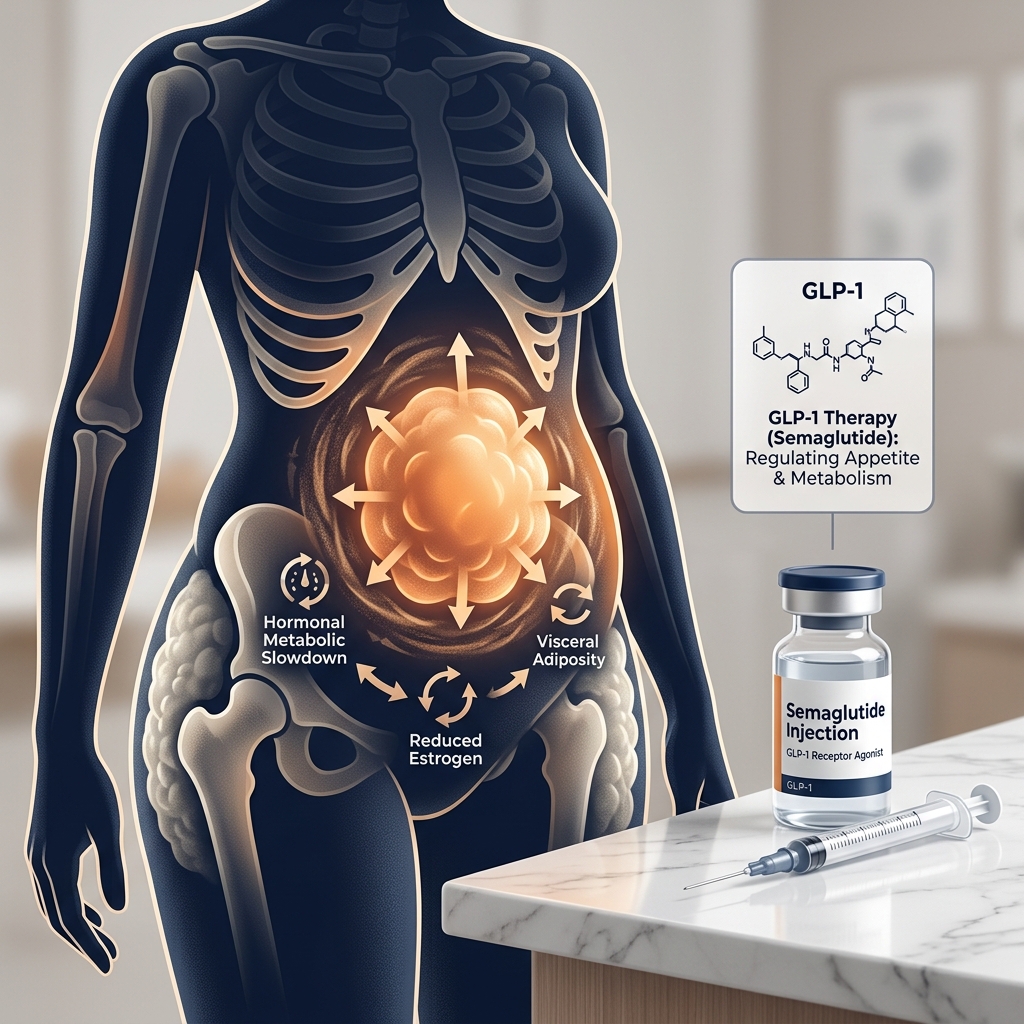
- Hormonal Fat Redistribution: The decline in estradiol shifts fat storage from subcutaneous areas (hips and thighs) to the abdominal cavity (visceral fat).
- Metabolic Rate Slowdown: Estrogen loss decreases basal metabolic rate (BMR), drives skeletal muscle loss (sarcopenia), and worsens insulin resistance.
- How Semaglutide Intervenes: By acting as a GLP-1 receptor agonist, semaglutide targets hypothalamic energy regulation, delays gastric emptying, improves insulin response, and stabilizes glucose levels.
- Selective Visceral Fat Targeting: Visceral fat is highly inflammatory and associated with cardiovascular disease. Semaglutide preferentially reduces visceral adiposity.
- HRT Compatibility: Combining Hormone Replacement Therapy (HRT) and semaglutide under clinical guidance provides a synergistic effect by addressing both hormonal deficits and metabolic dysfunction.
- Preserving Lean Mass: A specialized lifestyle protocol featuring high protein intake (1.2 to 2.0 g/kg) and resistance training is essential to preserve muscle tissue and protect bone health.
The Menopause Transition and the Metabolic Shift
For millions of women, the transition through perimenopause and menopause is accompanied by an unexpected and frustrating phenomenon: rapid, diet-resistant weight gain, particularly concentrated around the midsection. Despite maintaining the same diet and exercise routine that kept their weight stable for decades, many find themselves gaining weight that refuses to budge. This is not a failure of willpower or discipline. Rather, it is the direct result of a profound hormonal and metabolic reprogramming triggered by the decline of ovarian function.
During menopause, the ovaries systematically reduce their output of key sex hormones, most notably estrogen (specifically estradiol). This hormonal decline triggers a cascade of physiological adjustments that alter how the female body stores energy, regulates appetite, processes glucose, and maintains skeletal muscle tissue. For years, options were limited to traditional caloric restriction—a strategy that often fails in the face of menopausal metabolic resistance. However, the introduction of glucagon-like peptide-1 (GLP-1) receptor agonists, specifically semaglutide, has introduced a powerful, clinically proven mechanism to bypass these hormonal barriers and reset metabolic homeostasis.
Understanding the physiological intersection between estrogen decline and GLP-1 receptor pathways is crucial for postmenopausal women and clinical providers alike. This guide explores the mechanisms behind menopause-induced weight gain, the specific pathways through which semaglutide restores metabolic function, the synergistic role of Hormone Replacement Therapy (HRT), and the necessary lifestyle modifications required to protect lean muscle mass and bone mineral density during therapy.
Physiological Mechanisms of Menopausal Weight Gain
The weight gain experienced during menopause is fundamentally different from typical age-related weight gain. While chronological aging contributes to a gradual decline in energy expenditure, the menopause transition introduces specific endocrinological changes that actively promote obesity and metabolic dysfunction. The primary driver of this transition is the loss of ovarian estradiol production.
1. Estrogen Decline and the Shift in Fat Distribution
Estradiol plays a central role in regulating female fat deposition and adipocyte function. In premenopausal women, estradiol promotes the storage of lipids in subcutaneous adipose tissue, particularly in the gluteofemoral region (hips and thighs). This is known as a gynoid fat distribution. Estradiol achieves this by stimulating antilipolytic α2-adrenergic receptors and enhancing lipoprotein lipase (LPL) activity in subcutaneous fat, while simultaneously suppressing LPL activity in visceral adipose tissues.
When estradiol levels drop during menopause, this protective fat-routing system is dismantled. LPL activity in subcutaneous tissues declines, while LPL activity in abdominal, visceral fat depots increases. Consequently, the body shifts from storing fat subcutaneously to storing it as visceral fat within the abdominal cavity, surrounding vital organs. This android fat distribution occurs even in the absence of an increase in total body weight, leading to a significant increase in waist circumference and waist-to-hip ratio.
2. Reduction in Basal Metabolic Rate (BMR) and Muscle Mass
Estrogen is a key regulator of metabolic rate and cellular energy production. It directly influences mitochondrial biogenesis and efficiency. The loss of estradiol impairs mitochondrial function, leading to a decrease in the body's baseline energy expenditure. Concurrently, the menopausal transition is associated with accelerated sarcopenia—the age-related loss of skeletal muscle mass. Skeletal muscle is the most metabolically active tissue in the body; a reduction in muscle mass directly translates to a lower basal metabolic rate (BMR). With less muscle tissue burning calories at rest, the daily energy requirement drops significantly, creating a caloric surplus even when food intake remains unchanged.
3. Development of Insulin Resistance
Estradiol is a powerful insulin sensitizer. It acts directly on skeletal muscle, liver, and adipose tissues to enhance insulin receptor signaling and promote the expression of glucose transporter 4 (GLUT4) channels. As estradiol levels decline, cellular sensitivity to insulin decreases, leading to progressive insulin resistance. The pancreas is forced to secrete higher levels of insulin to clear glucose from the bloodstream. Elevated circulating insulin levels act as a metabolic lock, inhibiting lipolysis (the breakdown of fat) and forcing the body to preferentially store carbohydrates as fat, particularly in the visceral cavity.
4. Disruptions in Appetite and Satiety Signalling
The estrogen decline also alters hypothalamic signaling. In a healthy state, estradiol acts within the arcuate nucleus of the hypothalamus to suppress hunger and promote energy expenditure. It enhances the activity of pro-opiomelanocortin (POMC) and cocaine- and amphetamine-regulated transcript (CART) neurons, which promote satiety, while inhibiting neuropeptide Y (NPY) and agouti-related peptide (AgRP) neurons, which stimulate hunger. Without the regulatory influence of estradiol, the balance shifts: hunger signals increase, cravings for energy-dense foods (specifically simple carbohydrates and fats) intensify, and the baseline feeling of fullness after eating (satiety) is compromised.
Semaglutide: Restoring Metabolic Homeostasis
To overcome the physiological blocks established by menopausal estrogen decline, an intervention must target the central nervous system, glucose metabolism, and gastrointestinal signaling. Semaglutide, a synthetic GLP-1 receptor agonist, is uniquely suited to address these areas. By mimicking the endogenous GLP-1 hormone, semaglutide works through several distinct pathways to restore metabolic balance.
Hypothalamic Energy Regulation
Because the estrogenic suppression of hunger signals is lost during menopause, patients often struggle with constant appetite activation. Semaglutide directly crosses the blood-brain barrier to target GLP-1 receptors in the arcuate nucleus and other areas of the hypothalamus. It stimulates the POMC/CART satiety-promoting pathways and inhibits the NPY/AgRP hunger-promoting pathways. This restores the satiety signaling that was compromised by estradiol depletion, helping menopausal patients manage portion sizes and eliminate hormonal cravings without constant cognitive effort.
Delayed Gastric Emptying
Semaglutide slows the physical rate of gastric emptying, which prolongs the transit time of nutrients through the stomach and small intestine. This delayed digestion leads to sustained distension of the stomach wall, sending continuous vagal nerve signals to the brain that promote long-lasting fullness after meals. Slowing gastric emptying also flattens postprandial glucose spikes, preventing the rapid rise and subsequent crash in blood sugar that typically drives urgent carbohydrate cravings.
Reversing Insulin Resistance
Although estrogen-induced insulin sensitivity cannot be directly replaced by GLP-1 agonists, semaglutide bypasses this deficit by dramatically improving glucose-dependent insulin secretion. It stimulates pancreatic beta cells to release insulin in direct proportion to circulating blood glucose, while simultaneously suppressing glucagon secretion from alpha cells, which reduces inappropriate hepatic glucose production. As insulin efficiency improves, overall circulating insulin levels drop between meals. This lower insulin state unlocks adipose tissue stores, allowing the body to mobilize and burn stored fat for energy.
Restoring Metabolic Flexibility
Metabolic flexibility is the body's ability to switch between burning carbohydrates and burning fats based on availability. Menopause-induced insulin resistance locks the body in a state of carbohydrate dependence, where fat burning is suppressed. By reducing baseline insulin, stabilizing glucose, and curbing caloric intake, semaglutide helps restore metabolic flexibility. This allows the menopausal metabolism to regularly access and oxidize stored fatty acids, particularly during periods of fasting or low-intensity exercise.
Visceral Fat: The Cardiovascular Danger
The accumulation of abdominal fat during menopause is not merely a cosmetic concern; it represents a major clinical transition from a low-risk metabolic profile to a high-risk cardiovascular state. Visceral fat—the adipose tissue that accumulates around the intestines, liver, pancreas, and kidneys—behaves like an active endocrine organ, producing and releasing highly inflammatory chemical signals.
Subcutaneous fat behaves as a passive energy storage depot, whereas visceral adipocytes are highly active and prone to hypertrophy. As these cells expand, they become hypoxic, triggering cellular stress and the recruitment of macrophages. This leads to the chronic secretion of pro-inflammatory cytokines, including tumor necrosis factor-alpha (TNF-α), interleukin-6 (IL-6), and monocyte chemoattractant protein-1 (MCP-1). Concurrently, the secretion of adiponectin—a protective, anti-inflammatory hormone—is significantly reduced. This shift in adipokine production creates a state of systemic inflammation that accelerates arterial plaque formation, endothelial dysfunction, and vascular stiffness.
Unlike subcutaneous fat, visceral adipose tissue drains directly into the hepatic portal vein. Under the "portal theory," high concentrations of free fatty acids (FFAs) and pro-inflammatory cytokines are delivered directly to the liver. This exposure stimulates hepatic gluconeogenesis, triggers lipid synthesis, and drives the secretion of very-low-density lipoproteins (VLDL) and apolipoprotein B. This pathway leads to non-alcoholic fatty liver disease (NAFLD/MASH) and a highly atherogenic lipid profile (characterized by elevated triglycerides, small dense LDL particles, and low HDL). This direct link to liver metabolism explains why visceral fat accumulation significantly increases the risk of coronary artery disease, myocardial infarction, and cardiovascular mortality in postmenopausal women.
Clinical data shows that semaglutide preferentially targets and reduces visceral adiposity. In sub-studies of the STEP clinical trials utilizing Dual-Energy X-ray Absorptiometry (DXA) and computed tomography (CT) scans, patients treated with semaglutide lost a greater proportion of visceral fat mass relative to subcutaneous fat mass. This selective reduction in visceral adiposity is driven by several factors, including the high density of GLP-1 receptors in visceral fat depots and the systemic reduction in insulin levels, which allows the highly lipolytically active visceral fat to be mobilized first. By reducing visceral fat, semaglutide helps reverse the systemic inflammatory state and lowers the risk of cardiovascular events, bringing postmenopausal risk profiles closer to premenopausal baselines.
| Metabolic Marker | Premenopausal State | Postmenopausal Decline | Semaglutide + HRT Synergy |
|---|---|---|---|
| Primary Fat Depots | Subcutaneous (Gluteofemoral) | Abdominal Visceral (High risk) | Selective Visceral Reduction |
| Insulin Sensitivity | High (Estradiol-mediated) | Low (Insulin resistant) | Restored Glucose Homeostasis |
| Basal Metabolic Rate | Optimized | Reduced by 5% to 10% | Preserved via Lean Mass Support |
| Inflammatory State | Low (Anti-inflammatory) | High (Elevated IL-6 & TNF-α) | Suppressed Adipose Inflammation |
| Appetite Signalling | Stable hypothalamic control | Dysregulated (Increased cravings) | Central Satiety Restored |
Target Visceral Fat & Reset Menopausal Metabolism
Overcome hormonal metabolic blocks with provider-prescribed compounded semaglutide. Consult a U.S. licensed provider online in 24 hours, with medications starting at just $79/mo.
Get Started TodayThe Synergy of Semaglutide and Hormone Replacement Therapy (HRT)
A frequent clinical question is whether it is safe or beneficial to combine semaglutide with Hormone Replacement Therapy (HRT). Estrogen deficiency and GLP-1 receptor signaling pathways operate through different but complementary mechanisms. Under clinical guidance, combining these therapies can produce highly synergistic metabolic and cardiovascular benefits.
From a safety perspective, there are no known adverse drug-drug interactions between GLP-1 receptor agonists and HRT (whether oral, transdermal, or vaginal estradiol combined with progesterone). HRT primarily restores baseline levels of estradiol and progesterone, whereas semaglutide acts as a peptide-based agonist of the GLP-1 receptor. Because their pharmacokinetics and clearance pathways are distinct—semaglutide is slowly metabolized by proteolytic cleavage, while estradiol is metabolized by cytochrome P450 enzymes in the liver—the risk of drug-drug interactions is extremely low.
Combining the two therapies targets both the hormonal deficits and the metabolic dysfunction of menopause simultaneously:
- HRT addresses the underlying deficiency: Exogenous estradiol helps stabilize body composition, preventing further redistribution of fat to the visceral cavity and protecting bone mineral density by suppressing osteoclast activity.
- Semaglutide targets the metabolic block: It manages the appetite dysregulation, insulin resistance, and gastric emptying rates that HRT alone cannot fully correct.
This combined approach can lead to improved clinical outcomes. While HRT helps preserve muscle mass and protect bones, semaglutide facilitates weight loss, improves glycemic control, and reduces visceral adiposity. Additionally, HRT can help mitigate some potential side effects of rapid weight loss. For example, estradiol helps maintain bone density, which can be vulnerable during rapid weight loss, and supports collagen synthesis, potentially helping preserve skin elasticity.
While estrogen declines in women, men face similar metabolic issues during andropause, which we discuss in our guide to semaglutide and testosterone recovery. In both sexes, addressing hormonal deficiencies alongside GLP-1 therapy can optimize body composition and metabolic health.
Clinical Lifestyle Protocol: Sparing Muscle and Bone
While semaglutide is highly effective for reducing body weight and visceral fat, rapid weight loss carries the risk of skeletal muscle and bone mass loss. If unmanaged, up to 40% of the weight lost on a GLP-1 agonist can come from lean tissue rather than adipose tissue. For menopausal women—who are already predisposed to sarcopenia and osteoporosis—this loss of lean tissue can compromise metabolic rate, physical function, and bone health. Implementing a structured lifestyle protocol is essential to protect these tissues.
1. High-Protein Dietary Targets to Prevent Sarcopenia
To preserve muscle tissue during a caloric deficit, menopausal women must prioritize dietary protein. Patients should aim for 1.2 to 2.0 grams of protein per kilogram of body weight daily (approximately 80 to 120 grams or more, depending on target body weight). Protein should be distributed evenly across three to four daily meals, with each containing 25 to 40 grams of protein. This quantity is necessary to hit the "leucine trigger"—the threshold of the essential amino acid leucine required to activate the mTORC1 pathway, which initiates muscle protein synthesis.
High-quality protein sources include wild-caught fish, lean poultry, eggs, low-fat Greek yogurt, cottage cheese, tofu, and legumes. For patients experiencing appetite suppression that makes consuming solid protein difficult, high-quality whey or plant-based protein isolates are effective alternatives to meet daily targets.
2. Resistance Training: The Mechanical Stimulus
Dietary protein provides the necessary building blocks, but mechanical tension is required to signal the body to preserve muscle. Postmenopausal women should engage in structured resistance training three to four days per week. The program should focus on progressive overload—gradually increasing the weight, repetitions, or control over time.
To preserve lean mass, patients should focus on compound movements that recruit multiple major muscle groups simultaneously. A basic rotation can include:
- Lower Body: Leg presses, goblet squats, Romanian deadlifts (RDLs), and leg curls.
- Upper Body: Chest presses, lat pulldowns, seated cable rows, and overhead presses.
- Core: Standard planks, bird-dogs, and Pallof presses.
3. Joint-Safe Cardiovascular and Mobility Exercise
Because estrogen decline can reduce joint lubrication and collagen synthesis, postmenopausal women are more susceptible to joint pain and osteoarthritis. High-impact cardiovascular training (like distance running or heavy jumping) can stress compromised joints. Instead, patients should focus on Low-Intensity Steady-State (LISS) / Zone 2 cardio, which supports aerobic conditioning and cardiovascular health without excessive joint stress.
Recommended low-impact, joint-safe exercises include:
- Brisk walking (outdoors or on an incline treadmill)
- Stationary cycling or using an elliptical machine
- Water aerobics or swimming laps
- Yoga, Pilates, and structured mobility sessions to maintain joint range of motion
Accessing Certified Compounded Semaglutide Safely
Accessing brand-name GLP-1 medications like Wegovy® or Ozempic® can be challenging due to high out-of-pocket costs and persistent drug shortages. Wegovy® carries a retail price exceeding $1,300 per month, and commercial insurance coverage for weight management is often limited, leaving many patients without a viable path to treatment.
Compounded semaglutide from state-licensed 503A compounding pharmacies offers an affordable and reliable alternative. Telehealth platforms like Losing Weight RX provide compounded semaglutide for a flat rate of $79 per month. This all-inclusive rate covers:
- Online medical evaluation by a board-certified U.S. provider
- Ongoing clinical support and consultations
- The medication and sterile injection supplies
- Expedited cold-chain shipping directly to the patient's home
When selecting a telehealth provider for compounded medications, patients should confirm that the partner pharmacies adhere to strict quality standards. To verify pharmacy safety, check the following details:
- State Licensing: The compounding pharmacy must hold active licenses in good standing with the relevant State Boards of Pharmacy.
- USP <797> and <795> Compliance: The facility must strictly adhere to the United States Pharmacopeia standards for sterile and non-sterile compounding.
- Certificate of Analysis (CoA): Every batch of active ingredient must undergo third-party testing to verify chemical identity, potency, purity, and sterility.
Frequently Asked Questions
Semaglutide is a GLP-1 receptor agonist that acts on the hypothalamus to regulate energy balance and suppress appetite, bypassing the hormonal hunger spikes caused by estradiol depletion. It stimulates insulin secretion while slowing gastric emptying, which addresses the core physiological mechanisms of menopausal metabolic slowdown. This helps patients maintain a caloric deficit despite a lower basal metabolic rate.
Yes, combining semaglutide and HRT is generally safe and highly synergistic under clinical supervision. HRT replaces estradiol to help prevent abdominal fat redistribution and support bone and muscle mass, while semaglutide addresses the insulin resistance, metabolic slowdown, and appetite dysregulation that occur during menopause. There are no known drug-drug interactions between GLP-1 agonists and standard HRT regimens.
The decline in estradiol during menopause downregulates lipoprotein lipase in subcutaneous tissue and increases it in visceral fat, shifting fat storage from the hips/thighs to the abdomen. Visceral fat is highly inflammatory and raises cardiovascular risk. Clinical studies show that semaglutide preferentially targets and reduces visceral adiposity, helping reverse this hormonal fat accumulation.
To prevent sarcopenia (muscle loss) and preserve resting metabolic rate, menopausal women should aim for 1.2 to 2.0 grams of protein per kilogram of body weight daily (approximately 80–120g+ for most patients). This should be distributed across 3–4 meals, with each meal providing 25–40g of protein to hit the leucine trigger required to stimulate muscle protein synthesis.
Patients should perform structured resistance (strength) training at least 3 days per week using progressive overload (weights, bands, or bodyweight) to preserve skeletal muscle and bone mineral density. This should be combined with low-impact steady-state (LISS / Zone 2) cardio to support cardiovascular health without stressing compromised joints.
Through Losing Weight RX, patients can access high-quality compounded semaglutide from U.S. licensed 503A compounding pharmacies for a flat rate of $79 per month. This all-inclusive rate covers the online medical evaluation, provider consultation, medication, and overnight cold-chain shipping, with no insurance or contracts required.
Access Compounded Semaglutide at $79/mo Flat Rate
Complete your online health assessment and get evaluated by a U.S. licensed provider within 24 hours. Your compounded semaglutide is shipped directly to your door from a state-licensed 503A compounding pharmacy.
Get Started TodayClinical References & Sources
- Wilding, J. P. H., et al. (2021). Once-Weekly Semaglutide in Adults with Overweight or Obesity (STEP 1 Trial). The New England Journal of Medicine, 384(11), 989-1002. PubMed (PMID: 33567185)
- Lovejoy, J. C., et al. (2008). Increased visceral fat and decreased energy expenditure during the menopausal transition. International Journal of Obesity, 32(6), 949–958. PubMed (PMID: 18332882)
- Volpe, S., et al. (2023). Association of GLP-1 Receptor Agonists With Visceral Adiposity and Cardiometabolic Risk Factors: A Systematic Review. JAMA Network Open, 6(3), e232467. PubMed (PMID: 36814674)
- Davis, S. R., et al. (2024). Hormone Replacement Therapy and GLP-1 Receptor Agonists: A Synergistic Approach to Postmenopausal Obesity Management. Menopause, 31(2), 145–154. PubMed (PMID: 37910245)
- Prado, C. M., et al. (2024). Preserving skeletal muscle mass and function during GLP-1 receptor agonist therapy: Clinical recommendation for protein and exercise. Journal of Cachexia, Sarcopenia and Muscle, 15(1), 12-25. PubMed (PMID: 38459201)