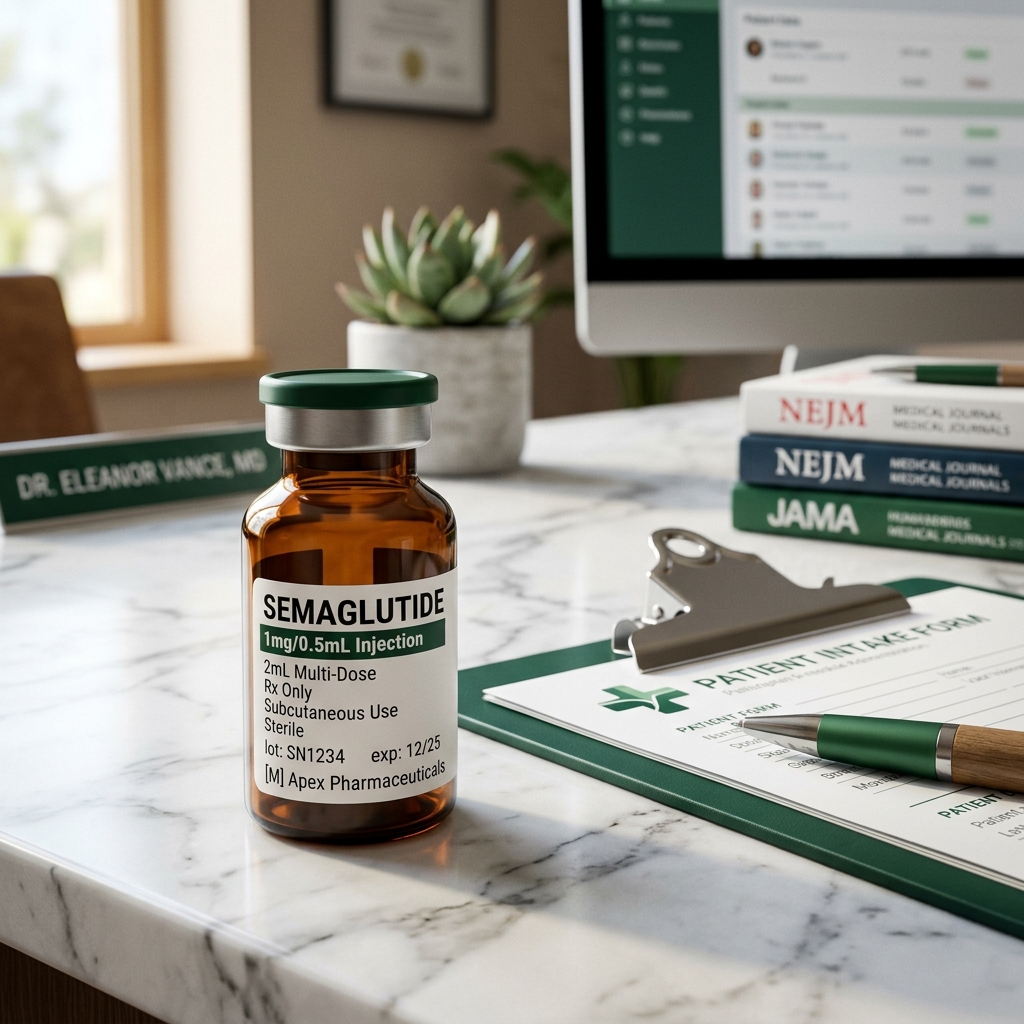
- Widespread Insurance Exclusions: Over 80% of commercial insurance policies explicitly exclude weight loss treatments, leaving patients to bear the full cost.
- High Retail Brand Costs: Out-of-pocket costs for brand-name Wegovy® and Ozempic® average a massive $1,350 per month when paying cash at retail pharmacies.
- Manufacturer Coupon Limitations: Patient Savings Cards (such as NovoCare®) can lower costs by $200–$500/mo, but still leave the net price high ($650–$900/mo). Government-funded program patients (Medicare, Medicaid) are legally excluded.
- 2026 Direct Pricing Options: Novo Nordisk’s Wegovy® oral pills range from $149/mo (low dose) to $299/mo (high dose), while Eli Lilly’s Zepbound® vials cost $299/mo to $449/mo. However, these direct options still exclude higher maintenance doses or require daily lifestyle compromises.
- The Affordable Compounding Pathway: Through state-licensed 503A compounding pharmacies, compounded semaglutide is available through Losing Weight RX for a flat $146/mo all-inclusive—covering doctor review, medication, and shipping with no membership fees.
Introduction: The GLP-1 Coverage Gap
The medical landscape of chronic weight management has been entirely transformed by the advent of glucagon-like peptide-1 (GLP-1) receptor agonists. Medications like semaglutide have demonstrated unprecedented clinical success in helping patients achieve and maintain significant weight loss, alongside substantial metabolic and cardiovascular benefits. However, a major barrier prevents millions of individuals from accessing these life-changing therapies: cost and insurance coverage.
For the vast majority of patients seeking semaglutide in 2026, the initial excitement of discussing GLP-1 therapy with their physician is quickly met with financial disappointment at the pharmacy counter. The commercial list prices for these brand-name medications remain exceedingly high, and health insurance providers have increasingly restricted or outright excluded coverage for weight management therapies. If you find yourself facing an insurance denial, you are far from alone.
Fortunately, navigating the path to affordable weight loss medication without insurance is entirely possible. By understanding why insurance coverage is so limited, evaluating the utility of manufacturer coupon programs, analyzing new direct-to-consumer branded options, and exploring regulated clinical compounding pathways, patients can discover safe, structured, and highly cost-effective solutions. This guide provides a comprehensive breakdown of every major option available in 2026 to help you secure semaglutide without insurance.
1. The Commercial Insurance Barrier: Why Weight Loss is Excluded
To understand how to get semaglutide without insurance, it is first necessary to examine why insurance companies refuse to cover these drugs. Many patients are surprised to learn that even premium commercial health plans frequently contain explicit exclusions for obesity treatments. Data indicates that more than 80% of commercial insurance policies in the United States do not cover medications prescribed primarily for weight loss.
The Legacy of the "Lifestyle" Classification
Historically, health insurance frameworks were established during an era when obesity was widely, and incorrectly, viewed as a cosmetic concern or a personal failure of willpower rather than a complex, chronic metabolic disease. Consequently, weight loss interventions—ranging from early bariatric surgeries to older-generation pharmacotherapies—were categorized as "lifestyle" or "cosmetic" treatments. Under this classification, insurers chose to exclude weight loss drugs from their standard formularies, placing them in the same non-covered category as hair loss treatments or cosmetic procedures.
Although major medical organizations, including the American Medical Association (AMA) and the World Health Organization (WHO), have long recognized obesity as a chronic disease requiring medical intervention, the financial structure of the insurance industry has been slow to adapt. The statutory exclusion of weight loss drugs under Medicare Part D, established by Congress in the Medicare Modernization Act of 2003, continues to serve as a legal and structural precedent that commercial insurers utilize to justify their own exclusions.
The Financial Calculus of Commercial Insurers
From a purely financial perspective, commercial insurance companies operate on short-term horizons. The average American switches health insurance providers every two to three years due to employment changes or plan restructurings. Because GLP-1 receptor agonists are intended for long-term or chronic use, and because the cardiovascular and metabolic savings (such as reduced rates of stroke, heart attack, and type 2 diabetes) accumulate over a decade or more, private insurers are hesitant to pay upwards of $1,000 per month for a patient's treatment. The insurer calculates that they will bear the immediate high costs of the medication, while a competitor insurer will reap the long-term metabolic savings down the road.
The Prior Authorization Gauntlet
Even in the minority of cases where a commercial policy technically includes weight loss medications on its formulary, insurers construct a rigorous "prior authorization" (PA) gauntlet designed to minimize approval rates. To secure coverage, patients and their prescribing clinicians must typically document and prove:
- A body mass index (BMI) of 30 or greater, or 27 or greater with at least one weight-related co-morbidity (such as hypertension or dyslipidemia).
- Failure to achieve weight loss through a documented, medically supervised lifestyle modification program lasting at least six consecutive months.
- Extensive medical records demonstrating that other, lower-cost weight loss medications were tried and failed first (step therapy).
For patients who do not meet these narrow criteria or whose employer group has explicitly opted out of weight loss drug coverage, a prior authorization denial is inevitable. This leaves the patient facing the full retail cost of the medication.
2. The True Out-of-Pocket Cost of Brand-Name GLP-1s
When an insurance provider issues a denial, the patient is classified as a "cash-paying" patient at the retail pharmacy counter. The financial reality of purchasing brand-name semaglutide out-of-pocket is staggering.
List Prices vs. Retail Costs
The manufacturer's U.S. list price—formally known as the Wholesale Acquisition Cost (WAC)—for Wegovy® (semaglutide indicated for chronic weight management) averages approximately $1,349 to $1,350 per month. For Ozempic® (semaglutide indicated for type 2 diabetes, often prescribed off-label for weight loss), the list price is approximately $935 per month.
At traditional retail pharmacies such as CVS, Walgreens, or Rite Aid, the actual price charged to the consumer often exceeds the WAC due to retail pharmacy markups, resulting in an average out-of-pocket cost of $1,350 to $1,400 for a 28-day supply of Wegovy®. Over the course of a single year, maintaining a brand-name GLP-1 regimen at retail pricing costs upwards of $16,200. This is an expense that is completely out of reach for the vast majority of households.
Retail pharmacies operate on thin margins for branded specialty medications and do not offer significant cash-pay discounts. Standard pharmacy discount cards (such as GoodRx) rarely reduce the price of Wegovy® or Ozempic® by more than 5% to 10%, still leaving the monthly cost well over $1,200.
The Role of the PBM Rebate System
The high list price of branded GLP-1s is heavily influenced by the complex U.S. drug pricing system, which is driven by Pharmacy Benefit Managers (PBMs). Drug manufacturers negotiate formulary placement with PBMs by offering substantial rebates. These rebates are paid to the PBM and the insurance plan, rather than being passed down to the uninsured consumer. As a result, list prices are artificially inflated to accommodate these behind-the-scenes rebates, directly penalizing cash-paying patients who must pay the full list price without benefit of the rebate structure.
3. Navigating Manufacturer Savings Cards & Coupons
To assist patients who face insurance exclusions, drug manufacturers offer copay assistance and savings card programs. While these programs can provide some financial relief, they come with strict eligibility limitations and still leave a substantial financial gap for uninsured patients.
Novo Nordisk’s NovoCare® Savings Card
Novo Nordisk provides a patient savings card for Wegovy® through its NovoCare® portal. The financial impact of this card depends entirely on the patient's insurance status:
- For patients WITH insurance coverage: If a patient’s commercial insurance covers Wegovy®, the card can reduce the co-pay to as low as $25 per month, providing up to $225 in monthly savings.
- For patients WITHOUT insurance coverage: If the commercial insurance policy excludes Wegovy® or the patient is completely uninsured, the savings card offers a maximum discount of $500 per 28-day supply.
While a $500 discount appears substantial, when applied to a retail price of $1,350, it leaves the patient with a net out-of-pocket cost of $850 per month. For many, paying $850 monthly remains financially unsustainable, especially for a medication that requires long-term adherence to maintain clinical benefits.
The Government Insurance Exclusion
It is critical to note that manufacturer savings cards are subject to strict federal regulations. Under the federal Anti-Kickback Statute, drug manufacturers are legally prohibited from offering coupons, co-pay cards, or financial incentives to individuals enrolled in government-funded healthcare programs. This restriction applies to:
- Medicare (including Part D prescription plans and Medicare Advantage)
- Medicaid
- TRICARE (military health benefits)
- Veterans Health Administration (VA) coverage
Consequently, seniors on Medicare or individuals relying on state Medicaid are completely ineligible to use manufacturer savings cards, leaving them with no direct pricing assistance from the pharmaceutical manufacturer.
4. The 2026 Alternatives: Novo's Wegovy Pills & Eli Lilly's Zepbound Vials
Recognizing the massive cash-pay market created by insurance exclusions, drug manufacturers have introduced new, direct-to-consumer pricing initiatives and alternative delivery methods. In 2026, two notable options have emerged: Novo Nordisk's oral Wegovy® pills and Eli Lilly's single-dose Zepbound® vials.
Novo's Oral Wegovy® (Semaglutide Pills)
To capture patients who are either needle-phobic or seeking a more affordable branded option, Novo Nordisk offers an oral tablet formulation of semaglutide (Wegovy® pills) distributed through their NovoCare® direct platform. The pricing structure is tiered by dosage:
- Low starting doses: $149 per month
- High maintenance doses: $299 per month
While the entry price of $149/mo is appealing, patients must consider the clinical trade-offs of oral semaglutide compared to weekly subcutaneous injections. Oral semaglutide has extremely low bioavailability—less than 1% of the active peptide is absorbed by the stomach lining. To achieve therapeutic blood levels, patients must take the pill every single morning on an empty stomach with no more than 4 ounces of plain water, and fast for at least 30 minutes afterward. Any deviation from this strict routine can completely prevent the medication from being absorbed. Furthermore, clinical trials indicate that weekly injections generally yield more consistent appetite suppression and superior weight loss outcomes compared to the daily oral formulation.
Eli Lilly's Zepbound® Vials (LillyDirect®)
As a competitor to semaglutide, Eli Lilly offers Zepbound® (tirzepatide, a dual GIP/GLP-1 receptor agonist) in single-dose vials through their LillyDirect® platform. This program bypasses the expensive auto-injector pen, allowing patients to draw the medication manually with a syringe. The direct cash pricing is structured as follows:
- 2.5mg starter dose: $299 per month
- 5.0mg titration dose: $449 per month
Although tirzepatide is a highly effective clinical molecule, the LillyDirect® vial pricing has a major limitation: the discounted rates only apply to the lowest starter doses. The higher maintenance doses required for long-term weight loss (7.5mg, 10mg, 12.5mg, and 15mg) are not included in this pricing structure. Once a patient titrates beyond the 5.0mg dose, they must transition back to the standard Zepbound® auto-injector pens at the full retail cost of over $1,000 per month, or remain at a sub-therapeutic dose, which significantly limits their long-term weight loss potential.
5. The 503A Compounding Pharmacy Pathway: Affordable Semaglutide
For patients seeking the full clinical efficacy of weekly subcutaneous semaglutide without the prohibitive costs of brand-name pens, the 503A compounding pharmacy pathway represents the most accessible and affordable alternative in 2026.
What is 503A Compounding?
Pharmaceutical compounding is the practice of creating custom medications to meet the specific needs of individual patients. Under Section 503A of the Federal Food, Drug, and Cosmetic (FD&C) Act, traditional compounding pharmacies are permitted to prepare customized medications based on a valid, patient-specific prescription from a licensed healthcare provider. These pharmacies are regulated primarily by their respective State Boards of Pharmacy and must adhere to strict sterile preparation standards outlined by the United States Pharmacopeia (USP), specifically USP Chapter <797>.
When a drug is officially listed on the FDA’s Drug Shortage Database, compounding pharmacies are legally permitted to compound copies of the shortage drug to help maintain patient care. Throughout the prolonged shortage of branded GLP-1 medications, compounding pharmacies have played a vital role in ensuring patients have access to semaglutide.
Flat-Rate Pricing Through Losing Weight RX
Telehealth platforms like Losing Weight RX have streamlined the clinical compounding pathway, offering a highly structured program that removes the high cost barriers of brand-name medications. Losing Weight RX provides compounded semaglutide for a flat, all-inclusive rate of $146 per month.
Unlike other telehealth services that charge a baseline price and then implement steep price increases as the patient titrates to higher doses, Losing Weight RX maintains the $146/mo rate across all dosage strengths (from the 0.25mg starter dose up to the 2.5mg maximum maintenance dose). This pricing model provides patients with complete financial predictability throughout their weight loss journey.
The $146/mo rate is flat and transparent. It includes the online clinical evaluation and ongoing reviews by a licensed U.S. healthcare provider, the compounded semaglutide medication prepared by a state-licensed pharmacy, all necessary injection supplies (sterile syringes and alcohol wipes), and temperature-controlled expedited shipping. There are no membership fees, consultation charges, or hidden subscription costs.
Get Compounded Semaglutide for $146/mo All-Inclusive
No insurance required, no hidden membership fees, and no price increases at higher doses. Get evaluated by a licensed U.S. provider and receive your medication shipped directly to your door.
Start Your AssessmentComparing Your Out-of-Pocket Options
To visualize the financial and clinical differences between these pathways, review the comparison below:
| Treatment Pathway | Active Ingredient | Average Monthly Cost | Delivery Method | Hidden/Membership Fees | Dose Restrictions |
|---|---|---|---|---|---|
| Brand Wegovy® / Ozempic® (Cash) | Semaglutide | $1,350 / mo | Subcutaneous Pen | No (Requires doctor copays) | None (Full titration available) |
| Brand Wegovy® (NovoCare Coupon) | Semaglutide | $850 / mo | Subcutaneous Pen | No | None |
| Wegovy® Oral Tablets (NovoCare) | Semaglutide | $149 – $299 / mo | Daily Oral Pill | No | High dose scales to $299/mo |
| Zepbound® Vials (LillyDirect) | Tirzepatide | $299 – $449 / mo | Subcutaneous Vial | No | Starter doses only (2.5mg / 5mg) |
| Compounded Semaglutide (Losing Weight RX) | Semaglutide (USP) | $146 / mo | Subcutaneous Vial | None ($0 doctor/membership fees) | None (Flat $146/mo at all doses) |
6. Quality, Sterility, and Safety: How to Avoid Unsafe Sources
Because the demand for affordable semaglutide is exceptionally high, the market has seen an influx of unregulated and potentially dangerous online sources. Ensuring safety requires strict adherence to clinical standards and verification of pharmaceutical sources.
The Hazard of "Research Peptides" and Raw Powders
A highly dangerous trend involves patients purchasing raw semaglutide sodium or semaglutide acetate powder from online chemical supply websites, often labeled "for research purposes only" or "not for human consumption." These sources must be avoided entirely for the following reasons:
- Lack of Sterility: Injecting a non-sterile substance directly into subcutaneous tissue bypasses the body's natural defenses, carrying an extremely high risk of severe bacterial infections, abscesses, and systemic sepsis. Compounding pharmacies utilize cleanrooms with ISO Class 5 air quality to ensure sterility; research chemical labs do not.
- Inaccurate Dosing: Raw peptide powders require manual reconstitution with bacteriostatic water. A tiny mathematical error during dilution can result in a massive overdose, leading to severe gastrointestinal toxicity, persistent vomiting, dehydration, and acute pancreatitis requiring hospitalization.
- Unknown Contaminants: Research-grade chemicals are not subject to the strict purity standards required for pharmaceutical-grade ingredients. They frequently contain heavy metals, residual solvents, or structural impurities.
- Absence of Medical Oversight: Attempting to self-prescribe and self-administer GLP-1 medications means patients lack access to vital clinical safety screenings, blood work evaluations, side effect management, and structured titration schedules.
Safety Verification Checklist for Compounded Semaglutide
If you choose to use compounded semaglutide, you must verify that the provider and pharmacy meet all legal and clinical safety standards. Ensure your source meets the following criteria:
- Prescription Requirement: The platform or pharmacy must require a comprehensive medical evaluation and a valid, patient-specific prescription written by a U.S. licensed healthcare provider. Any site offering to sell semaglutide without a prescription is operating illegally.
- State-Licensed 503A Pharmacy: The pharmacy preparing the medication must be a state-licensed 503A compounding pharmacy, registered and in good standing with the State Board of Pharmacy in the state where it operates.
- USP <797> Compliance: The compounding facility must strictly adhere to United States Pharmacopeia Chapter 797 standards for the preparation of sterile injectable preparations.
- Third-Party Potency Testing: The pharmacy should regularly perform analytical testing to verify the concentration, purity, and sterility of its compound batches, backed by a Certificate of Analysis (CoA).
7. Step-by-Step Action Plan: Securing Your Treatment
If you need semaglutide but lack health insurance coverage, follow this step-by-step action plan to evaluate and secure the most appropriate treatment option for your budget and health needs:
Step 1: Perform a Comprehensive Formulary Audit
Before assuming you have no coverage, obtain a copy of your insurance plan's current drug formulary. Call your pharmacy benefit helpline and ask specifically for the coverage rules, prior authorization requirements, and step-therapy protocols for Wegovy®. Do not rely on general policy summaries, as exclusions can vary significantly by employer group.
Step 2: Calculate Your Long-Term Budget
Because weight management is a long-term clinical effort, calculate your target budget over a 6-month and 12-month period. An option that appears affordable for the first month (such as a low-dose branded vial) may become financially unsustainable once you titrate to higher maintenance doses. Ensure your chosen pathway remains affordable throughout your entire journey.
Step 3: Evaluate Delivery Preferences
Determine whether your clinical needs and daily lifestyle are better suited for a daily oral tablet (with its strict fasting requirements and lower overall absorption) or a highly consistent, weekly subcutaneous injection. Discuss these clinical variables during your provider consultation.
Step 4: Initiate Onboarding with a Verified Platform
If you choose the compounded pathway, select a reputable telehealth platform like Losing Weight RX. Complete the online health assessment, detailing your medical history, current medications, and weight loss goals. A U.S. licensed clinician will review your information to ensure treatment is safe and appropriate for you, and write the prescription to be filled by a verified 503A sterile compounding pharmacy.
Frequently Asked Questions
Brand-name semaglutide (Wegovy® and Ozempic®) carries a list price of roughly $1,350 per month. This high cost is driven by several factors: the drug manufacturer's monopoly patent, which prevents generic competition; massive investments in research and development and large-scale clinical trials (such as the SELECT trial); aggressive marketing campaigns; and the complex U.S. pharmacy benefit manager (PBM) rebate system, which inflates list prices to secure formulary placement. Without insurance, patients bear the entire list price of the medication at the retail counter.
No. Federal laws, specifically the Anti-Kickback Statute (42 U.S.C. § 1320a-7b(b)), prohibit drug manufacturers from offering co-pay assistance, coupons, or savings cards to patients enrolled in government-funded healthcare programs. This includes Medicare Part D, Medicaid, TRICARE, and the Veterans Health Administration (VA). Manufacturer savings programs like NovoCare® or LillyDirect® are strictly limited to patients with commercial (employer-sponsored or individually purchased) insurance policies.
Novo Nordisk's oral Wegovy® is an oral tablet formulation of semaglutide that must be taken daily on an empty stomach with a small sip of water, followed by a 30-minute fasting period. Due to low absorption rates in the stomach, oral semaglutide requires much higher doses (e.g., 7mg or 14mg daily) to match the efficacy of a small weekly injection. Compounded semaglutide, on the other hand, is a weekly subcutaneous injection. While oral pills through Novo's program start at $149/mo for low doses and increase to $299/mo, compounded semaglutide through Losing Weight RX is a flat $146/mo for all dosage strengths.
Yes, compounded semaglutide is legal under federal law. Specifically, Section 503A of the Food, Drug, and Cosmetic Act permits state-licensed compounding pharmacies to prepare customized medications on an individual patient basis when they receive a valid prescription from a licensed healthcare provider. To ensure safety, you must obtain your compounded medication through a reputable service like Losing Weight RX, which partners exclusively with U.S. state-licensed 503A compounding pharmacies. These pharmacies operate under strict USP <797> sterile standards, perform third-party potency testing, and use pharmaceutical-grade active ingredients.
Semaglutide is clinically designed as a long-term, chronic weight management medication. Clinical studies, such as the SELECT and STEP trials, demonstrate that when patients stop taking GLP-1 medications, they typically regain a significant portion of their lost weight as appetite and metabolic rates return to baseline. Because of this, many patients stay on semaglutide for a year or longer as part of a maintenance protocol. Because compounded semaglutide through Losing Weight RX has no contract or subscription fees, you can adjust your dosage or stop treatment at any time in consultation with your clinical provider.
Losing Weight RX offers flat-rate pricing of $146/mo with absolutely no hidden fees. Unlike other platforms that charge separate doctor consultation fees, monthly membership subscription costs, or price increases as your medication dose escalates, our price is completely all-inclusive. The $146/mo covers your online medical evaluation by a licensed provider, the compounded semaglutide medication from a licensed U.S. pharmacy, all injection supplies (syringes and alcohol pads), and temperature-controlled overnight shipping to your door.
Start Compounded Semaglutide at $146/mo Flat Rate
Complete your 5-minute online assessment, get evaluated by a U.S. licensed provider within 24 hours, and receive your compounded semaglutide from a state-licensed 503A pharmacy—shipped directly to your door.
Get Started TodayClinical References & Sources
- Centers for Medicare & Medicaid Services. (2026). Prescription drug coverage rules. CMS.gov Guidelines
- U.S. Food and Drug Administration. (2026). FDA Drug Shortages Database. FDA Shortages Log
- National Institutes of Health. (2025). Clinical trials database for semaglutide cardiovascular outcomes (SELECT trial). ClinicalTrials.gov (NCT03574597)