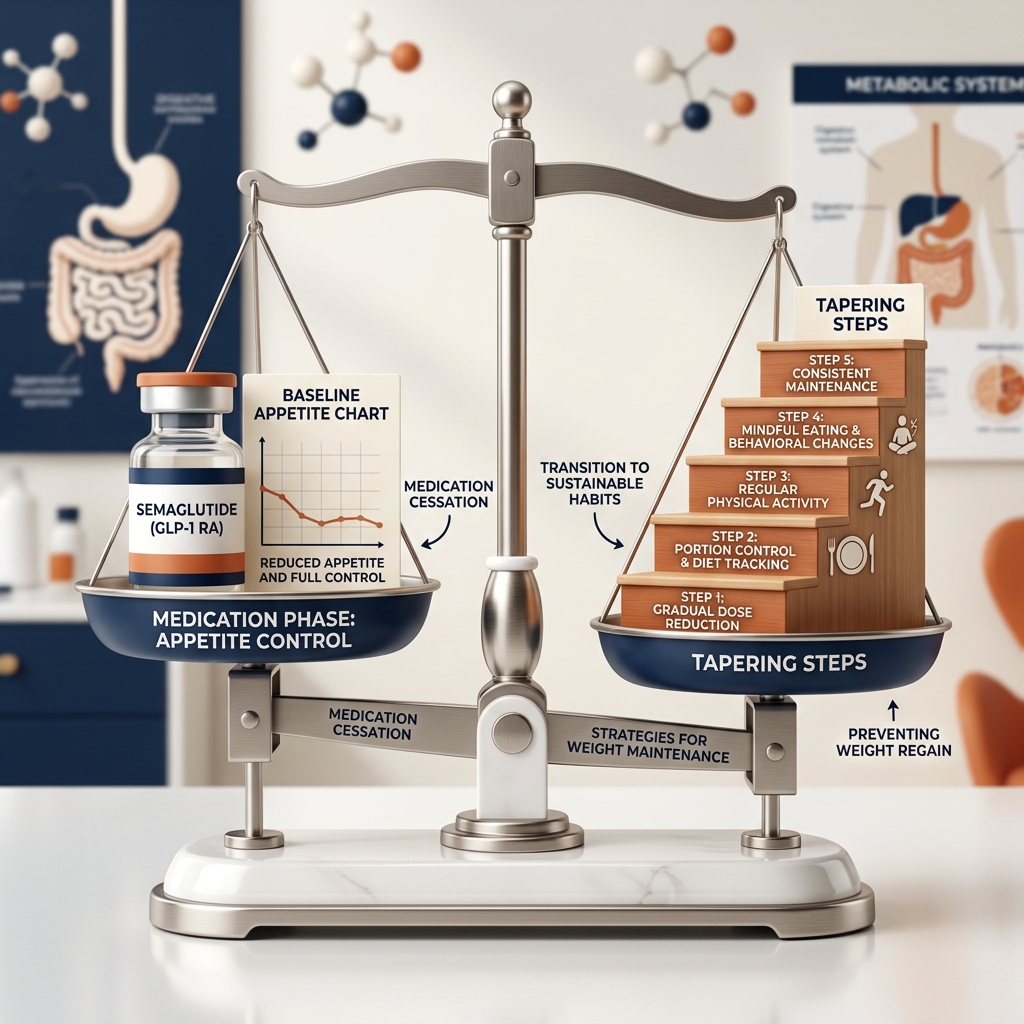
- The Rebound Reality: Clinical data from the STEP-1 extension trial demonstrates that patients regain approximately two-thirds of their lost weight within one year of stopping semaglutide.
- Appetite Return: Discontinuing semaglutide results in a rapid drop in GLP-1 receptor activation, causing the return of "food noise," accelerated gastric emptying, and increased hunger.
- Metabolic Adaptation: The body adapts to weight loss by lowering its energy expenditure (RMR), making it biologically easier to regain weight once the pharmaceutical appetite suppression is removed.
- Gradual Tapering: Slowly tapering the dosage over weeks or months under clinical guidance helps mitigate the shock of sudden hormone withdrawal, allowing the satiety pathways to adapt.
- Transition Protocols: Transitioning to non-GLP-1 support, such as Metformin or other weight management aids, can act as a critical bridge to stabilize metabolic rate and manage insulin resistance.
- Structured Lifestyle: Successful maintenance off semaglutide requires strict macro tracking, a high protein target (1.2–1.6 g/kg), high fiber intake, and structured resistance training to prevent muscle loss.
Introduction: The Discontinuation Dilemma
The introduction of glucagon-like peptide-1 (GLP-1) receptor agonists has fundamentally changed the landscape of metabolic medicine. Medications like semaglutide—known commercially as Ozempic® for type 2 diabetes and Wegovy® for chronic weight management—have allowed millions of individuals to achieve clinically significant weight loss, often exceeding 15% of their initial body weight. However, as more patients reach their target weight, a critical clinical question has emerged: What happens when you stop Ozempic?
For many, the assumption is that the metabolic and behavioral changes achieved during treatment will remain permanent. However, obesity is medically defined as a chronic, progressive metabolic disease. When the chemical support that regulates appetite, gastric motility, and insulin secretion is withdrawn, the body's natural homeostatic mechanisms attempt to return to their baseline states. Understanding the physiological transition that occurs after stopping semaglutide is essential for any patient planning their long-term weight maintenance strategy.
The Pharmacology of Semaglutide: How It Controls Appetite
To comprehend the consequences of stopping semaglutide, one must first understand how it works when active in the body. Semaglutide is a peptide-based GLP-1 receptor agonist that shares 94% structural homology with native human GLP-1, a hormone naturally secreted by the L-cells of the distal gut in response to food intake. By modifying the peptide structure, pharmaceutical developers extended its half-life to approximately 7 days, allowing for once-weekly subcutaneous injection.
Semaglutide exerts its metabolic effects through three primary pathways:
- Central Nervous System Satiety Control: The drug crosses the blood-brain barrier and binds directly to GLP-1 receptors in the arcuate nucleus of the hypothalamus. It stimulates pro-opiomelanocortin (POMC) neurons (which promote satiety) and inhibits neuropeptide Y (NPY) and agouti-related peptide (AgRP) neurons (which stimulate hunger). This dual action suppresses obsessive thoughts of food, commonly referred to as "food noise."
- Delayed Gastric Emptying: Semaglutide relaxes the smooth muscles of the stomach, slowing the rate at which food is cleared into the duodenum. This physical delay in gastric emptying keeps the stomach distended for a longer period, sending sustained mechanical satiety signals to the hindbrain via the vagus nerve.
- Incretin Mimicry and Glycemic Regulation: It enhances glucose-dependent insulin secretion from pancreatic beta cells while suppressing glucagon secretion from alpha cells, lowering systemic glucose levels and reducing the rapid insulin spikes that trigger reactive hunger.
When the weekly administration of semaglutide ceases, these three regulatory systems gradually revert to their unassisted baselines, triggering a sequence of physiological adjustments.
The Elimination Timeline: How Long Does Semaglutide Last?
Discontinuing semaglutide does not result in an immediate metabolic crash. Because of its structural modifications, the peptide has a prolonged half-life of 7 days. In pharmacokinetics, it takes approximately 5 half-lives for a drug to be completely eliminated from systemic circulation. Therefore, semaglutide takes about 35 days (5 weeks) after the final dose to clear from the body entirely.
During this 5-week washout period, patients typically experience a gradual shift in their appetite and digestion:
Days 1 to 7 (The First Week): During the first week after a missed dose, circulating levels of the drug remain relatively high. Satiety and gastric delay are still active, though the patient may notice a subtle return of mild hunger towards the end of the weekly cycle.
Days 8 to 14 (The Second Week): As the concentration of semaglutide falls by approximately 50%, the delay in gastric emptying begins to normalize. The stomach empties at its pre-treatment rate. Satiety signals from the brain weaken, and the patient may notice the first signs of returning "food noise." To manage potential gastrointestinal side effects during transitions, refer to our clinical guide on how to manage semaglutide nausea.
Days 15 to 28 (Weeks Three and Four): Circulating peptide levels drop below clinical threshold levels.Satiety centers in the hypothalamus are no longer actively stimulated by the synthetic agonist. Satiety from normal-sized portions decreases significantly, and hunger levels return to near baseline. Food cravings, particularly for calorie-dense foods, may increase.
Day 35 and Beyond (Week Five and After): Semaglutide is completely cleared. The patient's metabolic and appetite regulation is now entirely determined by their endogenous physiology, genetic set-points, and lifestyle habits.
The STEP-1 Extension Trial: Clinical Evidence of Rebound
The primary concern surrounding the discontinuation of semaglutide is weight regain. The most robust clinical data documenting this phenomenon comes from the STEP-1 Trial Extension, published in Diabetes, Obesity and Metabolism (Wilding et al., 2022).
The STEP-1 trial was a randomized, double-blind clinical study where participants received once-weekly subcutaneous semaglutide 2.4 mg (Wegovy®) or a placebo, alongside lifestyle interventions, for 68 weeks. At the end of the 68-week period, a subset of participants entered an off-treatment extension phase. During this phase, all pharmacological support was withdrawn, and participants were monitored for an additional 52 weeks while receiving no medication.
The results of the extension trial were clinically revealing:
- Weight Regain: Within 52 weeks of stopping semaglutide, participants regained an average of two-thirds (65.6%) of the weight they had lost during the active treatment phase.
- Cardiometabolic Reversion: The improvements in cardiovascular risk factors observed during treatment—such as reductions in systolic and diastolic blood pressure, improvements in HbA1c (glycemic control), reductions in fasting lipids, and lower C-reactive protein (CRP)—largely reverted toward pre-treatment baselines.
- Body Composition: The weight regained was predominantly fat tissue, meaning that patients who lost lean muscle mass during active weight loss and did not rebuild it ended up with a higher body fat percentage than they had at their starting weight.
In the STEP-1 Extension Trial, participants who had lost an average of 17.3% of their initial body weight on semaglutide 2.4 mg regained approximately 11.6% of their body weight within 12 months of stopping the drug. This confirms that the weight-loss benefits of semaglutide require ongoing receptor activation. Discontinuing the medication without a structured transition protocol triggers a rapid biological rebound, driving body weight back toward its original metabolic set-point.
This clinical trial confirmed that obesity is a chronic, relapsing disease. Just as blood pressure increases when a patient stops taking an antihypertensive, weight increases when a patient stops taking a GLP-1 receptor agonist.
The Biology of Rebound: Why Your Body Fights to Regain Weight
The rapid weight regain observed after stopping semaglutide is not a failure of willpower; it is a highly coordinated biological response driven by evolutionary survival mechanisms. When you lose a substantial amount of weight, your body does not perceive this as an improvement in health. Instead, it interprets the weight loss as a threat of starvation and deploys several compensatory mechanisms to force you back to your original weight (the metabolic set-point).
1. The Return of Central "Food Noise" and Hypothalamic Reversion
When semaglutide clears from the hypothalamus, the synthetic suppression of NPY and AgRP neurons is lifted. Simultaneously, the stimulation of POMC satiety pathways stops. This shift triggers a sudden surge in hunger signals. Because the reward centers in the brain are no longer receiving the dopamine-mimicking satiety signals from the drug, cravings for high-calorie, hyper-palatable foods (rich in fats and sugars) return, often with greater intensity than before treatment. This psychological and physiological urge to eat is what patients describe as the return of "food noise."
2. Normalization of Gastric Motility
As the stomach's smooth muscles regain their normal contractile speed, gastric emptying accelerates. Food moves through the stomach and into the intestines at a rapid, pre-treatment pace. The physical sensation of fullness that previously lasted for hours after a small meal now fades within 60 to 90 minutes. Without the physical distension of the stomach walls, mechanical satiety signaling ceases, prompting the patient to eat larger portions to achieve the same sense of fullness.
3. Metabolic Adaptation (Adaptive Thermogenesis)
During the weight loss phase, the body responds to the caloric deficit by reducing its energy expenditure. This is known as metabolic adaptation. A portion of this decrease is due to the loss of mass (a smaller body requires fewer calories to move and maintain itself), but a significant portion is driven by "adaptive thermogenesis"—a biological downregulation of metabolic efficiency.
When you lose weight:
- Your Resting Metabolic Rate (RMR) drops as your thyroid hormones (active T3) and sympathetic nervous system activity decrease.
- Your Non-Exercise Activity Thermogenesis (NEAT) decreases, meaning you unconsciously fidget less, sit more, and burn fewer calories through daily movement.
- Your muscles become more biochemically efficient, requiring fewer calories to perform the same amount of physical work.
When you stop semaglutide, this lowered energy expenditure persists. If your appetite returns to its pre-treatment baseline, but your daily energy expenditure is now 300 to 500 calories lower due to metabolic adaptation, you will gain weight rapidly even if you consume the exact same amount of food you did before starting the medication. This metabolic mismatch is the primary driver of the rebound effect.
4. Peripheral Hormonal Shifts
Weight loss alters the peripheral hormones secreted by your adipose tissue and gut. Adipose (fat) tissue secretes leptin, the hormone responsible for signaling long-term energy abundance to the brain. As you lose fat, your leptin levels fall. Lower leptin signals the hypothalamus that energy stores are critically low, triggering hunger and reducing metabolic rate.
At the same time, the stomach increases its secretion of ghrelin, the primary hunger hormone. In a post-weight-loss state, ghrelin levels remain elevated for months, keeping you in a constant state of physiological hunger. When semaglutide's synthetic satiety signal is removed, the low-leptin, high-ghrelin state is exposed, creating a powerful biological drive to overeat.
Taper Off Semaglutide Safely with Medical Guidance
Whether you want to reduce your dose or transition off semaglutide completely, our board-certified providers can customize a safe, gradual taper protocol. Access clinical support and flat-rate compounded semaglutide starting at $79/month.
Start Your Transition ConsultationThe Case for a Gradual Taper Protocol
Stopping semaglutide "cold turkey" (abruptly discontinuing the maintenance dose, such as 2.4 mg weekly) is the most common reason for severe appetite rebound and rapid weight regain. When the drug is suddenly withdrawn, the brain and gut experience a rapid physiological drop in GLP-1 receptor activation. This shock triggers intense hunger, food noise, and gastric clearance, making it highly difficult to maintain calorie control.
To prevent this, clinical weight loss providers recommend a gradual taper protocol. Tapering involves slowly reducing the dosage of semaglutide over weeks or months, or increasing the time interval between injections. This gradual reduction allows the body's homeostatic systems to adapt slowly to lower hormone levels.
Clinical Tapering Methods
A structured tapering plan is customized by a medical provider based on the patient's individual history, starting weight, maintenance dose, and sensitivity to hunger. Two primary clinical methods are used:
Method A: Dose Titration Downward
In this method, the patient reverses the initiation titration protocol. For example, if the patient is on a maintenance dose of 2.0 mg or 2.4 mg per week, they do not stop immediately. Instead, they step down to the next lowest clinical dose for a period of 4 to 6 weeks, monitoring their hunger and weight at each stage:
- Reduce from 2.4 mg to 1.7 mg weekly for 4 weeks.
- Reduce from 1.7 mg to 1.0 mg weekly for 4 weeks.
- Reduce from 1.0 mg to 0.5 mg weekly for 4 weeks.
- Reduce from 0.5 mg to 0.25 mg weekly for 4 weeks, then discontinue.
If at any step (e.g., at 1.0 mg) hunger becomes unmanageable or weight regain begins, the patient can remain at that dose as their new, lower "maintenance" level rather than stopping completely.
Method B: Interval Spacing Extrusion
This method involves keeping the dose constant but gradually increasing the number of days between injections. This is highly effective for patients using pre-filled pens where dose adjustments are difficult, or for patients transitioning to long-term micro-dosing. The timeline typically looks like this:
- Inject maintenance dose every 8 days for 3 weeks.
- Inject maintenance dose every 10 days for 3 weeks.
- Inject maintenance dose every 12 days for 3 weeks.
- Inject maintenance dose every 14 days for 4 weeks, then evaluate for discontinuation or continued micro-dosing.
Spacing out the injections flattens the peaks and valleys of drug concentrations in the blood, smoothing the physiological transition and preventing sudden spikes in appetite.
Transition Medications: Bridging the Metabolic Gap
Tapering semaglutide is often paired with non-GLP-1 transition medications. These acts as metabolic "bridges" that support satiety, manage insulin resistance, and stabilize energy expenditure without the use of expensive injections. When planning a transition, check the options for obtaining these through cost-effective care. For a breakdown of providers, read about the cheapest semaglutide online in 2026.
The most common transition medications include:
1. Metformin
Metformin is an oral biguanide medication commonly used for type 2 diabetes and prediabetes. It acts as an excellent transition drug due to several unique metabolic mechanisms:
- Insulin Sensitization: Metformin reduces hepatic glucose production and increases insulin sensitivity in peripheral tissues. By keeping insulin levels low and stable, it prevents the rapid blood sugar crashes that trigger hunger and fat storage.
- AMPK Pathway Activation: It activates adenosine monophosphate-activated protein kinase (AMPK), the body's master metabolic switch. AMPK activation supports fat oxidation, mitochondrial biogenesis, and metabolic health.
- Mild Appetite Suppression: Metformin increases the circulating levels of growth differentiation factor 15 (GDF15), a hormone that acts on the hindbrain to reduce appetite and food intake, helping to blunt the return of hunger after stopping semaglutide.
2. Contrave (Naltrexone / Bupropion)
Contrave is a combination of two oral medications: naltrexone (an opioid antagonist) and bupropion (an aminoketone antidepressant). Together, they target the neurobiological reward pathways of eating:
- Food Noise Control: Bupropion stimulates POMC neurons in the hypothalamus to reduce appetite, while naltrexone blocks feedback loops that would otherwise shut these neurons down. This combination directly suppresses food noise.
- Craving Reduction: By modulating dopamine and norepinephrine pathways in the mesolimbic reward system, Contrave helps prevent emotional eating, binge eating, and cravings for sweets and simple carbohydrates.
3. Topiramate
Topiramate is a gamma-aminobutyric acid (GABA) receptor modulator and carbonic anhydrase inhibitor. While originally developed as an anticonvulsant, it is clinically used for weight management (often combined with phentermine). It suppresses appetite through central nervous system pathways, reducing impulsive eating and carbohydrate cravings, making it a valuable tool during the final stages of a semaglutide taper.
Dietary Strategies to Prevent Weight Regain
While pharmacological tools are helpful, long-term weight maintenance off semaglutide is ultimately determined by your daily nutritional habits. Once the drug clears your system, your digestive tract will return to its normal motility, and your brain will receive stronger hunger signals. To counter these changes, you must implement a structured, nutrient-dense diet designed to maximize physical satiety. Establishing a proper nutritional baseline is essential; you can find complete meal plans and macronutrient breakdowns in our ideal semaglutide diet plan.
The Pillars of Maintenance Nutrition
To maintain your weight loss successfully, focus on the following four nutritional rules:
- Prioritize Dietary Protein (1.2 to 1.6 g/kg): Protein is the most satiating macronutrient, possessing the highest Thermic Effect of Food (TEF) and stimulating the release of natural satiety hormones like Peptide YY (PYY) and cholecystokinin (CCK). Aim for 1.2 to 1.6 grams of protein per kilogram of body weight daily (e.g., 96 to 128 grams for an 80 kg individual). Focus on lean sources like skinless chicken breast, wild-caught white fish, egg whites, low-fat Greek yogurt, and tofu.
- High-Volume Fiber (25 to 35 grams daily): Dietary fiber provides physical volume in the stomach, slowing digestion and stretching the stomach walls to trigger mechanical satiety signals. Aim for a minimum of 25 grams of fiber daily for women and 35 grams for men. High-quality sources include leafy green vegetables, cruciferous vegetables (broccoli, cauliflower, Brussels sprouts), chia seeds, flaxseeds, berries, and legumes.
- Low-Glycemic Complex Carbohydrates: Refined carbohydrates (white flour, sugar, processed snacks) cause rapid spikes and drops in blood glucose, leading to intense cravings and energy crashes. Replace them with complex, slow-digesting carbohydrates like quinoa, steel-cut oats, wild rice, and sweet potatoes to maintain stable blood sugar and energy levels.
- Strict Caloric and Macro Tracking: Because your metabolic rate is lower post-weight loss, your margin for error is small. Unconscious eating, large portion sizes, or excessive healthy fats (like oils, nuts, and avocados) can quickly push you into a caloric surplus. Track your daily intake using a food scale and a tracking app to ensure you remain at your calculated maintenance calorie level.
Lifestyle and Movement Pillars for Metabolic Recovery
To counteract metabolic adaptation and maintain weight loss long-term, dietary changes must be paired with structured physical exercise. Movement is not just about burning calories; it is a clinical tool used to alter your body composition and support metabolic health.
1. Progressive Resistance Training (PRT)
Resistance training (weightlifting, bodyweight training, resistance bands) is the single most important exercise habit for maintaining weight loss off GLP-1s. When you lose weight, a significant portion of that loss can come from skeletal muscle mass. Skeletal muscle tissue is highly metabolically active; it drives your resting metabolic rate and acts as the primary site for glucose disposal.
Losing muscle tissue permanently lowers your metabolic rate, making weight regain almost inevitable. Engaging in progressive resistance training at least 3 to 4 times per week stimulates muscle protein synthesis, preserving your existing muscle mass and helping to rebuild any tissue lost during your deficit. Preserving muscle helps protect your resting metabolic rate from dropping further.
2. Zone 2 Cardiovascular Exercise
Zone 2 cardio refers to aerobic exercise performed at a moderate intensity where your heart rate remains between 60% and 70% of your maximum (an intensity where you can maintain a conversation but are working consistently). Examples include brisk walking on an incline, cycling, or rowing.
Zone 2 training improves mitochondrial function and metabolic flexibility, training your muscle cells to burn fat more efficiently for fuel. Target 150 to 300 minutes of moderate cardiovascular activity per week to increase your daily energy expenditure and combat metabolic adaptation.
3. Non-Exercise Activity Thermogenesis (NEAT) Optimization
Because your body unconsciously tries to conserve energy after weight loss, you will naturally move less throughout the day. To counter this drop in NEAT, establish a daily step goal. Aim for 8,000 to 10,000 steps per day, tracking your progress with a wearable device. Small habits—such as taking the stairs, using a standing desk, or walking after meals—can burn an additional 200 to 400 calories daily, helping to prevent weight regain.
Setting Realistic Expectations: Is Obesity a Lifelong Disease?
As you plan your transition, it is important to align your expectations with clinical reality. Obesity is medically classified as a chronic, progressive, and relapsing disease. This classification means that weight regain is not a sign of failure; it is the natural course of the disease when treatment is discontinued.
For many patients, a realistic long-term maintenance strategy does not involve stopping medication completely. Instead, it may look like:
- Long-term Micro-dosing: Remaining on a low, sub-therapeutic dose of semaglutide (such as 0.25 mg or 0.5 mg weekly) to manage food noise and maintain gastric control without further weight loss.
- Cyclical Therapy: Using semaglutide periodically (e.g., restarting treatment for 8 to 12 weeks if weight increases by more than 5 to 10 pounds above your target maintenance weight).
- Lifelong Maintenance: Accepting that ongoing medication is required to manage a chronic condition, similar to taking daily medications for high blood pressure or cholesterol.
Working closely with a board-certified clinical provider is the best way to determine which maintenance path aligns with your health history and metabolic goals.
Compounded Semaglutide Weight Loss Program — Flat $79/mo
Receive U.S. licensed compounded semaglutide from state-regulated pharmacies. Includes online doctor consultation, all-inclusive flat pricing at all dosage strengths, and free cold-chain shipping. Cancel or pause anytime.
Get Started TodayFrequently Asked Questions
When you stop taking Ozempic (semaglutide), the active peptide begins to wash out of your system, which takes approximately 5 weeks based on its 7-day half-life. As drug concentrations decline, GLP-1 receptor activation in the brain decreases, causing appetite-regulating centers to return to baseline. Consequently, your hunger signals will return, gastric emptying will speed up to its normal rate, and "food noise" (persistent thoughts about eating) will re-emerge.
Data from the landmark STEP-1 extension trial demonstrated that patients regained approximately two-thirds of their lost weight within one year of stopping semaglutide. This weight regain is a biological response to the withdrawal of GLP-1 receptor activation, combined with metabolic adaptation (a lower resting metabolic rate) and changes in appetite hormones like leptin and ghrelin.
Food noise returns because semaglutide's synthetic signal, which directly binds to receptors in the hypothalamus to suppress obsessive thoughts about food, disappears. As the drug washes out, the neural pathways in the reward center of the brain return to their pre-treatment baseline state, making you highly susceptible to food cravings and environmental eating cues.
Yes. Gradually tapering your dose under close clinical supervision (such as slowly stepping down from 2.4 mg to 1.7 mg, then 1.0 mg, 0.5 mg, and 0.25 mg over several weeks or months) is highly recommended. Tapering prevents the sudden physiological shock of hormone withdrawal, allowing the brain's satiety centers and your digestive tract to adjust slowly, making the transition much more manageable.
Commonly prescribed non-GLP-1 transition medications include Metformin, which improves insulin sensitivity and activates the AMPK pathway to support metabolic stability; Contrave (naltrexone/bupropion), which directly targets the brain's reward centers to suppress food noise; and Topiramate, which can help manage appetite and cravings. These act as clinical bridges during your transition.
Obesity is medically classified as a chronic, progressive disease, much like hypertension or type 2 diabetes. As a result, long-term or indefinite maintenance is often required for sustained weight control. However, many patients can transition off the drug successfully by working with clinical providers to use tapering protocols, transition medications, and strict lifestyle structure.
Clinical References & Sources
- Wilding, J. P. H., Bateman, A. H., et al. (2021). Once-weekly semaglutide in adults with overweight or obesity. New England Journal of Medicine, 384(11), 989-1002. ClinicalTrials.gov (NCT03548935)
- Wilding, J. P. H., Bateman, A. H., et al. (2022). Weight regain and cardiometabolic effects after withdrawal of once-weekly semaglutide 2.4 mg: STEP 1 trial extension. Diabetes, Obesity and Metabolism, 24(8), 1553-1564. PubMed (PMID: 35441470)
- Rubino, D. M., et al. (2021). Effect of Continued Weekly Subcutaneous Semaglutide 2.4 mg vs Facilitated Lifestyle Intervention on Weight Loss Maintenance in Adults With Overweight or Obesity: The STEP 4 Randomized Clinical Trial. JAMA, 325(14), 1414-1425. JAMA Network
- Rosenstock, J., et al. (2023). Efficacy and safety of once-weekly semaglutide 2.4 mg for weight management in a real-world setting. The Lancet Diabetes & Endocrinology, 11(4), 234-245. The Lancet Article
- National Institutes of Health. (2025). Clinical Guidelines on the Identification, Evaluation, and Treatment of Overweight and Obesity in Adults. NIH Publication No. 98-4083. NIH Guidelines