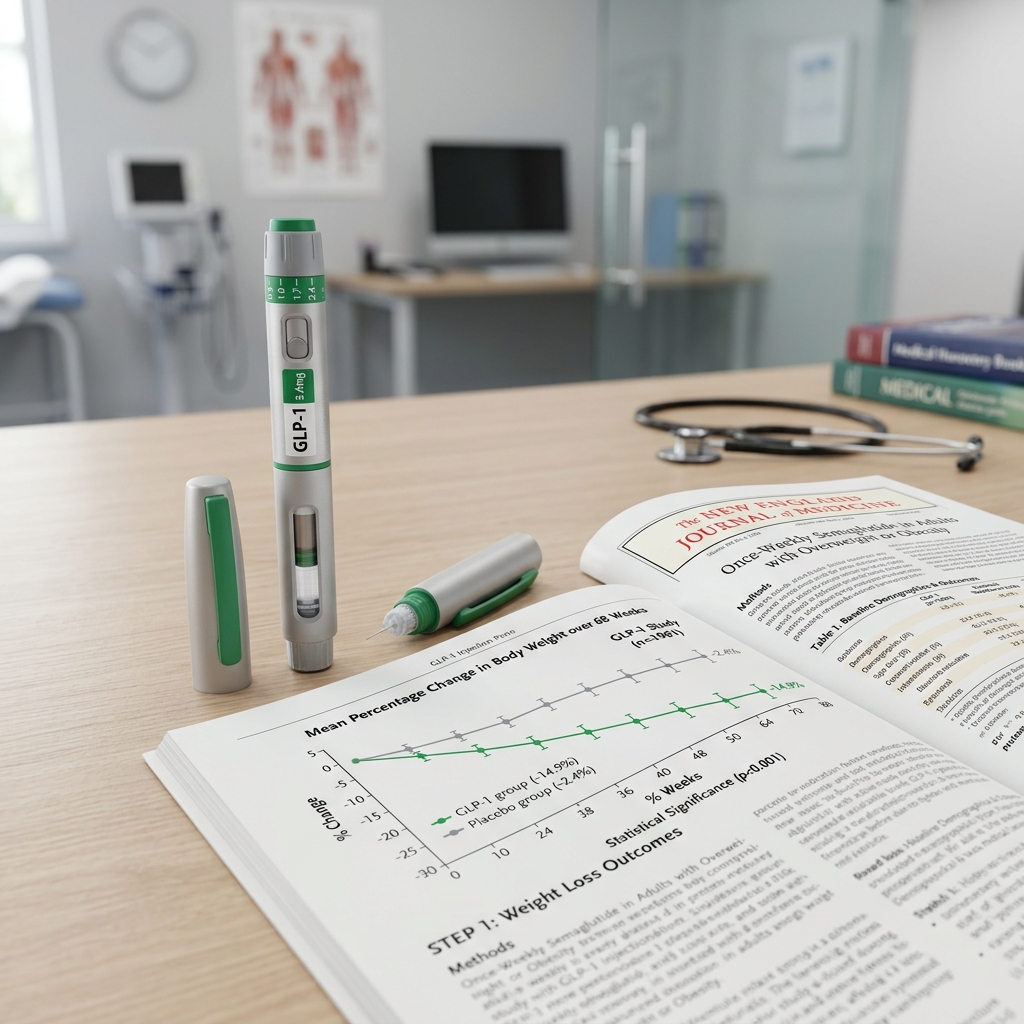
- Off-Label Use: Ozempic® is FDA-approved only for Type 2 diabetes. Using it for weight loss is considered "off-label" prescribing, which is a common and legal medical practice.
- Identical Active Ingredient: Ozempic® and Wegovy® contain the exact same active molecule—semaglutide—manufactured by Novo Nordisk. Wegovy® is officially FDA-approved for chronic weight management.
- Strict Insurance Denials: Commercial insurers routinely deny Ozempic® coverage for patients who do not have a documented diagnosis of Type 2 diabetes (such as an HbA1c level of 6.5% or higher).
- High Out-of-Pocket Cost: When insurance coverage is denied, patients paying cash at retail pharmacies face massive out-of-pocket costs ranging from $900 to over $1,000 per month.
- The Compounding Alternative: Under Section 503A of the FD&C Act, state-licensed compounding pharmacies can legally prepare compounded semaglutide. Telhealth platforms like Losing Weight RX provide this safe, identical molecule for a flat rate of $79/month.
Introduction: The GLP-1 Revolution in Chronic Weight Management
The conversation around weight loss has undergone a profound transformation in recent years, sparked by a class of medications known as glucagon-like peptide-1 (GLP-1) receptor agonists. At the center of this cultural and clinical shift is Ozempic® (semaglutide). Originally developed and approved as a weekly injection to improve glycemic control in adults with Type 2 diabetes, Ozempic® rapidly gained global fame for its remarkable weight loss side effects. Today, millions of individuals seek the medication to manage chronic obesity and overweight conditions.
However, this widespread popularity has highlighted a critical disconnect between clinical utility and regulatory approval. Many people seeking Ozempic® do not have Type 2 diabetes. While clinical evidence demonstrates that semaglutide is highly effective for weight loss in patients without diabetes, using Ozempic® specifically for weight management represents "off-label" use. This off-label status triggers severe hurdles, particularly regarding insurance coverage and out-of-pocket pricing.
For patients navigating this landscape, understanding the relationship between Ozempic®, Wegovy®, and the underlying active molecule (semaglutide) is crucial. In this guide, we will break down the clinical science behind using Ozempic® for weight loss without diabetes, analyze why insurers strictly deny coverage for off-label use, and outline the legal, safe, and highly affordable pathways—such as compounded semaglutide—available to patients seeking effective weight management.
FDA Indications: Ozempic vs. Wegovy
To understand the clinical and financial landscape of semaglutide, it is essential to distinguish between the two primary brand-name products containing the molecule: Ozempic® and Wegovy®. Both drugs are manufactured by Novo Nordisk and contain the identical active chemical structure (semaglutide), but they are marketed, packaged, and regulated under separate FDA approvals.
Ozempic®: FDA-Approved for Type 2 Diabetes
Ozempic® received its initial FDA approval in December 2017. Its approved indications are strictly limited to:
- Improving glycemic control (blood sugar levels) in adults with Type 2 diabetes mellitus as an adjunct to diet and exercise.
- Reducing the risk of major adverse cardiovascular events (such as cardiovascular death, non-fatal myocardial infarction, or non-fatal stroke) in adults with Type 2 diabetes and established cardiovascular disease.
Because its official indication is confined to Type 2 diabetes, any prescription written for Ozempic® to treat obesity or overweight in a patient without diabetes is classified as "off-label" prescribing. While off-label prescribing is entirely legal and common in U.S. medical practice—accounting for roughly 20% of all prescriptions written—it carries significant administrative consequences, particularly regarding insurance reimbursement.
Wegovy®: FDA-Approved for Chronic Weight Management
Recognizing the profound weight-loss effects of semaglutide, Novo Nordisk conducted separate clinical trials specifically targeting patients with obesity and overweight who did not have Type 2 diabetes. These studies culminated in the FDA approval of Wegovy® in June 2021. Wegovy® is indicated for:
- Chronic weight management in adults with an initial body mass index (BMI) of 30 kg/m² or greater (obesity), or 27 kg/m² or greater (overweight) in the presence of at least one weight-related comorbid condition (such as hypertension, Type 2 diabetes, or dyslipidemia).
- Pediatric patients aged 12 years and older who meet specific BMI percentiles.
- Reducing the risk of cardiovascular death, myocardial infarction, and stroke in adults with established cardiovascular disease and either obesity or overweight.
Consequently, Wegovy® is the product officially labeled for weight management. Despite this regulatory division, the underlying pharmacologically active drug in both Ozempic® and Wegovy® is identical.
| Feature | Ozempic® | Wegovy® |
|---|---|---|
| Active Ingredient | Semaglutide | Semaglutide |
| FDA Indication | Type 2 Diabetes Mellitus | Chronic Weight Management |
| Max Weekly Dose | 2.0 mg | 2.4 mg |
| Pen Delivery | Multi-dose adjustable dial pen | Single-dose disposable auto-injector |
| Typical Retail Cost | $900 - $950 / month | $1,300 - $1,350 / month |
The Clinical Science: Efficacy of Semaglutide in Patients Without Diabetes
Does semaglutide work effectively for weight loss in individuals who do not have Type 2 diabetes? The answer is a definitive yes, backed by robust clinical data. The primary clinical evidence supporting the efficacy of semaglutide for chronic weight management in patients without diabetes comes from the landmark STEP (Semaglutide Treatment Effect in People with obesity) clinical trial program, sponsored by Novo Nordisk.
The Landmark STEP 1 Trial
Published in the New England Journal of Medicine, the STEP 1 trial was a double-blind, randomized, placebo-controlled study designed to evaluate the safety and efficacy of once-weekly subcutaneous semaglutide at a dose of 2.4 mg in adults with overweight or obesity who did not have diabetes. The trial enrolled 1,961 participants across multiple international sites.
The participants were randomized in a 2:1 ratio to receive either weekly semaglutide 2.4 mg or a matching placebo, in addition to lifestyle interventions (consisting of a reduced-calorie diet and increased physical activity). The primary endpoints were the percentage change in body weight and the proportion of participants achieving weight losses of 5% or more over 68 weeks.
The results of the STEP 1 trial were unprecedented for a non-surgical weight loss intervention:
- Average Weight Loss: Participants receiving semaglutide 2.4 mg achieved a mean weight loss of 14.9% of their baseline body weight (an average reduction of approximately 34 pounds or 15.3 kg) over the 68-week period. In contrast, the placebo group achieved a mean weight loss of only 2.4%.
- High Success Rates: Over 86% of participants in the semaglutide group lost 5% or more of their body weight, 69.1% lost 10% or more, and an astonishing 50.5% lost 15% or more of their baseline weight.
- Improvements in Cardiometabolic Risk Factors: Beyond raw weight reduction, the semaglutide group demonstrated significant improvements in waist circumference, systolic and diastolic blood pressure, fasting plasma glucose, HbA1c, and lipid levels (including triglycerides and LDL cholesterol). Physical functioning scores also improved substantially.
Mechanism of Action: How Semaglutide Promotes Satiety
Semaglutide is a synthetic analogue of the naturally occurring GLP-1 hormone, which is secreted by the intestines in response to food intake. However, while natural GLP-1 is degraded by enzymes in the body within minutes, semaglutide is modified to resist enzymatic breakdown, giving it a half-life of approximately 7 days. This allows once-weekly dosing to maintain constant therapeutic levels in the bloodstream.
The drug achieves weight loss by acting on several physiological pathways:
- Central Nervous System Appetite Regulation: Semaglutide crosses the blood-brain barrier to target GLP-1 receptors in the hypothalamus, the region of the brain responsible for regulating appetite and food intake. By binding to these receptors, semaglutide increases signals of satiety (feeling full) and decreases signals of hunger. This curbs the constant thoughts about food—often referred to by patients as "food noise."
- Delayed Gastric Emptying: Semaglutide slows down the rate at which food empties from the stomach into the small intestine. By prolonging gastric retention, the physical sensation of fullness after a meal is extended, naturally reducing portion sizes and preventing overeating.
- Glucoregulatory Stability: While its insulin-stimulating effects are glucose-dependent (meaning it only stimulates insulin secretion when blood sugar levels are elevated), semaglutide helps maintain stable blood glucose profiles. This prevents the sharp spikes and crashes in blood sugar that typically trigger sugar cravings and sudden hunger.
Because semaglutide slows digestion, introducing the medication too quickly can overwhelm the gastrointestinal system, leading to nausea or vomiting. Clinical protocols mandate a gradual titration schedule, starting at 0.25 mg weekly for the first 4 weeks, before increasing to 0.5 mg, 1.0 mg, and eventually higher doses as tolerated.
Access Compounded Semaglutide Online — Just $79/mo Flat Rate
Get the identical active molecule (semaglutide) prescribed off-label for chronic weight management. Our flat-rate program includes medical assessment, medication, and shipping with no insurance required.
Start Your AssessmentThe Insurance Barrier: Why Off-Label Ozempic Is Strictly Denied
While the clinical data demonstrates that semaglutide is highly effective for weight loss in patients without diabetes, obtaining brand-name Ozempic® for this purpose is an administrative battleground. For the vast majority of patients without Type 2 diabetes, commercial insurance policies will not cover Ozempic®, creating a massive barrier to access.
The Prior Authorization Process
Insurance companies utilize a cost-control mechanism known as Prior Authorization (PA). Under this process, a pharmacy cannot dispense a high-cost specialty medication like Ozempic® with insurance coverage until the prescribing physician submits clinical documentation proving that the patient meets the insurer's specific coverage criteria.
For Ozempic®, the criteria established by insurance companies are extremely rigid. To approve a prior authorization for Ozempic®, insurers almost universally require:
- A documented diagnosis of Type 2 Diabetes Mellitus: The provider must submit medical records containing ICD-10 codes for Type 2 diabetes (such as E11.9).
- Laboratory confirmation: Insurers require recent laboratory results showing a Hemoglobin A1c (HbA1c) level of 6.5% or higher, which is the clinical diagnostic threshold for diabetes. Patients with pre-diabetes (HbA1c of 5.7% to 6.4%) or normal blood sugar levels are strictly rejected.
- Step Therapy: Many insurers require proof that the patient has tried and failed cheaper first-line diabetes treatments, most commonly metformin, before they will approve coverage for a GLP-1 agonist like Ozempic®.
If the patient does not have Type 2 diabetes, the prior authorization will be denied automatically. Appeals submitted by providers arguing that the patient has severe obesity, high cardiovascular risk, or insulin resistance are routinely rejected, as insurers enforce a strict separation between diabetes care and weight loss management.
Why Insurers Exclude Weight Loss Coverage
A natural question follows: If Ozempic® is denied because it is for diabetes, why not simply prescribe Wegovy®, which is FDA-approved for weight loss? Unfortunately, patients run into a second major insurance barrier here.
Many commercial insurance plans—particularly employer-sponsored health benefit packages—contain explicit **weight loss exclusions**. Historically, insurance companies viewed obesity as a behavioral issue rather than a chronic disease, categorizing weight loss treatments as "cosmetic" or "lifestyle" interventions. Consequently, they excluded coverage for all weight loss medications, counseling, and nutritional services from their benefit designs.
Furthermore, because GLP-1 medications are designed for long-term (potentially lifelong) use, insurers face immense financial pressure. Covering a drug like Wegovy® at a retail price of over $1,300 per month for a large percentage of their beneficiary population could threaten their financial solvency. Thus, even if a provider prescribes Wegovy® for its approved weight-loss indication, the plan may reject the claim simply because the entire category of weight management drugs is excluded from the employer's plan contract.
The Financial Reality: $900 to $1,000+ per Month
When insurance coverage is denied for Ozempic® (due to a lack of a diabetes diagnosis) or Wegovy® (due to a weight loss exclusion), patients are left with few options in the traditional retail market. If they choose to purchase the medication, they must pay the cash retail price.
At U.S. retail pharmacies, the out-of-pocket cash prices for brand-name GLP-1 agonists are exceptionally high:
- Ozempic®: Out-of-pocket costs average between $900 and $980 per month (for a single 4 mg or 8 mg pen, depending on the dosage).
- Wegovy®: Out-of-pocket costs are even higher, ranging from $1,300 to $1,400 per month for a box of four single-dose pens.
For the average American, paying $11,000 to $16,000 annually for a single maintenance medication is financially impossible. This stark financial barrier has led many patients to look outside traditional retail pharmacies for affordable, legal alternatives.
The Compounding Pathway: Safe and Affordable Access Under Section 503A
The convergence of extreme demand, manufacturing shortages, and high out-of-pocket costs created a critical public health challenge. Fortunately, a legal and highly regulated pathway exists within U.S. pharmacy law to address this issue: sterile drug compounding.
The Legal Status of Compounding
Pharmaceutical compounding is the practice of combining, mixing, or altering ingredients to create a customized medication for an individual patient. Compounding is a cornerstore of pharmacy practice, regulated under **Section 503A of the Federal Food, Drug, and Cosmetic (FD&C) Act**.
Under Section 503A, a state-licensed compounding pharmacy is legally permitted to prepare compounded medications when:
- It is done on the prescription of a licensed healthcare practitioner for an individual patient.
- The active pharmaceutical ingredient (API) used is bulk drug substance that complies with the standards of an applicable United States Pharmacopeia (USP) or National Formulary (NF) monograph.
- The drug is compounded by a licensed pharmacist in a state-licensed pharmacy.
Typically, compounding pharmacies cannot compound copies of commercially available drugs. However, the law provides a critical exception: when a drug is listed on the **FDA's Drug Shortage Database**, it is not considered "commercially available" in sufficient quantities. Semaglutide has experienced severe, documented shortages since 2022. During these shortage windows, compounding pharmacies are legally authorized to prepare compounded semaglutide to meet patient needs (a regulatory framework logged in the FDA Shortages Log).
How Compounded Semaglutide Sourcing Works
Compounded semaglutide is prepared by taking the raw active pharmaceutical ingredient (semaglutide base or semaglutide sodium) and dissolving it in a sterile liquid medium, often combined with an inactive ingredient like water for injection, a preservative (like benzyl alcohol), and sometimes a vitamin B12 (cyanocobalamin) or L-carnitine buffer to support metabolic health and ease mild side effects.
The resulting sterile solution is packaged in a multi-dose glass vial. Unlike the pre-filled, single-use pens provided by Novo Nordisk, patients withdraw their weekly dose from the vial using a sterile, ultra-fine insulin syringe. While this requires a small manual learning curve, it allows pharmacies to bypass the proprietary auto-injector pen mechanisms—which are the primary cause of Novo Nordisk's manufacturing bottlenecks—and deliver the medication directly to patients at a fraction of the cost.
The Losing Weight RX Solution: Flat-Rate $79/mo
Telhealth platforms have streamlined access to this legal compounding pathway. Losing Weight RX addresses both the clinical and financial barriers of GLP-1 therapy by offering an all-inclusive, flat-rate program:
- Flat-Rate Pricing: Compounded semaglutide is available for a flat rate of $79 per month. Unlike other telehealth platforms, this pricing remains constant at all dose levels—from the starting 0.25 mg dose up to the therapeutic 1.0 mg or 2.0 mg maintenance levels. There are no price hikes as your dose increases.
- All-Inclusive Care: The monthly fee covers the entire clinical process: the online medical evaluation by a U.S. licensed provider, the prescription, the compounded medication, all necessary injection supplies (vials, syringes, and alcohol prep pads), and temperature-controlled expedited shipping.
- Licensed Pharmacy Sourcing: Losing Weight RX partners exclusively with U.S.-based, state-licensed 503A compounding pharmacies. These pharmacies must strictly comply with USP Chapter 797 standards for sterile drug preparation, perform independent third-party potency testing, and verify the chemical purity of their active ingredients.
- No Insurance Needed: Because the cost is kept at a highly affordable $79/month, patients can bypass the stressful prior authorization process and commercial insurance rejections entirely.
Clinical Safety, Monitoring, and Side Effect Management
Whether using brand-name Ozempic® or compounded semaglutide, the pharmacological active compound is the same, and therefore the clinical profile—including expected side effects, contraindications, and monitoring requirements—is identical.
Common Side Effects and Management
Because GLP-1 receptors are located throughout the gastrointestinal tract as well as the brain, the most common side effects are gastrointestinal in nature. They are typically mild-to-moderate and tend to improve over time as the body adapts to the medication. Key side effects include:
- Nausea: The most frequent side effect, affecting roughly 15-20% of patients, particularly during the first few days after an injection or after a dose increase. Management: Eat smaller, more frequent meals. Avoid high-fat, greasy, or overly sweet foods. Stay hydrated, and eat bland foods like crackers, toast, or rice.
- Constipation: Caused by the delayed gastric emptying and slowed intestinal transit time. Management: Increase dietary fiber intake, drink plenty of water, and consider a mild, over-the-counter stool softener or fiber supplement if needed.
- Diarrhea: Occurs in some patients as the digestive tract adjusts to altered motility. Management: Stay hydrated to replenish lost fluids and electrolytes; eat bland, low-fiber foods temporarily.
- Acid Reflux/Heartburn: Slowed digestion can cause stomach acid to back up into the esophagus. Management: Avoid lying down for at least 2 hours after eating, avoid trigger foods (caffeine, chocolate, citrus, spicy foods), and use over-the-counter antacids if necessary.
Serious but Rare Risks
While semaglutide is generally safe and well-tolerated, it does carry warnings for rare, serious clinical conditions that require medical attention:
- Pancreatitis: Acute inflammation of the pancreas is a rare but serious risk. Patients should seek immediate emergency medical care if they experience severe, persistent abdominal pain that radiates to the back, with or without vomiting.
- Gallbladder Issues: Rapid weight loss and GLP-1 therapy can increase the risk of cholelithiasis (gallstones) or cholecystitis (gallbladder inflammation). Symptoms include severe right upper abdominal pain, fever, and jaundice.
- Thyroid C-Cell Tumors: In rodent studies, semaglutide caused thyroid C-cell tumors (including medullary thyroid carcinoma). While it is unknown if this occurs in humans, semaglutide is strictly contraindicated in patients with a personal or family history of Medullary Thyroid Carcinoma (MTC) or Multiple Endocrine Neoplasia syndrome type 2 (MEN 2).
The Necessity of Clinical Supervision
Given these side effects and clinical risks, semaglutide is not a cosmetic supplement—it is a powerful, prescription-only hormone therapy. It should never be purchased from unregulated online sources, research chemical websites, or "peptide shops" that sell products marked "for research purposes only" or "not for human consumption." These unregulated products bypass all sterile manufacturing rules, carry high risks of contamination, and often contain incorrect doses or entirely different chemicals.
Safe treatment requires ongoing supervision by a licensed U.S. healthcare provider who can evaluate your medical history, monitor your weight-loss progress, guide you through the titration schedule, and manage any side effects that arise during therapy.
Frequently Asked Questions
Yes. A licensed medical provider can legally prescribe Ozempic® "off-label" for weight loss. Prescribing FDA-approved medications for off-label indications is a very common, legal, and standard practice in U.S. medicine. However, because Ozempic® is only FDA-approved for Type 2 diabetes, health insurance companies almost always deny coverage for patients without a diabetes diagnosis, requiring you to pay the full out-of-pocket retail cost of $900 to $1,000 per month.
Ozempic® and Wegovy® contain the identical active drug molecule, semaglutide, and are manufactured by the same company, Novo Nordisk. The main differences are their FDA-approved clinical indications, maximum weekly dosages, and pen designs. Ozempic® is approved for Type 2 diabetes and has a maximum weekly dose of 2.0 mg delivered via a multi-dose adjustable pen. Wegovy® is approved specifically for chronic weight management and has a maximum weekly dose of 2.4 mg delivered via single-dose auto-injector pens.
Insurance companies establish coverage guidelines based on a drug's official FDA-approved indications. Because Ozempic® is FDA-approved specifically to treat Type 2 diabetes, insurance companies require a documented diagnosis of diabetes (typically verified by an HbA1c lab value of 6.5% or higher) before they will approve the prior authorization. If a patient does not have diabetes, the insurance company will deny coverage, even if a doctor writes a valid prescription for weight loss.
Yes. Compounded semaglutide contains the identical active pharmaceutical ingredient (API), semaglutide, as brand-name Ozempic® and Wegovy®. Chemically, the molecules are identical, meaning they interact with your body's GLP-1 receptors in the exact same way. The primary differences lie in the inactive ingredients (excipients), the multi-dose vial delivery system (where you withdraw the dose with an insulin syringe), and the state-licensed pharmacy pathway rather than brand-name manufacturing.
Losing Weight RX provides compounded semaglutide for a flat rate of $79 per month. This all-inclusive price remains the same at all dosage levels, meaning your monthly cost will not increase as you titrate up to higher maintenance doses. The price covers the online provider consultation, your prescription, the sterile compounded medication, all syringes and supplies, and expedited cold-chain shipping. No insurance is required, and there are no hidden membership fees.
Yes. Compounding is a federally recognized and legal medical pathway regulated under Section 503A of the Federal Food, Drug, and Cosmetic (FD&C) Act. Traditional compounding pharmacies are licensed and regulated by their respective State Boards of Pharmacy. When a commercial drug is listed on the FDA's drug shortage list, compounding pharmacies are legally permitted to prepare customized formulations of that drug to ensure patient access during the shortage period.
Start Compounded Semaglutide for $79/mo — Prescribed by Licensed U.S. Providers
Complete your 5-minute online health history, get evaluated by a U.S. licensed provider within 24 hours, and receive compounded semaglutide shipped directly from a state-licensed 503A pharmacy to your door.
Get Started TodayClinical References & Sources
- U.S. Food and Drug Administration. (2021). FDA Approves New Drug Treatment for Chronic Weight Management (Wegovy). FDA.gov Press Announcements. FDA.gov Release
- National Institutes of Health. (2021). Once-Weekly Semaglutide in Adults with Overweight or Obesity (STEP 1). ClinicalTrials.gov. ClinicalTrials.gov (NCT03548935)
- U.S. Food and Drug Administration. (2026). FDA Drug Shortages Database. FDA.gov Guidance & Shortage Logs. FDA Shortages Log