
- How Does Epigenetic Reprogramming Work to Rejuvenate Cells?
- Why Did Researchers Choose Glaucoma and NAION for This Trial?
- How Do Doctors Administer and Control the ER-100 Therapy?
Preclinical development of cellular reprogramming therapies.
The field of cellular rejuvenation medicine has achieved a historic milestone. Life Biosciences announced that they have dosed the first patient in a groundbreaking Phase 1 clinical trial. The study, registered under identifier NCT07290244, marks the very first human trial of an epigenetic restoration therapy.
The experimental therapy, named ER-100, is designed to evaluate safety, tolerability, and efficacy in patients suffering from open-angle glaucoma (OAG) and non-arteritic anterior ischemic optic neuropathy (NAION). Glaucoma is a progressive eye disease that damages the optic nerve, while NAION is a sudden, stroke-like loss of blood flow to the eye. This landmark trial represents the culmination of years of advanced research into cellular reprogramming and longevity.
As longevity research moves from lab benches to clinics, public interest in cellular health programs has spiked. While experimental therapies like ER-100 are in their early stages, established programs for cellular optimization and wellness are already available to patients. If you want to support your metabolic health, you can easily check if you qualify online.
How Does Epigenetic Reprogramming Work to Rejuvenate Cells?
In 2006, Nobel Prize-winning scientist Dr. Shinya Yamanaka discovered that four specialized proteins, called Yamanaka factors (OSKM), can reset adult cells back into stem cells. However, reprogramming cells completely in a living body is dangerous and can cause cells to lose their identity or form tumors. To prevent this, Life Biosciences uses a modified method called partial epigenetic reprogramming.
The therapy ER-100 delivers only three of these factors—OCT4, SOX2, and KLF4 (OSK)—while omitting the tumor-causing factor. Preclinical studies show that controlled expression of these three factors can safely reset epigenetic markers without erasing cell identity. Epigenetic markers act like a cellular control panel, regulating how genes turn on and off as we age.
Over time, this control panel accumulates wear and tear, causing cell function to decline. Research at Harvard Medical School suggests that expressing OSK factors in damaged retinal ganglion cells can reset this cellular clock. This reset helps injured nerve cells regrow connection lines, paving the way for potential vision restoration.
Explore Medical Weight Care Programs
Find clinical options for semaglutide, tirzepatide, and other medical weight loss solutions.
See Pricing OptionsWhy Did Researchers Choose Glaucoma and NAION for This Trial?
Choosing glaucoma and NAION for the first human trial of ER-100 addresses a major clinical need. Glaucoma is a leading cause of irreversible blindness, slowly destroying the vital retinal cells that form the optic nerve. Standard glaucoma treatments only lower eye pressure, which can prevent further damage but cannot restore vision that is already gone.
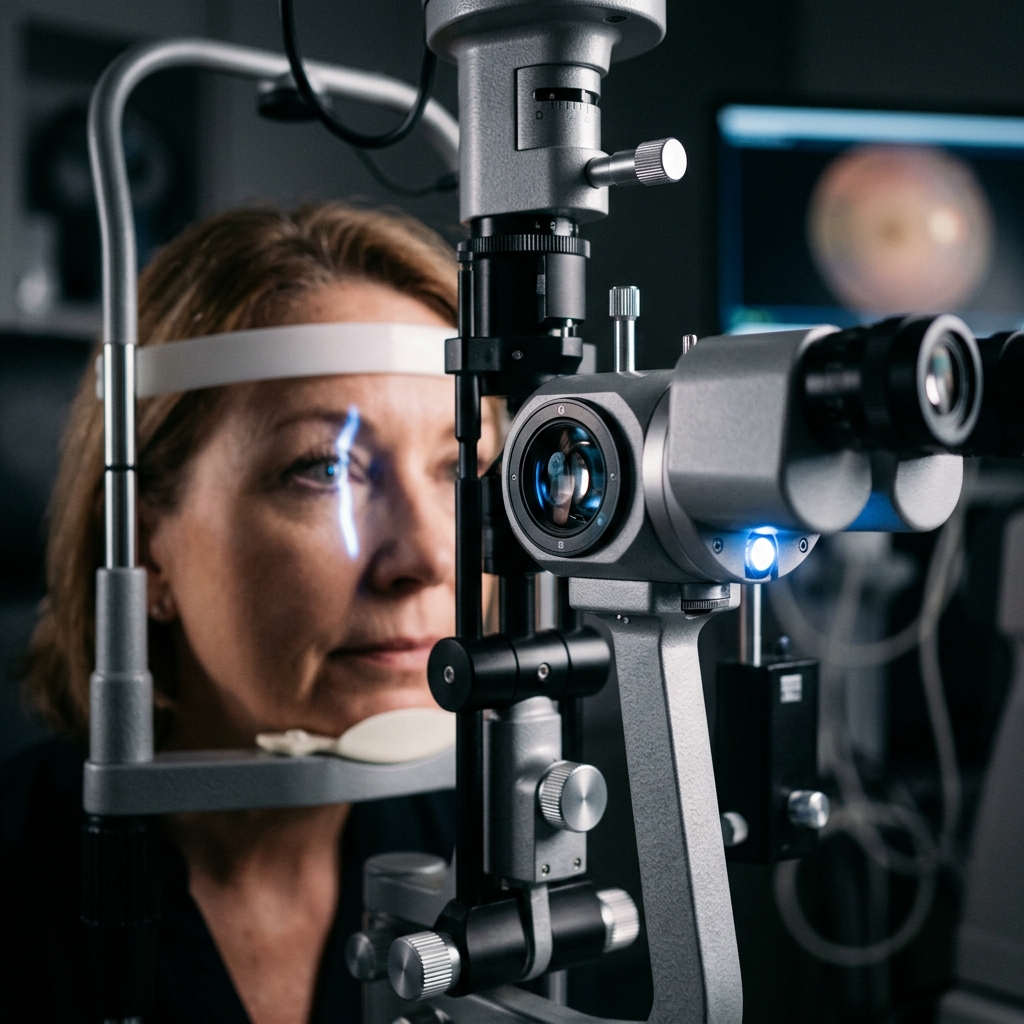
NAION, often described as a stroke of the optic nerve, causes sudden and permanent blindness. Currently, no approved medical therapies exist to treat NAION or restore lost vision. This lack of treatment options makes both of these conditions prime targets for new regenerative medicines.
The eye is also an ideal testing ground for gene therapies because it is self-contained and immunologically isolated, minimizing systemic side effects. Additionally, doctors can easily monitor retinal cells in real time using non-invasive imaging techniques. By targeting these eye conditions, researchers hope to prove that partial reprogramming can safely repair damaged nerves in humans.
How Do Doctors Administer and Control the ER-100 Therapy?
Doctors deliver the ER-100 therapy via a single intravitreal injection directly into the vitreous fluid of the eye. The treatment uses a modified, harmless adeno-associated virus (AAV) vector to carry the OSK reprogramming genes. This delivery system ensures the genes target only the damaged retinal cells that require rejuvenation.

To ensure safety, researchers built a chemical switch into the therapy so the reprogramming genes do not stay active forever. The OSK genes remain dormant inside the cells until they are triggered by a common, safe antibiotic called doxycycline. Patients take oral doxycycline for eight weeks following the injection to activate the rejuvenation process.
Once the eight-week antibiotic course ends, the genetic switch turns off, preventing over-reprogramming and ensuring safety. This combination of localized delivery and an oral control switch gives physicians precise control over the therapy. This unique control system is designed to keep patients safe during treatment.
Compare Top Weight Loss Treatments
Select from clinically backed options designed to support long-term metabolic health.
See Pricing OptionsWhat Are the Goals and Timelines of the Phase 1 Trial?
Because ER-100 is the first epigenetic restoration therapy tested in humans, the Phase 1 trial focuses primarily on safety and tolerability. Researchers will monitor patients for any signs of eye inflammation or unwanted side effects during and after treatment. They want to ensure the viral delivery and the eight-week activation phase are completely safe.
In addition to safety, the team will run exploratory tests to see if the therapy improves visual function. Investigators will measure visual fields, visual acuity, and changes in the thickness of the retinal nerve fiber layer. A preliminary safety and tolerability data readout is expected in the fourth quarter of 2026.
The trial will track participants for up to five years to monitor long-term safety and the durability of any visual improvements. While experimental trials carry risks, they represent the essential pathway to bringing breakthrough cures to patients. If you want to explore existing options for longevity and wellness, you can view current pricing for private consultations.
How Does Cellular Rejuvenation Fit Into Longevity Medicine?
The ER-100 trial represents a major shift in longevity medicine, moving from slowing aging to actively reversing it. Traditional medicine focuses on managing chronic diseases after damage occurs, but rejuvenation biology targets the cellular causes of aging directly. By repairing cells at the source, researchers hope to restore function to a youthful state.
Epigenetic reprogramming is just one of several innovative pathways being explored to support tissue repair and healthy aging. Other approaches focus on cellular energy production, using sirtuins and NAD+ pathways to support DNA repair and mitochondrial health. For example, patients are already using personalized NAD+ therapy programs to boost cellular energy and systemic wellness.
While cellular reprogramming is in its early stages, success in these eye trials could pave the way for treating other organs. In the future, this technology might repair damaged tissue in the liver, muscles, and central nervous system. These clinical advances could eventually redefine how we treat age-related degenerative diseases.
This article is for informational purposes only and is not medical advice. Consult your healthcare provider before starting any weight loss medication or treatment.
Access Medically Supervised Treatment
Check your clinical eligibility and view affordable pricing packages online.
See Pricing Options
References
- Life Biosciences Press Release — Life Biosciences Press Release
- ClinicalTrials.gov (NCT07290244) — ClinicalTrials.gov (NCT07290244)
Related Stories


Disclaimer: This article is for informational purposes only and is not medical advice. Consult your healthcare provider before starting any weight loss medication, peptide protocol, or metabolic therapy.